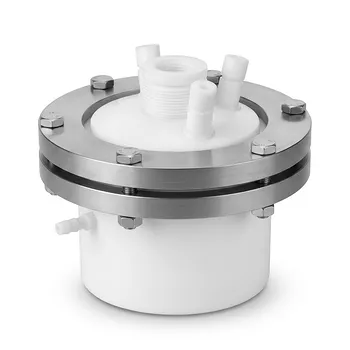
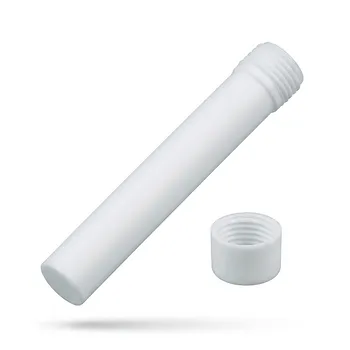
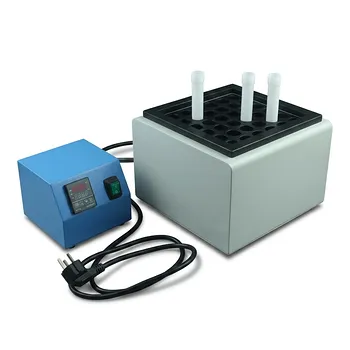
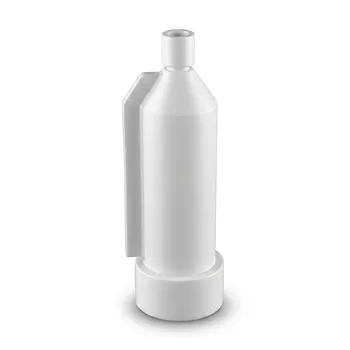
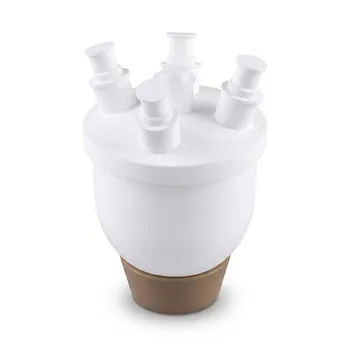
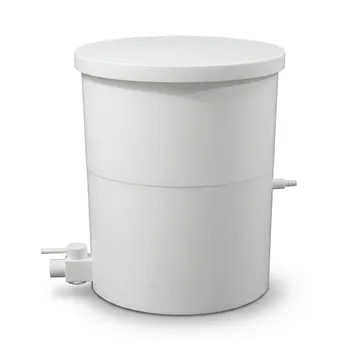
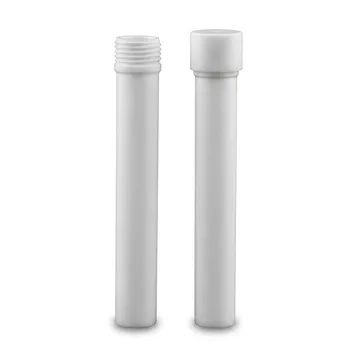
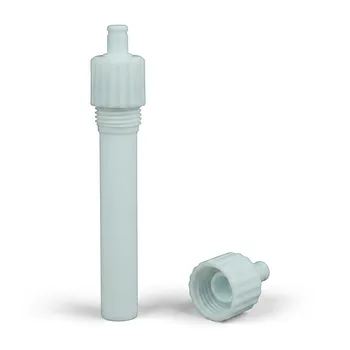
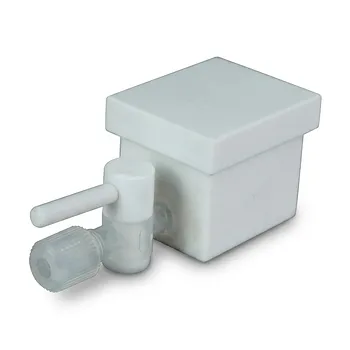
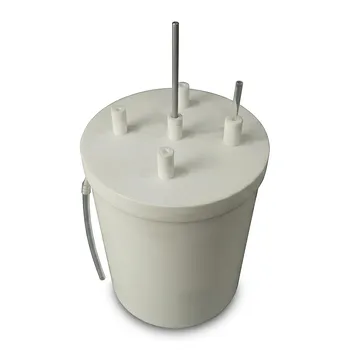
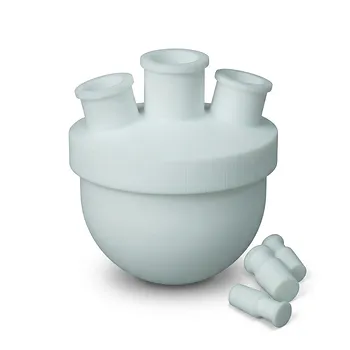
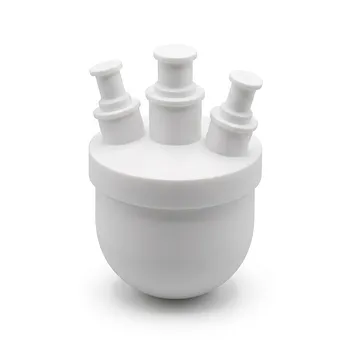
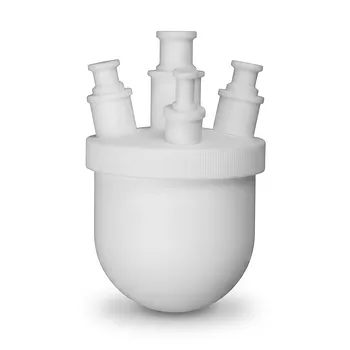
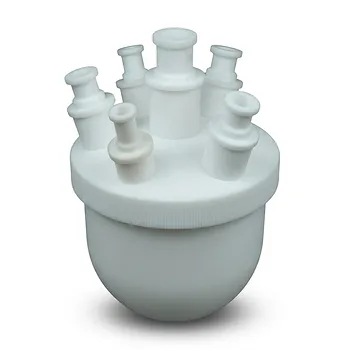
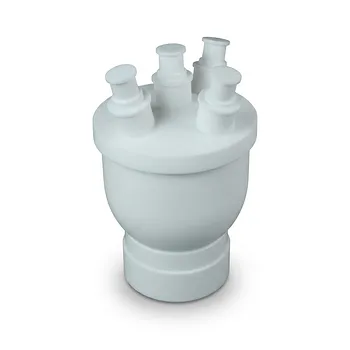
The necessity of a sealed PTFE reaction vessel in the microwave hydrothermal synthesis of zinc chromate spinel powders stems from its ability to create a pressurized, superheated environment that is transparent to electromagnetic energy. This specific configuration enables the rapid nucleation and precise morphological control of nanocrystals while maintaining the extreme chemical purity required for high-quality spinel structures.
Core Takeaway: A sealed PTFE vessel is the fundamental enabler of microwave hydrothermal synthesis, providing the chemical inertness, microwave transparency, and pressure containment necessary to accelerate reaction kinetics and achieve precise nanocrystal morphology.
Pressure and Temperature Management
Sustaining the Liquid Phase
The sealed structure of the PTFE vessel is critical for maintaining solvents in a liquid state even when they are heated far beyond their normal boiling points. This superheated environment allows for higher reaction temperatures than open-air systems, which is essential for the formation of the zinc chromate spinel phase.
Generating Autogenous Pressure
By trapping volatile components, the sealed vessel generates autogenous pressure that can exceed 5 bar. This internal pressure increases the solubility of reactants and the diffusion rates within the solvent, directly facilitating the transition from precursor materials to complex crystalline structures.
Accelerating Nucleation Kinetics
The combination of high pressure and temperature significantly shortens synthesis time by accelerating the rate of crystal nucleation. This rapid process allows researchers to produce high-quality spinel powders in a fraction of the time required by conventional thermal methods.
The Role of Polytetrafluoroethylene (PTFE)
Microwave Transparency
PTFE is characterized by its excellent microwave transparency, meaning it does not absorb 2.45 GHz radiation. This allows the microwave energy to pass through the vessel walls without loss, acting directly and volumetrically on the reaction solution for uniform heating.
Superior Chemical Inertness
The synthesis of zinc chromate requires high purity to maintain the correct stoichiometric ratio of the spinel structure. PTFE provides a non-reactive surface that prevents metal ions or impurities from leaching into the solution, ensuring the final ceramic nanopowders remain uncontaminated.
High-Temperature Stability
Modern high-purity PTFE liners are designed to remain functional at temperatures reaching up to 220 °C. This thermal stability, combined with the material's resistance to strong acids and bases, makes it the only viable choice for the harsh environments of hydrothermal chemistry.
Precision in Spinel Synthesis
Controlling Nanocrystal Morphology
The pressurized environment inside the PTFE vessel provides the physical constraints necessary to control the size and shape of the resulting crystals. This allows for the engineering of specific morphologies, such as the needle-like or hexagonal structures often required in advanced ceramic applications.
Preventing Volatile Loss
In a sealed system, the chemical environment remains constant because no material is lost to evaporation. This is critical for maintaining a precise chemical stoichiometric ratio, which is a prerequisite for successfully forming the $ZnCr_2O_4$ spinel lattice.
Elimination of Scaling
The non-stick properties of PTFE prevent the zinc chromate crystals from scaling or adhering to the reaction vessel walls. This ensures a higher yield of uniform nanoparticles and simplifies the recovery of the synthesized powder.
Understanding the Trade-offs
Temperature and Pressure Limits
While PTFE is robust, it has a definitive thermal ceiling, typically around 220 °C to 260 °C, above which the material begins to soften or lose structural integrity. Exceeding these limits under high pressure can lead to vessel deformation or catastrophic failure.
Risk of Pressure Spikes
Microwave heating is exceptionally rapid, which can lead to instantaneous pressure spikes if the reaction kinetics are not carefully monitored. If the internal pressure exceeds the mechanical limits of the PTFE liner or its supporting housing, it poses a significant safety risk.
Component Fatigue
Repeated exposure to high-pressure cycles and chemical stressors can lead to material fatigue in PTFE liners. Over time, these vessels may develop micro-cracks or deformations that can compromise the seal and introduce subtle contamination.
How to Apply This to Your Synthesis
Making the Right Choice for Your Goal
- If your primary focus is high-purity spinel production: Utilize high-purity PTFE liners to ensure that no metal ions or vessel contaminants interfere with the $ZnCr_2O_4$ crystal lattice.
- If your primary focus is rapid material throughput: Ensure your system is rated for at least 5 bar of pressure to take full advantage of the accelerated nucleation kinetics offered by superheated solvents.
- If your primary focus is morphology control: Use a sealed PTFE environment to maintain constant autogenous pressure, which is the primary driver for inducing specific crystal phase transitions.
The integration of sealed PTFE vessels into microwave hydrothermal workflows provides the unique thermodynamic environment required to produce high-performance zinc chromate spinel powders with unmatched speed and precision.
Summary Table:
| Key Feature | Advantage | Role in Spinel Synthesis |
|---|---|---|
| Microwave Transparency | Uniform volumetric heating | Enables rapid nucleation without electromagnetic loss. |
| Chemical Inertness | Non-reactive surface | Prevents contamination of the $ZnCr_2O_4$ crystal lattice. |
| Pressure Containment | Autogenous pressure (>5 bar) | Increases reactant solubility and controls crystal morphology. |
| Thermal Stability | Resists up to 220°C | Sustains superheated liquid phases for accelerated kinetics. |
| Non-Stick Properties | Prevents scaling | Ensures high yield and easy recovery of uniform nanopowders. |
Elevate Your Microwave Synthesis with KINTEK Precision
Achieving the perfect stoichiometric ratio in zinc chromate spinel powders requires more than just chemistry—it requires the highest quality reaction environments. KINTEK specializes in high-performance fluoropolymer materials, manufacturing virtually every laboratory supply imaginable from PTFE and PFA.
Whether you need standard labware (beakers, reagent bottles, digestion tubes), comprehensive fluid transfer components (tubing, valves, fittings), or advanced reaction apparatus like microwave digestion vessels and custom electrochemical cells, we have you covered. Backed by end-to-end custom CNC fabrication, KINTEK delivers everything from complex non-standard machined parts to high-volume orders with absolute precision.
Ready to optimize your hydrothermal workflows? Contact us today to discuss your bespoke laboratory setup and discover the KINTEK advantage in high-performance material science.
References
- Manal Hessien, Mohammed A. Taha. Optimizing Magnetic, Mechanical, and Electrical Properties of Cobalt-Substituted Zinc Chromite Spinel via Microwave-Hydrothermal Synthesis. DOI: 10.1007/s10904-025-03592-z
This article is also based on technical information from Kintek Knowledge Base .
Related Products
- Custom PTFE Reaction Apparatus Flange Sealed Corrosion Resistant Jacketed Vessel with Stirring Bar and Thermometer Ports
- PTFE Lined High Pressure Digestion Vessel 50ml High Temperature Hydrothermal Synthesis Tank
- High Purity TFM Microwave Digestion Vessels PTFE Acid Evaporation Liners Domestic GT-400 Equivalent Laboratory Reaction Containers
- Custom TFM Reaction Vessel with Stainless Steel Jacket and PTFE Inner Cup for High Corrosion Resistance
- High Purity PTFE Microwave Digestion Vessel Replacement for GT-400 Systems Acid Reflux and Sample Preparation
People Also Ask
- How do perfluorinated solvent environments influence the selection of reaction vessels and fluid handling components in nonaqueous emulsion polymerizations? Choose fluoropolymer materials.
- Why are high-purity PTFE or PFA reaction vessels recommended for the synthesis of PANI-TiC hybrid materials? - Guide
- Why are fluoroplastic (PTFE) reaction vessels recommended for Methylene Blue (MB) adsorption kinetic experiments?
- Why is a PTFE reaction vessel required for Ti3C2Tx MXene synthesis? Ensure Safe HF Etching & High Purity
- Why is a high-quality PTFE reaction vessel required for the etching preparation of Ti3C2Tx MXene? Ensure Pure Synthesis.