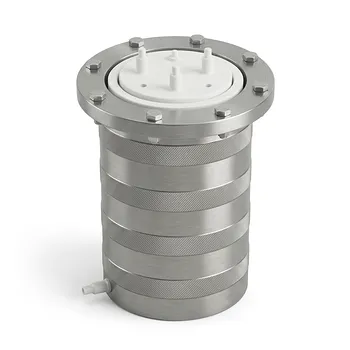
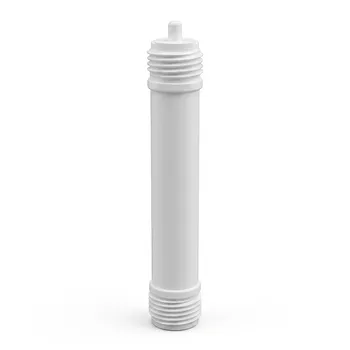
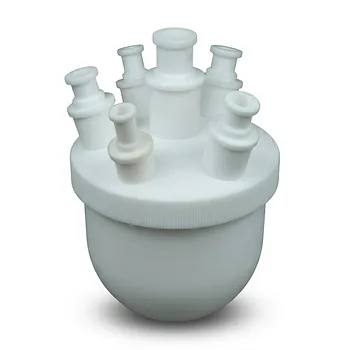
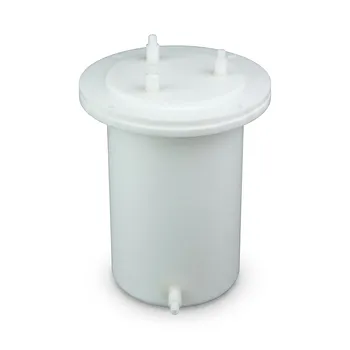
PTFE liners are a fundamental requirement in the hydrothermal synthesis of ZnO/NiO heterojunctions. This material provides a chemically inert barrier that survives the aggressive alkaline environments and high-pressure conditions necessary to form these nanocomposites. Without it, the reaction would likely fail due to contamination from the metal autoclave or damage to the reactor vessel itself.
Core Takeaway: A PTFE liner acts as a critical isolation layer that prevents corrosive precursors from attacking the reactor walls while simultaneously protecting the ZnO/NiO heterojunction from metal ion contamination, ensuring high-purity crystal growth.
Chemical Resilience in Aggressive Environments
Resistance to Strong Alkaline Precursors
The synthesis of ZnO/NiO heterojunctions frequently utilizes strong bases like sodium hydroxide (NaOH) to regulate pH and facilitate precipitation. Polytetrafluoroethylene (PTFE) is exceptionally resistant to these caustic chemicals, whereas the stainless steel of the outer autoclave would suffer significant corrosion if exposed directly.
Corrosion Protection for the Reactor Body
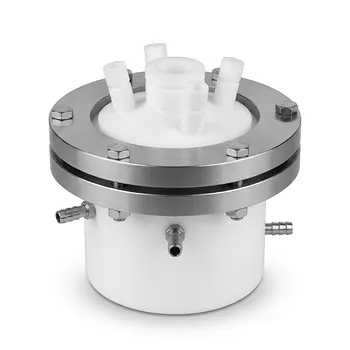
By serving as an internal reaction vessel, the PTFE liner isolates the stainless steel autoclave from the reactive solution. This protection is vital because the high-temperature and high-pressure conditions of hydrothermal synthesis accelerate the degradation of metallic surfaces.
Preservation of Material Purity and Structure
Elimination of Metal Ion Leaching
One of the most critical roles of the PTFE liner is preventing metal ion contamination from the reactor walls from leaching into the sample. Even trace amounts of iron, chromium, or nickel from the autoclave body can degrade the optoelectronic properties and catalytic activity of the resulting ZnO/NiO heterojunction.
Maintaining Crystal Growth and Stoichiometry
The high-purity environment provided by PTFE ensures that the crystalline quality and specific growth orientations of the ZnO and NiO nanostructures remain consistent. This allows researchers to achieve the precise stoichiometry required for the heterojunction to function effectively in applications like photocatalysis or gas sensing.
Physical Stability Under Stress
Managing High Temperatures and Pressures
Hydrothermal reactions occur in a "super-heated" state that requires the containment vessel to remain stable under high thermal and barometric stress. PTFE maintains its structural integrity and chemical inertness throughout these cycles, facilitating a stable environment for single-crystal growth.
Non-Stick Surface for Product Recovery
The non-stick properties of PTFE are essential for the easy recovery of the synthesized powders after the reaction is complete. This minimizes material loss and ensures that the morphology of the delicate ZnO/NiO nanostructures is not damaged during the extraction process.
Understanding the Trade-offs
Temperature Limitations
While PTFE is highly resilient, it has a clear thermal ceiling, typically around 200°C to 250°C. Exceeding these temperatures can cause the liner to soften or undergo thermal decomposition, which may release toxic vapors and compromise the experiment.
Mechanical Deformation
Under extreme pressure, PTFE can exhibit "cold flow" or permanent deformation, particularly if the liner is not properly fitted to the stainless steel jacket. Users must ensure a precise fit to prevent the liner from buckling or failing to seal, which could lead to dangerous pressure leaks.
How to Apply This to Your Project
When preparing for the hydrothermal synthesis of ZnO/NiO heterojunctions, your choice of liner and handling procedures will determine the quality of your results.
- If your primary focus is High Purity: Always use a new or rigorously acid-cleaned PTFE liner to ensure no cross-contamination from previous synthesis runs.
- If your primary focus is High-Temperature Stability: Monitor your reaction temperature closely to ensure it remains below 220°C to prevent liner degradation and potential vessel failure.
- If your primary focus is Structural Consistency: Ensure the PTFE liner is tightly sealed and matches the autoclave volume perfectly to maintain stable pressure throughout the growth phase.
The PTFE liner is not merely a container, but a critical component that defines the purity and performance of synthesized nanomaterials.
Summary Table:
| Key Feature | Benefit for ZnO/NiO Synthesis |
|---|---|
| Chemical Resilience | Resists strong NaOH/alkaline precursors, preventing reactor corrosion. |
| Purity Protection | Eliminates metal ion leaching to maintain semiconductor performance. |
| Non-Stick Surface | Ensures high recovery rates and preserves delicate nanostructure morphology. |
| Pressure Stability | Maintains a stable environment for single-crystal growth under hydrothermal stress. |
| Thermal Limits | Operates safely up to 200°C–250°C, ideal for standard hydrothermal cycles. |
Optimize Your Synthesis with KINTEK’s High-Performance Fluoropolymers
Achieving precise stoichiometry in ZnO/NiO heterojunctions requires an environment free from contamination. KINTEK specializes in manufacturing an exhaustive range of high-performance PTFE and PFA laboratory supplies designed to withstand the most aggressive chemical reactions.
Whether you need standard hydrothermal synthesis liners, microwave digestion vessels, or high-purity labware like beakers, reagent bottles, and centrifuge tubes, our products ensure the integrity of your research. Beyond standard supplies, we provide:
- Comprehensive Fluid Transfer: Tubing, fittings, and valves for complex setups.
- Sample Prep & Filtration: Separatory funnels, filters, and high-precision tweezers.
- Advanced Reaction Apparatus: Custom electrochemical cells, battery testing fixtures, and microchannel reactors.
- Bespoke Fabrication: End-to-end custom CNC machining for non-standard parts and bespoke laboratory setups.
Don't let metal contamination compromise your results. Trust KINTEK for everything from high-volume consumables to complex, custom-engineered components.
Contact our technical team today to discuss your project requirements!
References
- B. Ben Salem, G. Leroy. Efficient degradation of organic pollutants under solar irradiation using an n–p ZnO/NiO heterostructure. DOI: 10.1039/d5ra00756a
This article is also based on technical information from Kintek Knowledge Base .
Related Products
- PTFE Lined High Pressure Digestion Vessel 50ml High Temperature Hydrothermal Synthesis Tank
- High Pressure Custom TFM Reactor Stainless Steel Outer Vessel PTFE Inner Cup for Corrosive Synthesis
- Custom TFM Reaction Vessel with Stainless Steel Jacket and PTFE Inner Cup for High Corrosion Resistance
- High Purity PTFE Microwave Digestion Vessel for Soil and Food Analysis Acid Resistant Fluoropolymer Sample Preparation Liners
- High Purity TFM Microwave Digestion Vessels PTFE Acid Evaporation Liners Domestic GT-400 Equivalent Laboratory Reaction Containers
People Also Ask
- What are the benefits of using a PTFE-lined vessel for carbon-sulfur cathode treatment? Maximize Purity & Performance
- Why are PTFE-lined pressure digestion vessels required for the preparation of Ag/CeO2 catalysts? Purity & Performance
- What is the function of high-pressure PTFE digestion vessels in mineral analysis? Optimize Sample Mineralization
- What safety features are typically incorporated into high-pressure PTFE digestion vessel designs? Ensure Lab Safety
- What is the function of PTFE lined high-pressure vessels in g-C3N4 synthesis? Achieve High-Purity Material Growth