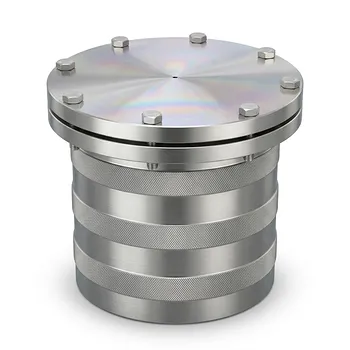
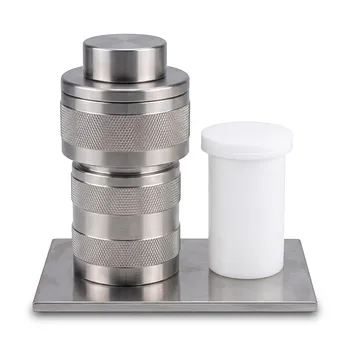
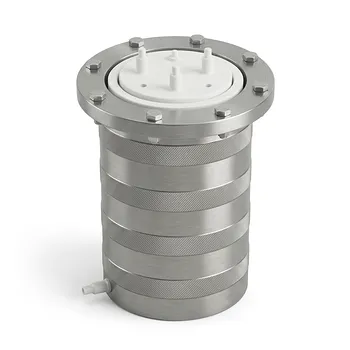
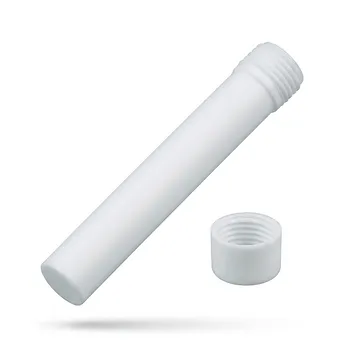
A PTFE-lined stainless steel autoclave is the standard vessel for Cu-TCPP synthesis because it creates a high-pressure, chemically inert environment necessary for solvothermal crystal growth.
The autoclave allows the reaction to occur at 85 °C, which is typically above the boiling point of the solvents used. This setup ensures that the copper ions and TCPP ligands can assemble into an ordered framework without corroding the equipment or introducing impurities into the crystalline structure.
The combination of a structural stainless steel shell and a PTFE (Teflon) liner enables "solvothermal" conditions, where elevated pressure and temperature facilitate the orderly assembly of metal ions and organic ligands into a high-purity Metal-Organic Framework.
The Dual Role of the Reaction Vessel
Structural Integrity via Stainless Steel
The outer stainless steel body provides the necessary mechanical strength to withstand autogenous pressure. During the heating of solvents to 85 °C or higher, internal pressure rises significantly as the liquid enters a subcritical state.
Without the steel shell, a standard glass vessel would likely fail or shatter under the force of the expanding vapor. This pressure is essential for promoting the in situ nucleation and growth of the MOF crystals.
Chemical Protection via PTFE Liner
The Polytetrafluoroethylene (PTFE) liner acts as a chemically inert barrier between the reaction mixture and the metal walls. Many organic ligands and solvents used in MOF synthesis are corrosive or can react with the iron, nickel, or chromium in stainless steel.
The liner prevents the reaction solution from eroding the steel, which would otherwise lead to vessel failure over time. Furthermore, the smooth surface of PTFE facilitates the recovery of the solid Cu-TCPP precipitates once the reaction is complete.
Ensuring Material Purity and Crystal Quality
Preventing Metal Ion Contamination
If the reaction solution contacted the stainless steel directly, metal impurities could leach into the solution. Even trace amounts of iron or nickel from the reactor walls can integrate into the MOF framework, ruining its structural purity.
By using a PTFE liner, the only metal source available is the copper salt explicitly added by the researcher. This ensures that the resulting Cu-TCPP MOF possesses the intended chemical and physical properties.
Facilitating Ordered Crystal Assembly
The sealed environment creates a stable, high-energy state that allows for the complete and orderly growth of the MOF framework. High-pressure environments increase the solubility of precursors, allowing them to move more freely and find their optimal positions in the lattice.
This process is critical for achieving a high-porosity framework and a well-defined three-dimensional structure. Without the pressurized environment of the autoclave, the assembly of TCPP ligands and copper ions might result in amorphous precipitates rather than organized crystals.
Understanding the Trade-offs
Temperature and Pressure Limitations
While highly effective, PTFE liners have a maximum operating temperature (typically around 220-250 °C). Exceeding these limits can cause the liner to soften or deform, leading to a breach of the seal and potential equipment damage.
Thermal Expansion Disparity
Stainless steel and PTFE expand at different rates when heated. If the temperature is raised or lowered too rapidly, the liner may warp or crack, compromising the sealed environment required for the reaction.
Cleaning and Cross-Contamination
PTFE is porous at a microscopic level, meaning it can absorb trace amounts of reagents. If not meticulously cleaned between uses, "memory effects" can occur, where residues from a previous synthesis contaminate a new batch of Cu-TCPP.
How to Apply This to Your Project
Making the Right Choice for Your Goal
- If your primary focus is high structural purity: Ensure your PTFE liner is pristine and free of scratches to prevent any leaching of metal ions from the outer shell.
- If your primary focus is large crystal size: Utilize the autoclave's ability to maintain a steady temperature of 85 °C over several days, as the constant pressure favors slow, orderly growth.
- If your primary focus is experimental safety: Always verify that your solvent volume does not exceed 60-80% of the liner's capacity to allow for safe thermal expansion and pressure buildup.
By utilizing the unique properties of a PTFE-lined autoclave, you can reliably produce high-quality Cu-TCPP MOFs with the structural integrity required for advanced applications.
Summary Table:
| Component | Primary Function | Benefit for MOF Synthesis |
|---|---|---|
| Stainless Steel Shell | Mechanical Strength | Withstands high autogenous pressure at 85°C+ |
| PTFE Liner | Chemical Barrier | Prevents metal leaching and ligand corrosion |
| Sealed System | Pressure Management | Facilitates orderly crystal growth and nucleation |
| Smooth Surface | Non-stick Property | Simplifies the recovery of solid Cu-TCPP precipitates |
Optimize Your MOF Synthesis with KINTEK
Achieve uncompromising purity in your Cu-TCPP preparation with high-performance fluoropolymer labware. KINTEK specializes in the full spectrum of PTFE and PFA laboratory supplies—from everyday basics like beakers, crucibles, and reagent bottles to advanced hydrothermal synthesis liners, microwave digestion vessels, and custom reaction apparatus.
Whether you need trace analysis instruments, fluid transfer components (tubing, valves, fittings), or general consumables like stirring bars and O-rings, our end-to-end custom CNC fabrication ensures we deliver everything from high-volume orders to complex, non-standard machined parts. Trust KINTEK for an absolute focus on high-performance fluoropolymer excellence to power your next breakthrough.
Contact our experts today to discuss your custom laboratory needs!
References
- Shahin Karamifar, Sahar Alizadeh. A novel electrode design using Cu-TCPP MOF-modified MWCNT for efficient electro-organic cross coupling synthesis of biphenyl derivatives in a Urea/Chol-Cl DES system as a green and sustainable electrolyte. DOI: 10.1038/s41598-025-21256-3
This article is also based on technical information from Kintek Knowledge Base .
Related Products
- Custom TFM Reaction Vessel with Stainless Steel Jacket and PTFE Inner Cup for High Corrosion Resistance
- PTFE Lined High Pressure Digestion Vessel 50ml High Temperature Hydrothermal Synthesis Tank
- High Pressure Custom TFM Reactor Stainless Steel Outer Vessel PTFE Inner Cup for Corrosive Synthesis
- High Purity TFM Microwave Digestion Vessels PTFE Acid Evaporation Liners Domestic GT-400 Equivalent Laboratory Reaction Containers
- High Purity PTFE Microwave Digestion Vessel Replacement Liner for Acid Sample Preparation and Trace Analysis
People Also Ask
- Why is a Polytetrafluoroethylene (PTFE) lined reaction vessel an ideal choice for preparing PtNPs/FeSAC tandem catalysts?
- Why are high-performance pressure-resistant reaction vessels required for oxygen-assisted hydrothermal conversion at 150 °C?
- Why are PTFE-lined reaction vessels necessary for forced degradation studies? Ensure high-purity results and accuracy.
- Why are high-quality fluoropolymer-lined reaction vessels required for alk-Ti3C2Tx MXene? Ensure Purity & HF Resistance
- How do magnetic stirring and reaction vessels impact MOF-derived carbon quality? Optimize Your Composite Performance