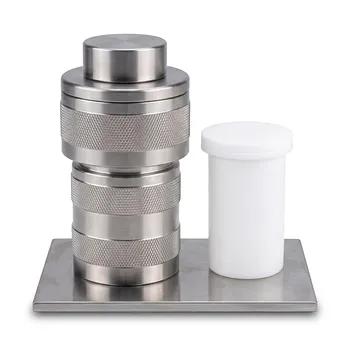
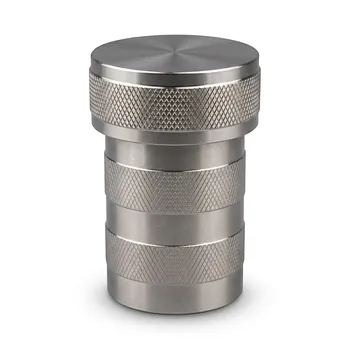
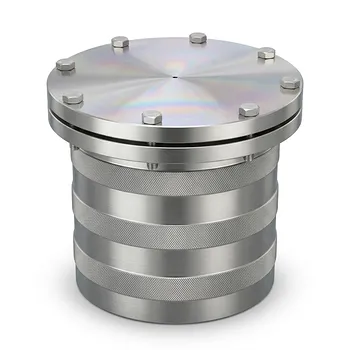
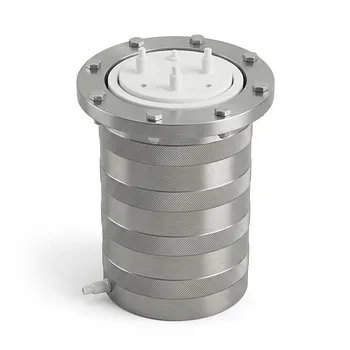
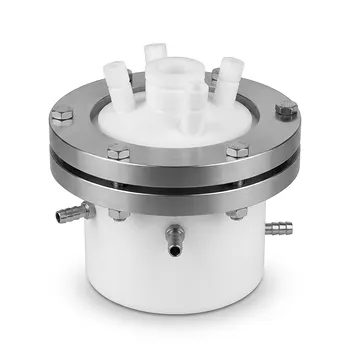
The use of a PTFE-lined hydrothermal autoclave is essential for $ZnWO_4$ synthesis because it provides a chemically inert, high-pressure environment that facilitates anisotropic crystal growth. This specialized vessel allows the reaction to reach temperatures like 120°C while resisting corrosive precursors such as ammonium fluoride ($NH_4F$). By isolating the reaction from the metallic walls of the autoclave, the liner ensures the high purity required for the formation of delicate, ultrathin nanosheet structures.
The PTFE-lined autoclave acts as a controlled micro-environment that mimics natural mineralization processes, allowing for the precise nucleation of $ZnWO_4$. It serves a dual purpose: protecting the integrity of the product from metallic contamination and providing the thermal stability necessary to direct the growth of two-dimensional nanostructures.
Chemical Resilience in Aggressive Environments
Resistance to Corrosive Precursors
The synthesis of $ZnWO_4$ often involves aggressive chemical agents, such as ammonium fluoride, which can be highly erosive. Polytetrafluoroethylene (PTFE) is selected for its exceptional chemical inertness, allowing it to withstand these precursors without degrading. This resistance ensures that the reaction vessel does not participate in the chemistry or fail during the heating process.
Preventing Metallic Contamination
Standard stainless steel autoclaves can leach metal ions into the reaction solution when exposed to heat and chemicals. The PTFE liner acts as a total physical barrier, preventing iron, nickel, or chromium ions from entering the $ZnWO_4$ system. This isolation is critical for maintaining the high chemical purity required for advanced nanomaterial applications.
Stability in Alkaline Conditions
Many hydrothermal synthesis routes for metal oxides require strong alkaline environments, such as those involving sodium hydroxide. PTFE remains stable in these conditions, protecting the outer stainless steel shell from caustic embrittlement or pitting. This allows researchers to utilize a wide range of pH levels to tune the nanosheet morphology.
The Role of High-Pressure Thermodynamics
Simulating Natural Mineralization
The sealed autoclave environment generates autogenous pressure as it is heated, mimicking the geological conditions of natural mineralization. This high-pressure state increases the solubility of the precursors, allowing them to react more efficiently than they would at atmospheric pressure. This "forced" solubility is a key driver in the formation of complex crystal structures.
Directing Ultrathin Nanosheet Growth
The combination of high pressure and constant temperature (typically 120°C) guides the nucleation and growth phases of $ZnWO_4$. These conditions provide the kinetic energy necessary for anisotropic growth, where the crystal grows faster in certain directions than others. This specific growth pattern is what transforms the material into highly developed, ultrathin nanosheets rather than bulk particles.
Uniform Temperature Distribution
The design of the PTFE-lined autoclave ensures a stable and uniform thermal environment throughout the reaction period. Consistent heating is vital for achieving a monodisperse product, meaning the nanosheets produced are uniform in size and thickness. Without this stability, the resulting material would likely be a mixture of various irregular shapes and sizes.
Understanding the Trade-offs
Temperature Limitations
While PTFE is highly resistant to chemicals, it has a functional temperature ceiling, typically around 200°C to 250°C. Exceeding these limits can cause the liner to soften or deform, potentially leading to seal failure or "creeping" of the material. For reactions requiring higher temperatures, more expensive PPL (polyphenylene polymers) liners must be used.
Thermal Expansion Mismatch
PTFE has a different coefficient of thermal expansion than the stainless steel shell surrounding it. Rapid heating or cooling can cause the liner to expand or contract at a different rate, which may lead to permanent deformation of the PTFE. This necessitates a slow, controlled heating and cooling cycle to preserve the equipment's lifespan.
Adhesion and Recovery
Although PTFE has low surface energy, which usually reduces particle adhesion, certain nanostructures can still become trapped in microscopic pores or surface scratches. Over time, this can lead to cross-contamination between different synthesis batches if the liner is not meticulously cleaned. Users must balance the benefit of high yield with the need for rigorous maintenance.
How to Apply This to Your Project
Making the Right Choice for Your Goal
To achieve the best results in hydrothermal synthesis, consider your primary objective when selecting and using your equipment:
- If your primary focus is High Chemical Purity: Ensure the PTFE liner is pristine and free of scratches to prevent any precursor contact with the outer metal shell.
- If your primary focus is Morphology Control: Maintain a precise, constant temperature (e.g., 120°C) to ensure the autogenous pressure remains stable enough to guide nanosheet growth.
- If your primary focus is Safety and Durability: Never fill the PTFE liner more than 80% of its capacity to allow for liquid expansion and prevent over-pressurization.
The PTFE-lined autoclave is the definitive tool for balancing chemical purity with the extreme physical conditions required to engineer $ZnWO_4$ at the nanoscale.
Summary Table:
| Feature | Benefit for ZnWO4 Synthesis | Critical Requirement |
|---|---|---|
| Chemical Inertness | Resists corrosive precursors like $NH_4F$ and NaOH | Limits temperature to 200°C-250°C |
| Physical Barrier | Prevents metallic contamination (Fe, Ni, Cr) from the shell | Requires scratch-free liner surface |
| Pressure Control | Drives anisotropic growth for ultrathin nanosheet morphology | Do not exceed 80% filling capacity |
| Thermal Stability | Ensures uniform temperature for monodisperse products | Requires slow heating/cooling cycles |
Elevate Your Material Synthesis with KINTEK’s High-Performance Fluoropolymers
Precision in nanomaterial synthesis demands equipment that never compromises on purity or performance. KINTEK specializes in the absolute focus on high-performance fluoropolymer materials, ensuring your research environment remains chemically inert and contamination-free.
From everyday basic labware like beakers, crucibles, and reagent bottles to advanced PTFE and PFA-lined hydrothermal autoclaves, we provide the tools necessary for complex chemical reactions. Our expertise extends to comprehensive fluid transfer components (tubing, valves, fittings), sample prep tools, and specialized apparatus like electrochemical cells and microwave digestion vessels.
Why choose KINTEK?
- Custom Fabrication: Backed by end-to-end custom CNC fabrication, we deliver bespoke laboratory setups and complex non-standard machined parts.
- Unrivaled Purity: Our PFA and PTFE products are engineered for the most sensitive trace analysis and aggressive chemical environments.
- Scalability: We support everything from individual research projects to high-volume industrial orders.
Contact KINTEK today to discuss your custom laboratory needs and ensure your next synthesis project achieves world-class results.
References
- Dasu Ram Paudel, Gunendra Prasad Ojha. Enhanced Hydrogen Evolution Reaction of a Zn+2-Stabilized Tungstate Electrocatalyst. DOI: 10.3390/electrochem6010003
This article is also based on technical information from Kintek Knowledge Base .
Related Products
- PTFE Lined High Pressure Digestion Vessel 50ml High Temperature Hydrothermal Synthesis Tank
- High Temperature Corrosion Resistant Hydrothermal Synthesis Reactor with TFM Inner Liner and Straight Cylinder Design
- Custom TFM Reaction Vessel with Stainless Steel Jacket and PTFE Inner Cup for High Corrosion Resistance
- High Pressure Custom TFM Reactor Stainless Steel Outer Vessel PTFE Inner Cup for Corrosive Synthesis
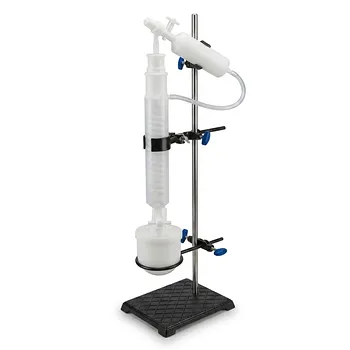
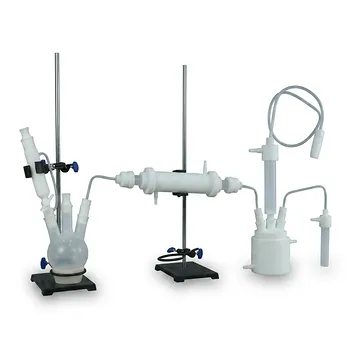
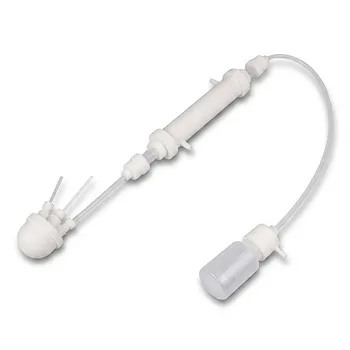
- PTFE Acid Steam Cleaning System HF Resistant Trace Analysis Beaker Digestion Tank Customizable
People Also Ask
- What are the benefits of using a PTFE-lined vessel for carbon-sulfur cathode treatment? Maximize Purity & Performance
- Why are PTFE-lined pressure digestion vessels required for the preparation of Ag/CeO2 catalysts? Purity & Performance
- What safety features are typically incorporated into high-pressure PTFE digestion vessel designs? Ensure Lab Safety
- What is the function of high-pressure PTFE digestion vessels in mineral analysis? Optimize Sample Mineralization
- What is the function of PTFE lined high-pressure vessels in g-C3N4 synthesis? Achieve High-Purity Material Growth