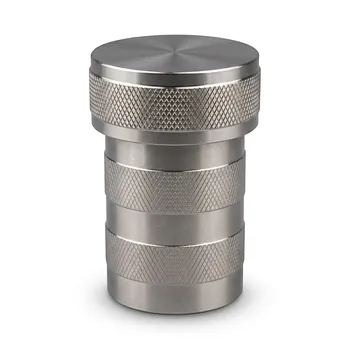
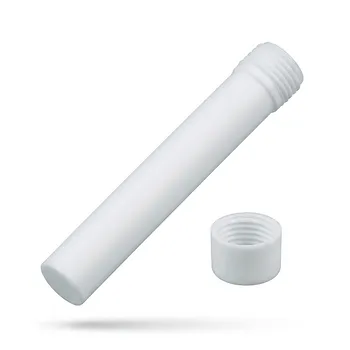
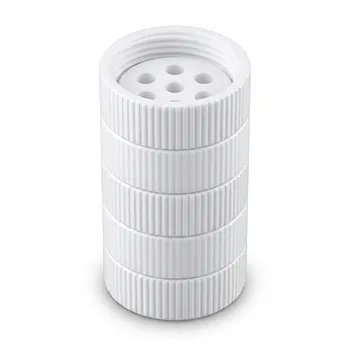
The PTFE-lined autoclave is indispensable because it creates a sterile, high-pressure environment that prevents metallic contamination while enabling the precise crystallization of Bi2WO6. By isolating the reaction from the stainless steel walls, the PTFE (polytetrafluoroethylene) liner ensures that the precursors react completely under high-temperature conditions. This containment is critical for achieving the specific nanosheet morphology and chemical purity necessary for advanced material applications.
A PTFE-lined hydrothermal autoclave combines the chemical resistance of fluoropolymers with the structural strength of steel to facilitate high-pressure crystal growth. It is the primary tool for synthesizing Bi2WO6 nanosheets because it prevents contamination and provides the stable thermal field required for uniform morphology.
Protecting Chemical Integrity and Purity
Exceptional Chemical Inertness
The primary role of the PTFE liner is to act as a chemically inert barrier between the reaction solution and the metal autoclave body. In the synthesis of Bi2WO6, the precursors and solvents can be corrosive, especially when heated to 120°C or higher. PTFE remains stable in the presence of strong acids, bases, and oxidizing agents, ensuring the liner itself does not react with the chemistry inside.
Prevention of Metallic Contamination
Without the liner, the reaction solution would come into direct contact with the stainless steel walls of the autoclave. This contact often leads to the leaching of iron, chromium, or nickel ions into the solution, which would poison the Bi2WO6 crystal lattice. By using PTFE, researchers ensure the resulting nanosheets maintain a high degree of chemical purity.
Facilitating the Hydrothermal Environment
Generating Autogenous Pressure
The hydrothermal method relies on heating a solution within a sealed vessel to temperatures above its boiling point. As the liquid expands, it generates autogenous pressure, which significantly increases the solubility of the precursors. This high-pressure environment is essential for the complete reaction of bismuth and tungsten precursors into the desired Bi2WO6 phase.
Kinetic Control of Crystal Growth
The sealed, pressurized environment within the PTFE liner lowers the reaction activation energy. This allows for the precise control of nucleation and growth rates, which are fundamental to forming nanosheets rather than bulk particles. The stable thermal field created inside the autoclave promotes uniform crystallization throughout the entire volume of the solution.
Achieving Specific Nanosheet Morphology
Promoting Anisotropic Growth
Bi2WO6 nanosheets require specific conditions to grow into two-dimensional structures rather than three-dimensional crystals. The constant pressure and temperature provided by the autoclave facilitate anisotropic growth, where crystals grow faster along certain crystallographic axes. This results in the high-aspect-ratio "sheet" morphology that is vital for catalytic performance.
Ensuring System Homogeneity
The PTFE liner provides a clean and smooth reaction interface that minimizes irregular nucleation on the container walls. This homogeneity ensures that the Bi2WO6 nanosheets develop a consistent thickness and size distribution. A controlled environment is the only way to achieve the repeatable nanostructural characteristics required for research and industrial use.
Understanding the Trade-offs
Temperature Limitations
While PTFE is exceptionally inert, it has a clear thermal ceiling, typically around 250°C. For most Bi2WO6 syntheses performed at 120°C to 180°C, this is not an issue, but exceeding these limits can cause the liner to soften or deform. If a reaction requires temperatures above 250°C, alternative liners like PPL (polyphenylene polymers) or gold-lined vessels must be considered.
Structural Dependency
A PTFE liner has no structural strength on its own and will fail under the internal pressures generated during heating. It must always be used in conjunction with a stainless steel outer shell, which provides the mechanical support to contain the high-pressure environment safely. Users must ensure the steel shell is properly maintained to prevent catastrophic failure of the entire system.
Making the Right Choice for Your Goal
How to Apply This to Your Project
When selecting and using a PTFE-lined autoclave for bismuth-based nanomaterials, consider your specific experimental targets:
- If your primary focus is maximum chemical purity: Ensure the PTFE liner is thoroughly cleaned with dilute nitric acid between runs to remove any residual ions from previous experiments.
- If your primary focus is morphology control: Strictly monitor the "fill degree" (the volume of liquid relative to the liner capacity) to ensure consistent autogenous pressure across different batches.
- If your primary focus is safety and longevity: Never exceed the 200°C–220°C mark for extended periods, as this preserves the seal integrity and prevents the PTFE from "creeping" or deforming.
Choosing a PTFE-lined autoclave is the standard for Bi2WO6 synthesis because it effectively balances chemical protection with the physical conditions required for precision nano-engineering.
Summary Table:
| Feature | Benefit for Bi2WO6 Synthesis |
|---|---|
| Chemical Inertness | Prevents metallic leaching (Fe, Cr, Ni) and ensures high chemical purity. |
| Autogenous Pressure | Enhances precursor solubility and facilitates complete chemical reactions. |
| Kinetic Control | Lowers activation energy to promote 2D nanosheet growth over bulk particles. |
| Surface Homogeneity | Minimizes irregular nucleation for consistent thickness and size distribution. |
| Thermal Limit | Safely supports standard synthesis temperatures (120°C–180°C) up to 250°C. |
Elevate Your Material Synthesis with KINTEK Precision
Achieving the perfect Bi2WO6 nanosheet morphology requires equipment that refuses to compromise on purity. KINTEK specializes in high-performance fluoropolymer manufacturing, providing researchers with the ultimate defense against metallic contamination.
From everyday basic labware like beakers, crucibles, and digestion tubes to advanced hydrothermal synthesis liners and custom-machined reaction apparatus, KINTEK delivers end-to-end solutions tailored to your specific pressure and temperature requirements. Our expertise extends across:
- Sample Prep & Filtration: Separatory funnels, filters, and high-purity tweezers.
- Fluid Transfer: Precision-engineered PTFE tubing, fittings, and valves.
- Custom Fabrication: Bespoke CNC-machined parts and non-standard laboratory setups designed for extreme chemical resistance.
- General Consumables: High-durability stirring bars, O-rings, and specialized gaskets.
Don't let impurities compromise your results. Partner with KINTEK for absolutely everything from high-volume orders to complex, one-off specialized components.
Ready to optimize your lab's performance? Contact our experts today to discuss your custom project and discover the KINTEK advantage.
References
- Wenxing Chen, Huilin Hou. Engineering g-C3N4/Bi2WO6 Composite Photocatalyst for Enhanced Photocatalytic CO2 Reduction. DOI: 10.3390/coatings15010032
This article is also based on technical information from Kintek Knowledge Base .
Related Products
- PTFE Lined High Pressure Digestion Vessel 50ml High Temperature Hydrothermal Synthesis Tank
- High Temperature Corrosion Resistant Hydrothermal Synthesis Reactor with TFM Inner Liner and Straight Cylinder Design
- Custom TFM Reaction Vessel with Stainless Steel Jacket and PTFE Inner Cup for High Corrosion Resistance
- High Pressure Custom TFM Reactor Stainless Steel Outer Vessel PTFE Inner Cup for Corrosive Synthesis
- PTFE Acid Steam Cleaning System HF Resistant Trace Analysis Beaker Digestion Tank Customizable
People Also Ask
- What are the benefits of using a PTFE-lined vessel for carbon-sulfur cathode treatment? Maximize Purity & Performance
- Why are PTFE-lined pressure digestion vessels required for the preparation of Ag/CeO2 catalysts? Purity & Performance
- What safety features are typically incorporated into high-pressure PTFE digestion vessel designs? Ensure Lab Safety
- What is the function of high-pressure PTFE digestion vessels in mineral analysis? Optimize Sample Mineralization
- What is the function of PTFE lined high-pressure vessels in g-C3N4 synthesis? Achieve High-Purity Material Growth