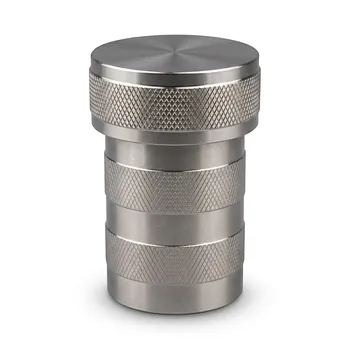
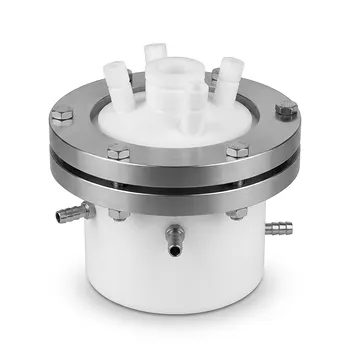
The necessity of a PTFE-lined autoclave stems from its ability to create a chemically inert, pressurized environment that allows manganese oxides to crystallize directly onto carbon nanotubes without contamination. This specialized vessel enables the reaction to occur at temperatures like 140°C and pressures far exceeding atmospheric levels, which are required for the formation of highly crystalline MnO2 nanosheets.
Core Takeaway: A PTFE (Teflon) liner serves as a critical barrier that prevents corrosive precursors from leaching metallic impurities from the autoclave's steel body while providing the high-pressure conditions necessary for the uniform growth of MnOx on CNT surfaces.
Protecting Chemical Purity and Structural Integrity
The synthesis of MnOx/CNT nanocomposites involves highly reactive precursors that would otherwise damage standard laboratory equipment.
Resistance to Corrosive Oxidizers
The synthesis process typically utilizes manganese salts and strong oxidizing agents such as potassium permanganate. At operating temperatures around 140°C, these chemicals are highly corrosive to stainless steel, the material used for the autoclave's outer shell.
Polytetrafluoroethylene (PTFE) is exceptionally inert and remains stable in the presence of these aggressive reagents. By isolating the solution, the liner ensures that the reaction remains focused on the MnOx/CNT interaction rather than reacting with the vessel itself.
Prevention of Metallic Contamination
If the reaction solution were to come into direct contact with the stainless steel body, metal ions (such as iron, nickel, or chromium) would leach into the sample. These impurities would disrupt the electronic properties of the CNTs and the catalytic phase of the manganese oxide.
The PTFE liner acts as a definitive barrier, ensuring the high purity required for electrochemical or catalytic applications. This isolation is what allows for the synthesis of a "clean" nanocomposite with predictable performance.
Facilitating Crystalline Development
Hydrothermal synthesis relies on thermodynamics that cannot be achieved in an open-air environment.
Leveraging High-Pressure Environments
The sealed nature of the autoclave generates significant internal pressure as the liquid is heated above its boiling point. This pressure increases the solubility of the precursors, allowing them to undergo heterogeneous reactions that would be impossible at 100°C.
This environment is essential for the conformal deposition of MnO2. The pressure forces the manganese species to nucleate and grow directly on the CNT scaffold, creating a robust interface between the two materials.
Promoting Directional Crystallization
The controlled heat and pressure inside the liner facilitate the development of specific crystalline phases, such as alpha-MnO2 nanowires or nanosheets. This "directional crystallization" ensures the resulting nanocomposite has the high surface area and structural stability needed for advanced technology.
Without the stability provided by the PTFE liner, the reaction parameters could fluctuate, leading to poorly crystalline or amorphous materials. The liner provides the steady-state environment required for the phase transition of precursors into organized nanostructures.
Understanding the Trade-offs and Limits
While PTFE is essential, it is not a universal solution for all synthesis conditions and requires careful handling.
Temperature and Thermal Expansion Constraints
PTFE liners have a defined thermal ceiling, typically around 220°C to 250°C, above which the material begins to soften or release toxic fumes. Users must strictly adhere to the 140°C–200°C range common for MnOx synthesis to avoid liner deformation.
Furthermore, PTFE has a different coefficient of thermal expansion than the steel shell. Heating or cooling the autoclave too rapidly can cause the liner to crack or lose its seal, potentially ruining the synthesis and damaging the autoclave body.
Maintenance and Memory Effects
PTFE is porous at a microscopic level, meaning it can "absorb" trace amounts of chemicals over multiple high-pressure cycles. If not cleaned rigorously between uses, cross-contamination can occur between different batches of nanocomposites.
Regular inspection is necessary to check for "pitting" or discoloration. Once a liner shows signs of significant wear or permanent staining from manganese oxides, it must be replaced to maintain the integrity of the reaction environment.
How to Apply This to Your Project
Choosing and using your autoclave correctly is vital for achieving high-quality MnOx/CNT nanocomposites.
- If your primary focus is electrochemical purity: Ensure the PTFE liner is pristine and free of scratches, as even minor surface damage can trap ions from previous experiments.
- If your primary focus is crystalline morphology: Monitor the "fill degree" of your liner; generally, filling the liner to 60-80% of its capacity provides the optimal vapor pressure for MnO2 growth.
- If your primary focus is equipment longevity: Always allow the autoclave to cool naturally to room temperature before opening to prevent the PTFE liner from warping due to thermal shock.
The PTFE-lined autoclave is the fundamental tool that bridges the gap between raw chemical precursors and a high-performance, uncontaminated MnOx/CNT nanocomposite.
Summary Table:
| Feature of PTFE Liner | Benefit for MnOx/CNT Synthesis |
|---|---|
| Chemical Inertness | Prevents manganese salts/oxidizers from leaching metallic impurities from steel. |
| High-Pressure Seal | Enables hydrothermal growth of crystalline MnO2 nanosheets at 140°C+. |
| Non-Stick Surface | Facilitates easier recovery of synthesized nanocomposites and prevents residue. |
| Phase Control | Provides the steady-state environment required for directional crystallization. |
Elevate Your Synthesis with KINTEK’s High-Performance Fluoropolymers
Achieve uncompromising purity in your nanomaterial research with KINTEK. We specialize in high-performance fluoropolymer materials, offering everything from standard labware to bespoke reaction vessels. Whether you are performing trace analysis or complex hydrothermal synthesis, our products ensure zero contamination and maximum chemical resistance.
Our extensive range includes:
- Everyday Labware: Beakers, measuring cylinders, crucibles, dishes, reagent/wash bottles, and centrifuge/digestion tubes.
- Fluid & Sample Prep: Tubing, fittings, valves, separatory funnels, filters, pipettes, and high-purity cleaning tanks.
- Advanced Reaction Apparatus: PTFE/PFA hydrothermal synthesis liners, microwave digestion vessels, microchannel reactors, and custom electrochemical cells.
- Consumables: Stirring bars, O-rings, gaskets, seal tapes, and septa.
Backed by end-to-end custom CNC fabrication, KINTEK is equipped to deliver everything from complex non-standard machined parts to high-volume orders. Contact our experts today to source the precision-crafted PTFE and PFA tools your laboratory demands.
References
- Jiaming Shi, Chunmei Zhou. Sustainable Synthesis of Adipic Acid via MnOx-Catalyzed Electrooxidation of Cyclohexanol in Neutral Electrolyte. DOI: 10.3390/molecules30142937
This article is also based on technical information from Kintek Knowledge Base .
Related Products
- PTFE Lined High Pressure Digestion Vessel 50ml High Temperature Hydrothermal Synthesis Tank
- High Temperature Corrosion Resistant Hydrothermal Synthesis Reactor with TFM Inner Liner and Straight Cylinder Design
- Custom TFM Reaction Vessel with Stainless Steel Jacket and PTFE Inner Cup for High Corrosion Resistance
- High Pressure Custom TFM Reactor Stainless Steel Outer Vessel PTFE Inner Cup for Corrosive Synthesis
- PTFE Acid Steam Cleaning System HF Resistant Trace Analysis Beaker Digestion Tank Customizable
People Also Ask
- What are the benefits of using a PTFE-lined vessel for carbon-sulfur cathode treatment? Maximize Purity & Performance
- Why are PTFE-lined pressure digestion vessels required for the preparation of Ag/CeO2 catalysts? Purity & Performance
- What safety features are typically incorporated into high-pressure PTFE digestion vessel designs? Ensure Lab Safety
- What is the function of PTFE lined high-pressure vessels in g-C3N4 synthesis? Achieve High-Purity Material Growth
- Role of High-Pressure Digestion Tanks in Perovskite Synthesis: Achieve Superior Stability and Latent Heat