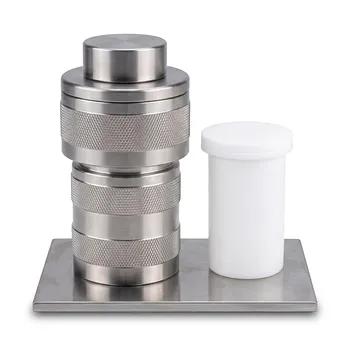
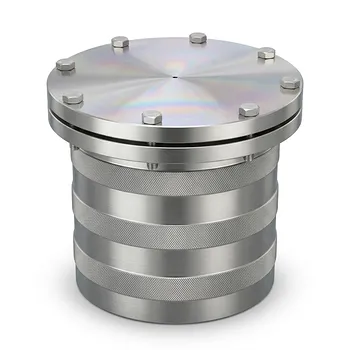
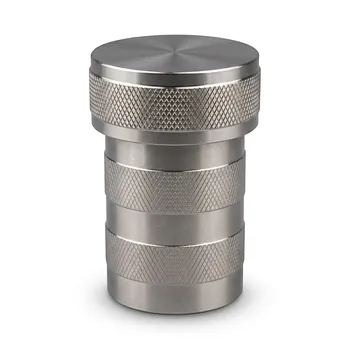
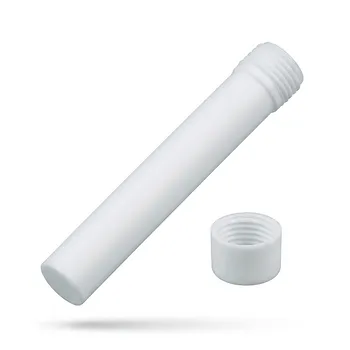
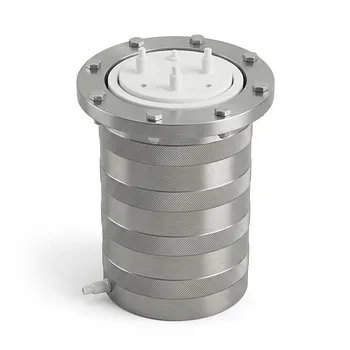
The use of a PTFE-lined hydrothermal autoclave is critical for creating the specific architecture of $Ni_3S_2@MoO_3@Co_3O_4/NF$. It provides a controlled, pressurized environment at 90°C that ensures the uniform nucleation of cobalt-based precursors onto nickel sulfide nanorods. This process is essential for developing the high-surface-area "cactus-like" morphology required for the final oxide transformation.
Core Takeaway: The autoclave functions as a pressurized reactor that drives the secondary growth of nanostructures, while the PTFE liner serves as a chemically inert barrier that protects sample purity and vessel integrity from corrosive precursors.
Controlled Growth Environment
The secondary growth phase requires precise physical conditions to achieve the desired material properties.
Facilitating Uniform Nucleation
The hydrothermal autoclave maintains a stable temperature and pressure environment, which is necessary for the consistent deposition of cobalt-based precursors. This pressurized, confined space forces the precursors to interact uniformly with the surface of the existing $Ni_3S_2$ nanorods. Without this pressure, the growth would likely be uneven or fail to adhere to the substrate.
Developing Cactus-like Morphology
The specific "cactus-like" structure of the catalyst is a direct result of the hydrothermal conditions. This unique framework provides a high specific surface area, which is vital for the efficiency of the subsequent oxide transformation. This complex geometry is difficult to achieve using open-air synthesis methods.
The Role of the PTFE Liner
While the stainless steel autoclave provides the strength to withstand pressure, the Polytetrafluoroethylene (PTFE) liner is essential for chemical management.
Prevention of Metal Contamination
The PTFE liner is highly characterized by its chemical inertness, meaning it does not react with the precursor solutions. It acts as a physical barrier that prevents the reaction solution from contacting the stainless steel walls of the autoclave. This prevents metallic impurities, such as iron or chromium from the steel, from leaching into the system and compromising the purity of the $Ni_3S_2@MoO_3@Co_3O_4$ nanostructures.
Resistance to Corrosive Reagents
Hydrothermal synthesis often involves sulfur sources and metal precursors that can be highly corrosive to steel at elevated temperatures. PTFE is resistant to chemical attack from sulfur-based precursors and other corrosive reagents like ammonium fluoride. This resistance ensures the structural stability of the catalyst as it grows in-situ on the nickel foam substrate.
Understanding the Trade-offs
While the PTFE-lined autoclave is a standard tool, it requires careful operational management to be effective.
Temperature and Pressure Limits
PTFE has a thermal limit, typically around 200°C to 240°C, after which it may begin to deform or release toxic fumes. While the 90°C required for this specific synthesis is well within safe bounds, higher-temperature reactions (like those for $MoS_2$ at 200°C) push the liner to its physical limits.
Sealing and Autogenous Pressure
The success of the reaction depends on the "autogenous pressure" generated by heating the liquid in a sealed volume. If the PTFE liner is not seated correctly or if the autoclave is overfilled (usually beyond 80% capacity), the seal may fail. This would lead to a loss of pressure, resulting in a failure of the nanorods to grow into the required cactus-like morphology.
Applying This to Your Synthesis Project
To ensure the successful secondary growth of complex nanostructures, consider the following technical priorities.
- If your primary focus is Morphology Control: Ensure the autoclave is kept at a constant temperature (e.g., 90°C) for the entire duration to allow for uniform self-assembly and the creation of high-surface-area frameworks.
- If your primary focus is Material Purity: Always inspect the PTFE liner for cracks or discoloration before use to prevent the introduction of metallic impurities from the stainless steel shell.
- If your primary focus is Vessel Longevity: Thoroughly clean the PTFE liner after each use to remove residual sulfur or metal precursors that could degrade the material over time.
Selecting the right vessel environment is as vital to the catalyst's performance as the chemical precursors themselves.
Summary Table:
| Feature | Role in Synthesis | Key Benefit |
|---|---|---|
| Controlled Pressure | Facilitates uniform nucleation on nanorods | Ensures stable growth of cactus-like morphology |
| PTFE Inertness | Prevents metallic leaching from steel walls | Maintains high sample purity and catalyst integrity |
| Corrosion Resistance | Withstands sulfur and metal precursors | Protects the vessel from aggressive chemical attack |
| Thermal Stability | Maintains a consistent 90°C environment | Enables high-surface-area framework development |
Elevate Your Synthesis Precision with KINTEK
Achieving the perfect "cactus-like" morphology in advanced catalysts requires equipment that guarantees both chemical purity and structural integrity. KINTEK specializes in high-performance fluoropolymer solutions tailored for the most demanding laboratory environments.
From everyday essentials like PTFE beakers, crucibles, and reagent bottles to advanced apparatus such as hydrothermal synthesis liners, microwave digestion vessels, and custom electrochemical cells, we manufacture virtually every laboratory supply imaginable from high-grade PTFE and PFA.
Whether you require complex non-standard machined parts via our end-to-end custom CNC fabrication or high-volume orders of standard consumables (tubing, fittings, valves, and filters), KINTEK provides the absolute focus on material performance your research deserves.
Ready to optimize your lab setup? Contact us today to discuss your custom requirements!
References
- Jiabang Liang, Liangjuan Gao. Ni3S2@MoO3@Co3O4@AMO/NF core–shell heterostructure for high performance alkaline overall water splitting. DOI: 10.1186/s11671-025-04283-x
This article is also based on technical information from Kintek Knowledge Base .
Related Products
- PTFE Lined High Pressure Digestion Vessel 50ml High Temperature Hydrothermal Synthesis Tank
- Custom TFM Reaction Vessel with Stainless Steel Jacket and PTFE Inner Cup for High Corrosion Resistance
- High Temperature Corrosion Resistant Hydrothermal Synthesis Reactor with TFM Inner Liner and Straight Cylinder Design
- PTFE Acid Steam Cleaning System HF Resistant Trace Analysis Beaker Digestion Tank Customizable
- High Purity TFM Microwave Digestion Vessels PTFE Acid Evaporation Liners Domestic GT-400 Equivalent Laboratory Reaction Containers
People Also Ask
- What are the benefits of using a PTFE-lined vessel for carbon-sulfur cathode treatment? Maximize Purity & Performance
- Why are PTFE-lined pressure digestion vessels required for the preparation of Ag/CeO2 catalysts? Purity & Performance
- What is the function of high-pressure PTFE digestion vessels in mineral analysis? Optimize Sample Mineralization
- What safety features are typically incorporated into high-pressure PTFE digestion vessel designs? Ensure Lab Safety
- What is the function of PTFE lined high-pressure vessels in g-C3N4 synthesis? Achieve High-Purity Material Growth