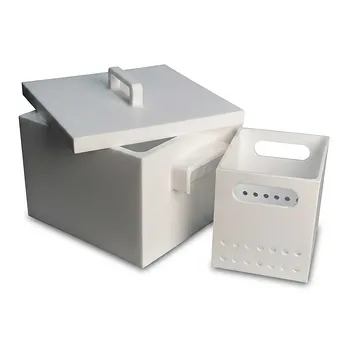
The synthesis of NiMoSe hybrid precursors requires a PTFE-lined high-pressure reaction vessel to create a controlled solvothermal environment while ensuring chemical purity. This specific setup allows the reaction to reach temperatures (typically 180 °C) and autogenous pressures that drive the nucleation and growth of nickel, molybdenum, and selenium at specific lattice sites to form desired morphologies.
A PTFE-lined autoclave is essential because it facilitates high-pressure reaction kinetics through a sealed thermal environment while providing a chemically inert barrier that prevents contamination and corrosion.
Facilitating High-Pressure Solvothermal Kinetics
Driving Nucleation and Lattice Growth
The solvothermal process relies on a sealed environment to reach temperatures exceeding the boiling point of the solvents, such as 1,4-butanediol and isopropyl alcohol.
At a constant temperature of 180 °C, the vessel generates autogenous pressure, which provides the necessary energy for nickel, molybdenum, and selenium components to nucleate successfully.
This pressure ensures that the atoms occupy specific lattice sites, allowing the hybrid precursors to grow into precise intermediates with the intended structural morphologies.
Managing Solvent Behavior
High-performance fluoropolymers like PTFE allow the use of mixed solvent systems that would otherwise evaporate at atmospheric pressure.
The pressure inside the vessel promotes enhanced reaction kinetics, enabling the chemical precursors to interact more efficiently than they would in an open-ended reflux system.
Ensuring Chemical Purity and Structural Integrity
The Role of Chemical Inertness
PTFE (Polytetrafluoroethylene) is utilized primarily for its exceptional chemical inertness, which serves as a critical barrier between the precursors and the reactor walls.
Without this liner, high-concentration precursor solutions—often containing acidic or oxidative metal salts—would corrode the outer steel shell of the autoclave.
This inertness prevents trace metal impurities (such as iron or chromium from stainless steel) from leaching into the solution and altering the precise stoichiometric ratio of the NiMoSe catalyst.
Preventing Interference and Side Reactions
The presence of a PTFE liner eliminates potential interference factors where the metal surfaces of the reactor might catalyze unwanted side reactions.
By maintaining a pure environment, the 3D-structured catalysts can achieve saturated growth, which is vital for maximizing the active surface area of the final hybrid material.
This isolation ensures that the resulting productivity and selectivity are purely a function of the catalyst’s performance rather than external contamination.
Understanding the Trade-offs and Limitations
Temperature Constraints
While PTFE is highly stable, it has a thermal limit (typically around 250 °C), beyond which it may deform or release toxic vapors.
For reactions requiring temperatures higher than this, alternative liners like PFA (Perfluoroalkoxy) or specialized metallic alloys may be necessary, though they often lack the same level of universal inertness.
Thermal Lag and Cooling
The thick walls of a PTFE liner can introduce thermal lag, meaning the internal reaction temperature may take longer to reach equilibrium than the external furnace sensor indicates.
Additionally, the sealed nature of these vessels requires careful cooling protocols to prevent pressure shocks or morphological damage to the delicate NiMoSe precursors during depressurization.
How to Apply This to Your Synthesis Goals
Strategic Recommendations
- If your primary focus is precise morphology: Ensure the reaction temperature is held constant at 180 °C to maintain the specific autogenous pressure required for lattice site nucleation.
- If your primary focus is high chemical purity: Inspect the PTFE liner for any signs of pitting or staining before use to prevent cross-contamination from previous experimental batches.
- If your primary focus is maximizing active surface area: Use a high-purity PTFE or PFA liner to ensure a "pure environment" that supports the saturated growth of three-dimensional structures.
Choosing the right reaction environment ensures that your NiMoSe hybrid precursors achieve the specific structural and chemical properties necessary for high-performance applications.
Summary Table:
| Feature | Primary Benefit | Role in NiMoSe Synthesis |
|---|---|---|
| Chemical Inertness | Prevents contamination | Protects stoichiometry by avoiding metal leaching from steel walls. |
| Pressure Tolerance | Autogenous pressure | Drives nucleation and growth at specific lattice sites for 3D structures. |
| Thermal Stability | Stable up to 250 °C | Facilitates the 180 °C solvothermal environment required for precursors. |
| Sealed Environment | Prevents evaporation | Enables the use of mixed solvent systems (e.g., 1,4-butanediol) under heat. |
Optimize Your Advanced Material Synthesis with KINTEK
Elevate the precision and purity of your laboratory research with KINTEK. From everyday basic labware like beakers, crucibles, and reagent bottles to high-purity trace analysis instruments and cleaning tanks, we provide the essential tools for high-performance chemistry.
Our expertise extends from comprehensive fluid transfer components (tubing, fittings, valves) and sample prep tools (filters, pipettes, tweezers) to advanced reaction apparatus. Whether you need standard hydrothermal synthesis liners, microwave digestion vessels, or custom-machined PTFE and PFA components via our end-to-end CNC fabrication, KINTEK delivers everything from bespoke setups to high-volume orders with an absolute focus on fluoropolymer performance.
Ready to ensure the structural integrity of your catalysts? Contact us today to discover how our specialized laboratory supplies can support your next breakthrough.
References
- Abrar Qadir, Jin‐Gang Liu. An In-Plane Heterostructure Ni3N/MoSe2 Loaded on Nitrogen-Doped Reduced Graphene Oxide Enhances the Catalyst Performance for Hydrogen Oxidation Reaction. DOI: 10.3390/molecules30030488
This article is also based on technical information from Kintek Knowledge Base .
Related Products
- PTFE Lined High Pressure Digestion Vessel 50ml High Temperature Hydrothermal Synthesis Tank
- Custom TFM Reaction Vessel with Stainless Steel Jacket and PTFE Inner Cup for High Corrosion Resistance
- High Purity PTFE Microwave Digestion Vessel Replacement Liner for Acid Sample Preparation and Trace Analysis
- High Purity TFM Microwave Digestion Vessels PTFE Acid Evaporation Liners Domestic GT-400 Equivalent Laboratory Reaction Containers
- High Pressure Custom TFM Reactor Stainless Steel Outer Vessel PTFE Inner Cup for Corrosive Synthesis
People Also Ask
- What are the benefits of using a PTFE-lined vessel for carbon-sulfur cathode treatment? Maximize Purity & Performance
- Why are PTFE-lined pressure digestion vessels required for the preparation of Ag/CeO2 catalysts? Purity & Performance
- What is the function of high-pressure PTFE digestion vessels in mineral analysis? Optimize Sample Mineralization
- What safety features are typically incorporated into high-pressure PTFE digestion vessel designs? Ensure Lab Safety
- What is the function of PTFE lined high-pressure vessels in g-C3N4 synthesis? Achieve High-Purity Material Growth