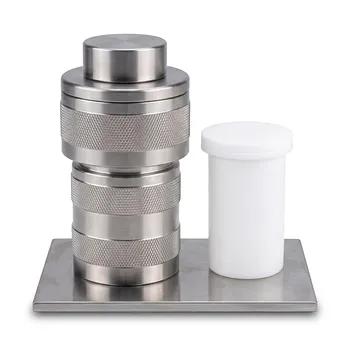
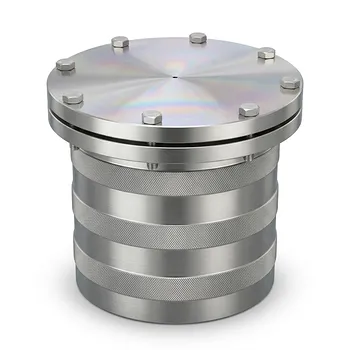
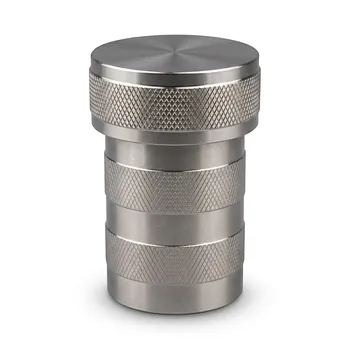
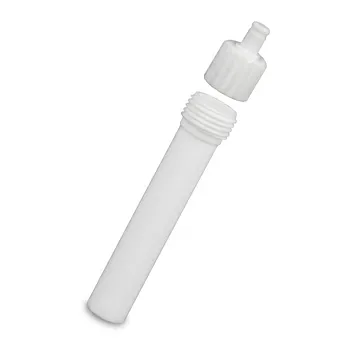
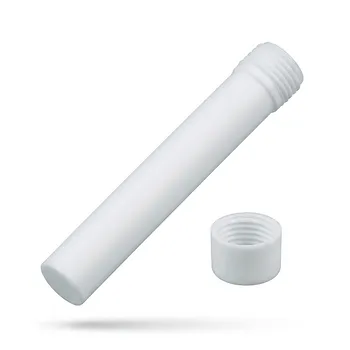
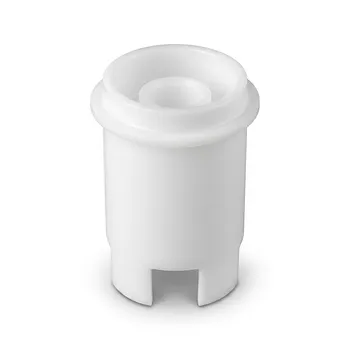
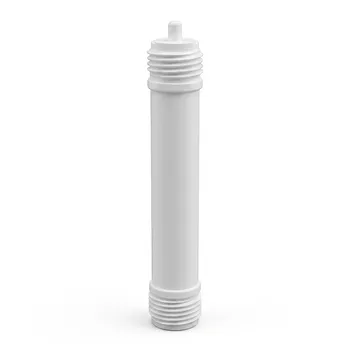
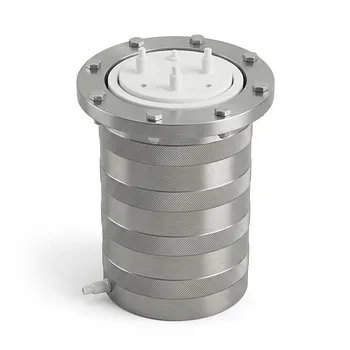
The requirement for a PTFE liner in bismuth telluride synthesis is driven by the need for chemical isolation and sample purity. In high-pressure hydrothermal environments, PTFE acts as an inert barrier that prevents corrosive precursors from attacking the autoclave's steel walls. This isolation ensures that no metallic contaminants leach into the reaction, preserving the specific phase purity and nanostructure of the bismuth telluride crystals.
A PTFE liner serves as a critical protective barrier that prevents corrosion of the autoclave's metal shell while ensuring the reaction environment remains free of impurities. Its chemical inertness and temperature resistance are essential for maintaining the integrity of both the equipment and the resulting nanostructures.
Maintaining High Chemical and Phase Purity
Prevention of Metal Ion Contamination
The primary function of a PTFE liner is to isolate the reaction solution from the stainless steel walls of the autoclave. Without this barrier, metal ions like iron, nickel, or chromium could leach into the solution and integrate into the bismuth telluride lattice.
This isolation is vital because even trace amounts of foreign metal ions can degrade the thermoelectric properties and phase purity of the nanostructures. By providing a chemically inert surface, PTFE ensures the resulting nanocrystals meet strict quality standards.
Ensuring Redox Reaction Integrity
The synthesis of bismuth telluride often involves strongly alkaline or reducing environments to facilitate the formation of nanostructures. PTFE does not react with these precursors, allowing the intended redox reactions to proceed without interference.
This inertness prevents the vessel itself from participating in the chemistry. As a result, researchers can achieve a high degree of reproducibility in the chemical composition of their samples.
Protecting the Structural Integrity of the Autoclave
Resistance to Corrosive Precursors
High-pressure synthesis frequently utilizes harsh chemicals, such as strong bases or acids, that would rapidly erode a metal vessel. PTFE is uniquely resistant to these corrosive agents, even at the elevated temperatures required for hydrothermal processing.
By shielding the metal shell, the liner prevents pitting and structural thinning of the autoclave. This protection is a critical safety requirement for vessels operating under significant autogenous pressure.
Stability at High Temperatures
Standard PTFE liners are designed to withstand temperatures up to 200°C during hydrothermal aging. This range is sufficient for the growth of diverse bismuth telluride morphologies, such as nanowires or nanoplates.
At these temperatures, the liner maintains its mechanical stability, ensuring that the seal remains tight. This prevents the leakage of hazardous precursors and maintains the pressure necessary for the reaction.
Optimizing the Synthesis Environment
Preventing Unintended Catalysis
Metal surfaces, such as those found on autoclave walls, can sometimes act as unintended catalysts for side reactions. PTFE is catalytically neutral, ensuring that the reaction kinetics are governed solely by the added reagents.
This neutrality allows for more accurate measurement of yield and selectivity. It ensures that the observed performance of a catalyst or precursor is not skewed by the container material.
Managing Reaction Volume and Nucleation
PTFE liners can be used to precisely adjust the effective working volume of an autoclave. This allows researchers to optimize the gas-liquid phase contact, which is often a critical factor in hydrothermal synthesis.
Furthermore, the smooth internal surface of a PTFE liner discourages heterogeneous nucleation on the vessel walls. This encourages the formation of uniform, monodisperse nanostructures within the bulk solution.
Understanding the Trade-offs and Limitations
Temperature Limitations
While PTFE is highly resistant, it begins to soften and lose structural integrity as it approaches 250°C. Exceeding these temperature limits can lead to liner deformation, compromising the seal and potentially damaging the autoclave.
Thermal Expansion and Sealing Issues
PTFE has a much higher coefficient of thermal expansion than the stainless steel that surrounds it. This means the liner expands significantly more than the vessel when heated, which can lead to "creeping" or sealing failures if the autoclave is not properly designed to accommodate this expansion.
Porosity and Absorption
Under extreme pressure, PTFE can become slightly porous, potentially absorbing small amounts of precursors. Over multiple uses, this can lead to cross-contamination between different batches if the liner is not meticulously cleaned or replaced.
How to Apply This to Your Synthesis
When preparing for the synthesis of bismuth telluride nanostructures, your choice of liner and operating parameters should reflect your specific experimental goals.
- If your primary focus is phase purity: Ensure the PTFE liner is thoroughly cleaned with acid between runs to prevent the carryover of residual metal ions or precursors.
- If your primary focus is high-temperature operation (above 200°C): Consider upgrading to a PFA (perfluoroalkoxy) liner or a gold-plated vessel, as standard PTFE may deform and leak.
- If your primary focus is morphology control: Use the liner to adjust the filling ratio of the autoclave, as the pressure and head-space volume directly influence the growth rate of nanostructures.
The use of a PTFE liner is a fundamental requirement that transforms a simple pressure vessel into a precise chemical reactor capable of producing high-performance nanomaterials.
Summary Table:
| Key Requirement | Role in Synthesis | Advantage of PTFE |
|---|---|---|
| Chemical Isolation | Prevents metal leaching (Fe, Ni, Cr) | Chemically inert barrier |
| Corrosion Protection | Shields steel from harsh acids/bases | Exceptional chemical resistance |
| Purity Control | Prevents unintended catalysis | Catalytically neutral surface |
| Morphology Control | Encourages uniform nucleation | Non-stick, smooth internal surface |
| Thermal Stability | Maintains pressure seal up to 200°C | High-performance fluoropolymer |
Elevate Your Research with KINTEK’s Precision Fluoropolymer Engineering
Achieving ultra-pure bismuth telluride nanostructures requires absolute chemical isolation. KINTEK specializes in high-performance laboratory supplies crafted exclusively from PTFE and PFA to ensure your reactions remain uncontaminated and your equipment stays protected.
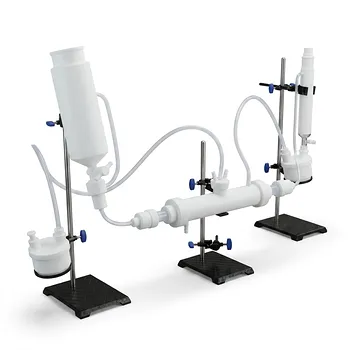
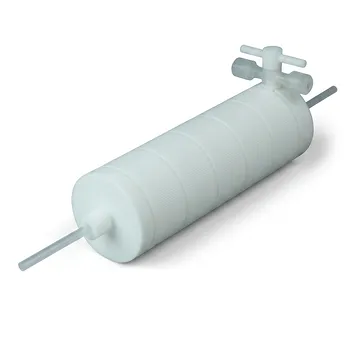
From everyday essentials like beakers, crucibles, and digestion tubes to advanced hydrothermal synthesis liners, microwave digestion vessels, and custom electrochemical cells, we provide the tools necessary for rigorous high-pressure synthesis. Our capabilities extend to comprehensive fluid transfer components (tubing, valves), sample prep tools (filters, pipettes), and bespoke end-to-end custom CNC fabrication for complex non-standard machined parts.
Ensure the integrity of your next experiment—contact KINTEK today for custom fluoropolymer solutions!
References
- Iman Mohammed, T. Khalifa. Investigation of Thermoelectric Properties of Nanostructured Bismuth Telluride for Energy Harvesting Application. DOI: 10.62341/izti2445
This article is also based on technical information from Kintek Knowledge Base .
Related Products
- PTFE Lined High Pressure Digestion Vessel 50ml High Temperature Hydrothermal Synthesis Tank
- Custom TFM Reaction Vessel with Stainless Steel Jacket and PTFE Inner Cup for High Corrosion Resistance
- High Temperature Corrosion Resistant Hydrothermal Synthesis Reactor with TFM Inner Liner and Straight Cylinder Design
- High Purity PTFE Microwave Digestion Vessel Replacement Liner for Acid Sample Preparation and Trace Analysis
- High Purity TFM Microwave Digestion Vessels PTFE Acid Evaporation Liners Domestic GT-400 Equivalent Laboratory Reaction Containers
People Also Ask
- What are the benefits of using a PTFE-lined vessel for carbon-sulfur cathode treatment? Maximize Purity & Performance
- Why are PTFE-lined pressure digestion vessels required for the preparation of Ag/CeO2 catalysts? Purity & Performance
- What safety features are typically incorporated into high-pressure PTFE digestion vessel designs? Ensure Lab Safety
- What is the function of PTFE lined high-pressure vessels in g-C3N4 synthesis? Achieve High-Purity Material Growth
- Role of High-Pressure Digestion Tanks in Perovskite Synthesis: Achieve Superior Stability and Latent Heat