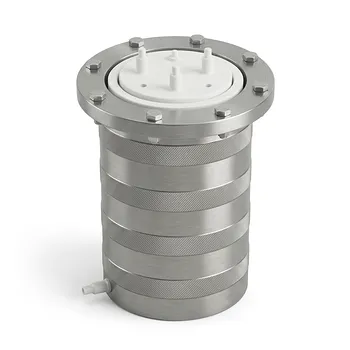
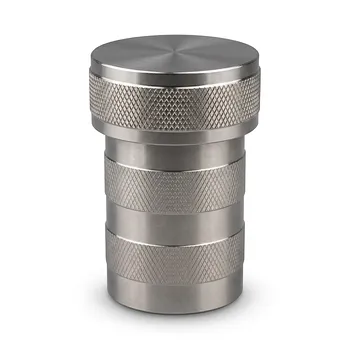
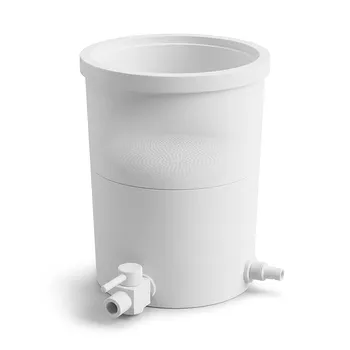
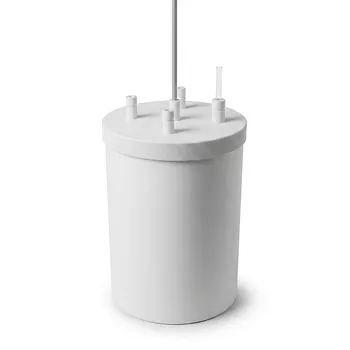
The requirement for a PTFE liner in hexachlorobenzene (HCB) dechlorination is driven by the aggressive chemical environment of the reaction. A Polytetrafluoroethylene (PTFE) liner provides a chemically inert barrier that withstands the high concentrations of strong bases, such as sodium hydroxide or potassium hydroxide, used to strip chlorine from the HCB molecule. Without this liner, the caustic reagents would rapidly corrode the stainless steel reactor shell and introduce metal impurities that compromise experimental accuracy.
A PTFE liner acts as a critical chemical shield, isolating corrosive alkaline reagents from the metal reactor body to prevent equipment failure and ensure the purity of the chemical reaction.
Protection Against Chemical Corrosion
Resistance to Strong Alkaline Environments
HCB dechlorination typically requires a high-concentration strong base to facilitate the reaction. PTFE is uniquely suited for this task because it exhibits exceptional resistance to chemical attack, even from caustic agents like sodium hydroxide (NaOH) or potassium hydroxide (KOH).
Preserving the Integrity of the Stainless Steel Shell
While stainless steel provides the structural strength to handle high pressures, it is vulnerable to pitting and stress corrosion when exposed to strong bases at elevated temperatures. The PTFE liner serves as a physical barrier, ensuring the corrosive media never makes contact with the outer metal shell.
Extending Reactor Service Life
By preventing direct contact between the reagents and the autoclave body, the liner significantly extends the operational lifespan of the equipment. This reduces maintenance costs and prevents the structural thinning of the pressure vessel that could lead to safety hazards.
Maintaining Experimental Purity and Control
Prevention of Metal Ion Leaching
Under the high-temperature and high-pressure conditions of a hydrothermal reaction, metal ions from the reactor walls can leach into the solution. The PTFE liner isolates the reaction, ensuring that elements like iron, chromium, or nickel do not contaminate the system.
Avoiding Catalytic Interference
Leached metal ions can act as unintended catalysts or inhibitors, leading to side reactions that skew the results of the HCB dechlorination. Using a high-purity liner ensures that the observed chemical changes are purely a result of the intended reagents and conditions.
Surface Inertness and Product Yield
PTFE has an extremely low surface energy, which prevents reaction products or nanoparticles from adhering to the vessel walls. This "non-stick" property facilitates easier recovery of the materials and ensures a higher product yield.
Understanding the Trade-offs and Limitations
Temperature Constraints
While PTFE is highly resistant to chemicals, it has a strict thermal ceiling, typically around 220°C. Exceeding this temperature can cause the liner to soften or deform, which may lead to a breach and subsequent damage to the stainless steel shell.
Pressure Sensitivity and Deformation
PTFE is a relatively soft plastic that can undergo "cold flow" or permanent deformation under extreme pressure. If the liner is not properly fitted or if the cooling process is too rapid, the seal may fail, allowing corrosive vapors to escape into the metal threads of the reactor.
Heat Transfer Efficiency
Because PTFE is an insulator, it does not conduct heat as efficiently as metal. This creates a thermal lag between the external heating element and the internal reaction solution, requiring longer stabilization times to reach the target temperature.
How to Apply This to Your Project
Making the Right Choice for Your Goal
- If your primary focus is HCB dechlorination efficiency: Ensure your liner is high-purity PTFE to prevent metal ions from interfering with the dechlorination kinetics.
- If your primary focus is reactor longevity: Always inspect the liner for thinning or discoloration after every alkaline run to prevent "invisible" corrosion of the outer shell.
- If your primary focus is high-temperature reactions (above 230°C): Consider switching from a PTFE liner to a PPL (Polyphenylene polymers) liner, which offers higher thermal stability while maintaining chemical resistance.
The strategic use of a PTFE liner is the most effective way to balance the structural demands of high-pressure reactors with the extreme chemical requirements of HCB dechlorination.
Summary Table:
| Key Feature | Benefit in HCB Dechlorination | Operational Impact |
|---|---|---|
| Chemical Inertness | Resists high-concentration NaOH/KOH | Prevents reactor shell corrosion |
| High Purity | Zero metal ion leaching (Fe, Cr, Ni) | Eliminates catalytic interference |
| Non-stick Surface | Low surface energy | Facilitates high product recovery/yield |
| Thermal Barrier | Reliable performance up to 220°C | Protects structural vessel integrity |
| Isolation | Physical barrier for reagents | Extends equipment service life |
Upgrade Your Lab with KINTEK’s Precision PTFE & PFA Solutions
Are you conducting aggressive chemical reactions like HCB dechlorination? KINTEK provides the high-performance fluoropolymer equipment you need to ensure safety and experimental accuracy. We specialize in a comprehensive range of laboratory supplies crafted from premium PTFE and PFA, designed to withstand the most demanding environments.
From everyday labware—such as beakers, reagent bottles, and centrifuge tubes—to specialized hydrothermal synthesis liners, microwave digestion vessels, and custom electrochemical cells, we offer it all. Our expertise extends to fluid transfer components, sample prep tools, and high-purity trace analysis instruments.
Why choose KINTEK?
- Comprehensive Range: Everything from stirring bars and O-rings to complex reaction apparatus.
- Bespoke Fabrication: End-to-end custom CNC machining for non-standard parts and bespoke setups.
- Absolute Quality: An exclusive focus on high-performance materials to prevent contamination and corrosion.
Ensure the integrity of your research and the longevity of your equipment today.
Contact KINTEK for a Quote or Custom Consultation
References
- Ye Xiao, Hai Huang. Chemical dechlorination of hexachlorobenzene with polyethylene glycol and hydroxide: Dominant effect of temperature and ionic potential. DOI: 10.1038/srep06305
This article is also based on technical information from Kintek Knowledge Base .
Related Products
- PTFE Lined High Pressure Digestion Vessel 50ml High Temperature Hydrothermal Synthesis Tank
- Custom TFM Reaction Vessel with Stainless Steel Jacket and PTFE Inner Cup for High Corrosion Resistance
- High Pressure Custom TFM Reactor Stainless Steel Outer Vessel PTFE Inner Cup for Corrosive Synthesis
- High Purity TFM Microwave Digestion Vessels PTFE Acid Evaporation Liners Domestic GT-400 Equivalent Laboratory Reaction Containers
- High Temperature Corrosion Resistant Hydrothermal Synthesis Reactor with TFM Inner Liner and Straight Cylinder Design
People Also Ask
- What are the benefits of using a PTFE-lined vessel for carbon-sulfur cathode treatment? Maximize Purity & Performance
- Why are PTFE-lined pressure digestion vessels required for the preparation of Ag/CeO2 catalysts? Purity & Performance
- What is the function of high-pressure PTFE digestion vessels in mineral analysis? Optimize Sample Mineralization
- What safety features are typically incorporated into high-pressure PTFE digestion vessel designs? Ensure Lab Safety
- What is the function of PTFE lined high-pressure vessels in g-C3N4 synthesis? Achieve High-Purity Material Growth