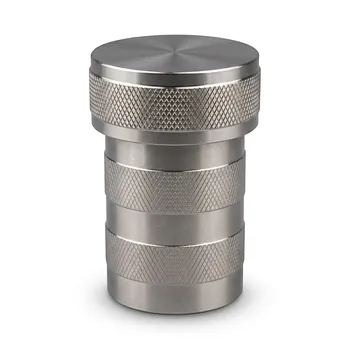
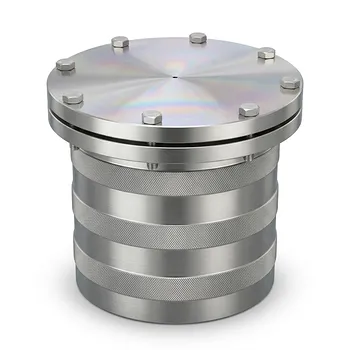
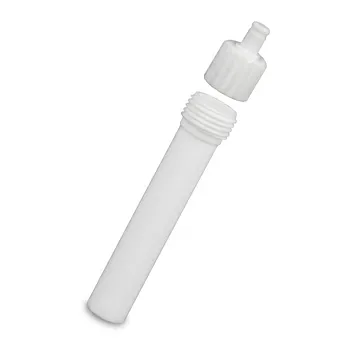
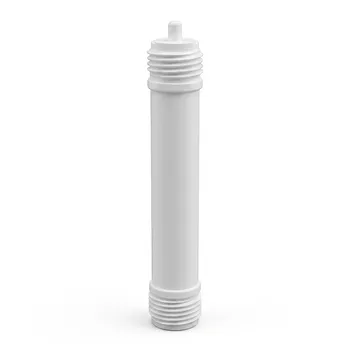
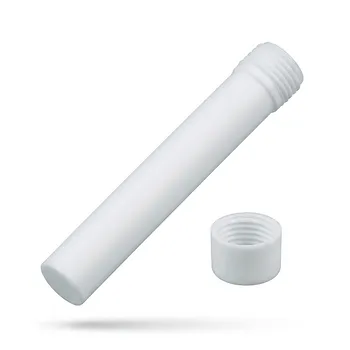
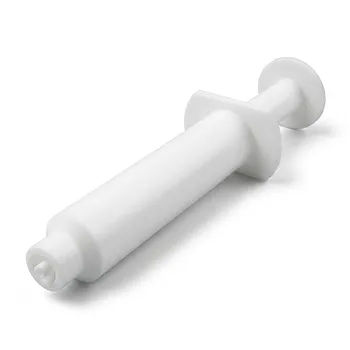
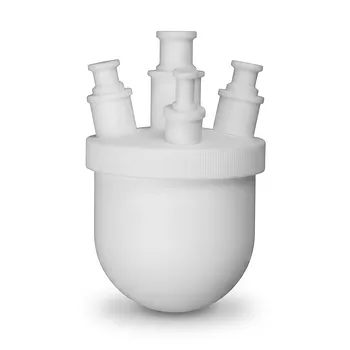
The requirement for a PTFE liner in POSS-PANI hydrothermal treatment is driven by the necessity for chemical isolation and extreme material purity. At reaction temperatures such as 120 °C, the acidic or alkaline precursors used to synthesize POSS-PANI (Polyhedral Oligomeric Silsesquioxane-Polyaniline) nanocomposites become highly aggressive. A Polytetrafluoroethylene (PTFE) liner provides a chemically inert barrier that prevents these reagents from corroding the stainless steel autoclave while ensuring that no metal ions leach into the sample, which would otherwise compromise the chemical integrity of the composite.
The PTFE liner acts as a definitive shield that protects the structural purity of the POSS-PANI nanocomposite and the physical integrity of the reactor by maintaining a sealed, non-reactive environment under high-pressure hydrothermal conditions.
The Role of Chemical Inertness in Nanocomposite Synthesis
Protection Against Aggressive Reagents
Hydrothermal synthesis of POSS-PANI often involves corrosive acidic or alkaline environments that would rapidly degrade standard metallic containers. PTFE is chosen because it is virtually unaffected by most chemicals, allowing the reaction to proceed without the vessel itself becoming a participant in the chemistry.
Extension of Equipment Service Life
By isolating the corrosive precursor solutions from the stainless steel autoclave body, the PTFE liner prevents pitting and structural weakening of the pressure vessel. This isolation is critical for maintaining safety standards and extending the operational lifespan of expensive laboratory hardware.
Maintaining High-Purity Chemical Environments
Prevention of Metal Ion Leaching
Under high-pressure and high-temperature conditions, stainless steel can release metal impurity ions into the reaction solution. A high-purity PTFE liner ensures that these ions do not contaminate the POSS-PANI samples, which is vital for maintaining the specific electronic and structural properties of the nanocomposite.
Facilitating Controlled Microstructure Growth
The presence of unintended impurities can catalyze side reactions or disrupt the controlled growth of the microstructure. By providing a "clean-room" environment within the autoclave, the PTFE liner allows for the precise, predictable assembly of the POSS and PANI components.
Operational Advantages of PTFE Liners
Superior Non-Stick and Recovery Properties
PTFE is renowned for its low surface energy, which prevents the synthesized POSS-PANI nanopowders from adhering to the walls of the vessel. This non-stick characteristic ensures high product recovery rates and makes the cleaning process more efficient, reducing the risk of cross-contamination between batches.
Reliable Sealing and Thermal Stability
At the 120 °C threshold required for POSS-PANI treatment, PTFE maintains its structural integrity while providing an excellent seal. This ensures a constant temperature and pressure environment, which is necessary for the stable bonding of chemical complexes during the in-situ synthesis process.
Understanding the Trade-offs and Limitations
Temperature Constraints
While PTFE is ideal for reactions at 120 °C, it has a maximum operating temperature (typically around 200°C to 250°C). Exceeding these limits can lead to the deformation of the liner or the release of toxic fluorinated vapors, making it unsuitable for ultra-high-temperature synthesis.
Thermal Expansion and Creep
PTFE has a high coefficient of thermal expansion, meaning it expands significantly more than the steel shell surrounding it. If not properly cooled or if subjected to extreme pressure cycles, the liner can undergo "creep" or permanent deformation, which may eventually compromise the seal.
Implementing PTFE Liners in Your Process
Recommendations for Optimal Synthesis
- If your primary focus is maximum material purity: Use only high-purity, virgin PTFE liners and implement a rigorous acid-washing protocol between uses to remove any trace adsorbed ions.
- If your primary focus is reactor longevity: Ensure the liner is properly seated and inspected for "flaring" or cracks after every high-pressure cycle to prevent corrosive leakage onto the stainless steel.
- If your primary focus is high yield and recovery: Utilize the non-stick properties of PTFE by using mechanical recovery tools that do not scratch the soft interior surface, as scratches can become sites for material buildup.
By utilizing a PTFE liner, you ensure that the complex chemical architecture of POSS-PANI is preserved through a clean, stable, and highly controlled hydrothermal environment.
Summary Table:
| Key Feature | Benefit for POSS-PANI Synthesis | Protection Provided |
|---|---|---|
| Chemical Inertness | Prevents side reactions with corrosive precursors | Protects autoclave body from pitting |
| Purity Control | Eliminates metal ion leaching into samples | Maintains nanocomposite electronic properties |
| Non-Stick Surface | Ensures high product recovery and easy cleaning | Reduces risk of cross-batch contamination |
| Thermal Stability | Maintains seal integrity at 120 °C | Prevents hazardous vapor leaks |
Maximize Your Lab’s Precision with KINTEK
Ready to elevate your synthesis results? KINTEK specializes in high-performance fluoropolymer solutions tailored for the most rigorous laboratory demands. From everyday basic labware like PTFE beakers, digestion tubes, and filtration tools to advanced hydrothermal synthesis liners, microwave digestion vessels, and custom electrochemical cells, we provide the absolute chemical purity your research requires.
Our end-to-end custom CNC fabrication allows us to deliver everything from complex non-standard machined parts to high-volume orders of O-rings, gaskets, and tubing. By maintaining an exclusive focus on high-performance materials, we help you protect your hardware and your data.
Contact us today to discuss your bespoke laboratory requirements and see how our PTFE and PFA expertise can secure the integrity of your next breakthrough.
References
- Lei Liu, Xiaoxuan Xu. Porous POSS-PANI nanofibre from interfacial polymerization and hydrothermal approach. DOI: 10.1186/s40064-015-1524-3
This article is also based on technical information from Kintek Knowledge Base .
Related Products
- PTFE Lined High Pressure Digestion Vessel 50ml High Temperature Hydrothermal Synthesis Tank
- High Pressure Custom TFM Reactor Stainless Steel Outer Vessel PTFE Inner Cup for Corrosive Synthesis
- High Temperature Corrosion Resistant Hydrothermal Synthesis Reactor with TFM Inner Liner and Straight Cylinder Design
- Custom TFM Reaction Vessel with Stainless Steel Jacket and PTFE Inner Cup for High Corrosion Resistance
- High Purity PTFE Microwave Digestion Vessel Replacement Liner for Acid Sample Preparation and Trace Analysis
People Also Ask
- What are the benefits of using a PTFE-lined vessel for carbon-sulfur cathode treatment? Maximize Purity & Performance
- Why are PTFE-lined pressure digestion vessels required for the preparation of Ag/CeO2 catalysts? Purity & Performance
- What is the function of high-pressure PTFE digestion vessels in mineral analysis? Optimize Sample Mineralization
- What safety features are typically incorporated into high-pressure PTFE digestion vessel designs? Ensure Lab Safety
- What is the function of PTFE lined high-pressure vessels in g-C3N4 synthesis? Achieve High-Purity Material Growth