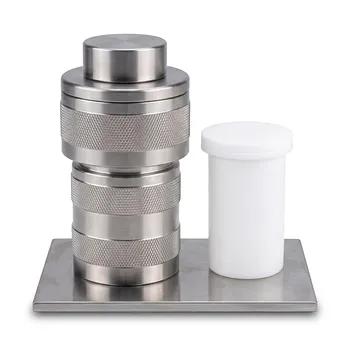
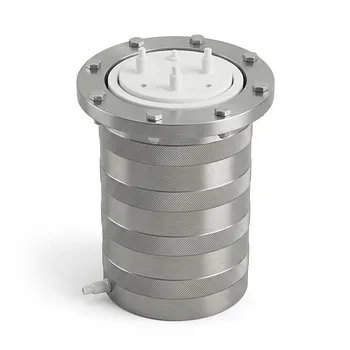
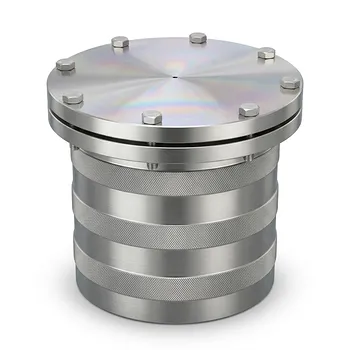
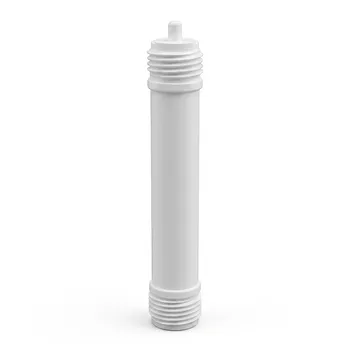
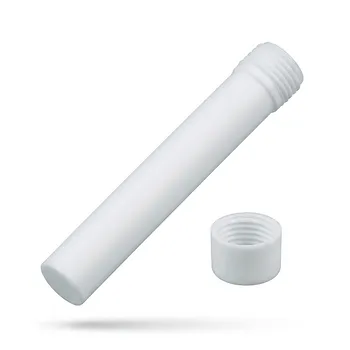
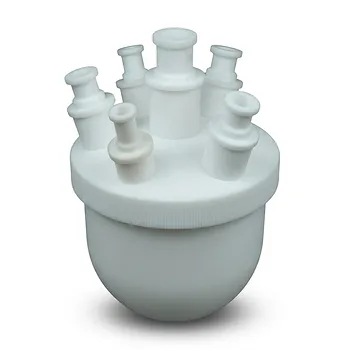
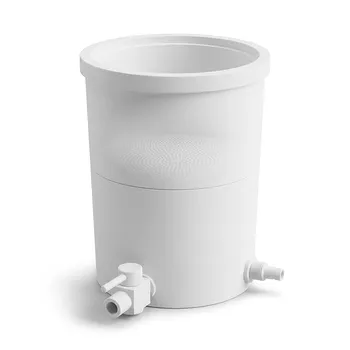
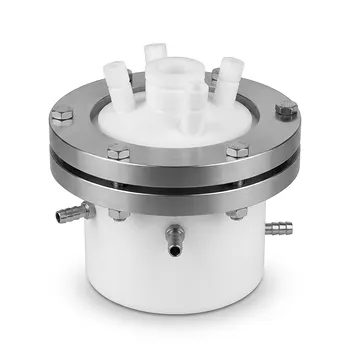
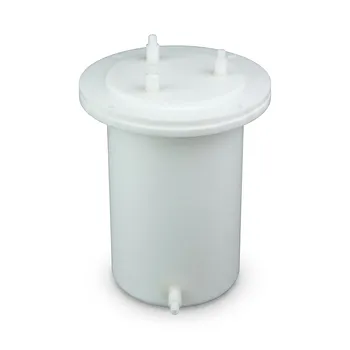
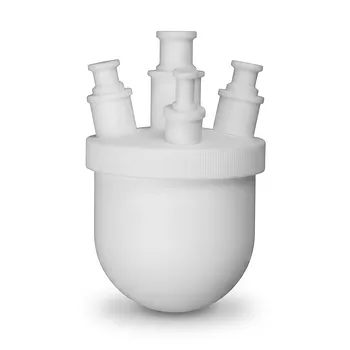
The necessity of a Polytetrafluoroethylene (PTFE) liner in hydrothermal synthesis stems from the extreme chemical environment required to form high-quality Barium Titanate.
For epitaxial thin films to grow correctly, the reaction must occur in high concentrations of strong alkalis (such as 8 mol dm⁻³ NaOH) at temperatures reaching 200 °C. The PTFE liner acts as a chemically inert barrier that prevents these corrosive solutions from leaching metal ions out of the autoclave body, which would otherwise contaminate the film and degrade its ferroelectric performance.
Core Takeaway: The PTFE liner is a critical isolation layer that protects the purity of the precursor solution from metallic contamination while simultaneously shielding the pressure vessel from corrosive alkaline attack.
Managing Extreme Chemical Environments
Resisting Strong Alkaline Corrosion
Hydrothermal synthesis of Barium Titanate (BaTiO3) requires highly concentrated alkaline fluxes, such as NaOH or KOH. PTFE is one of the few materials that remains chemically inert when exposed to these strong bases, preventing the reaction medium from reacting with the vessel walls.
Stability Under High Temperature and Pressure
The synthesis process typically operates at temperatures around 200 °C, and some applications reach up to 240 °C. PTFE liners maintain their structural integrity under these conditions, providing a stable environment for the autogenous pressure required to facilitate the chemical conversion of precursors.
Protecting the Pressure Vessel
Without a liner, the stainless steel outer shell of the autoclave would be directly exposed to the corrosive precursors. The PTFE liner serves as a protective shield, preventing structural erosion and significantly extending the service life of the expensive high-pressure hardware.
Safeguarding Material Purity and Performance
Prevention of Metal Ion Leaching
At high temperatures, alkaline solutions can cause metal ions to leach from the stainless steel autoclave walls into the reaction mixture. The PTFE liner provides a "clean room" environment within the vessel, ensuring that no unwanted metallic elements interfere with the crystal growth.
Preserving Ferroelectric Properties
For epitaxial thin films, even trace amounts of impurities can disrupt the crystalline microstructure. By maintaining a high-purity environment, the PTFE liner ensures the thin film retains the specific ferroelectric characteristics required for electronic applications.
Facilitating Controlled Microstructure Growth
The chemically neutral environment provided by PTFE allows for more precise control over the reaction kinetics. This leads to the controlled growth of the BaTiO3 microstructure, which is essential for achieving the uniform thickness and orientation required for epitaxial films.
Operational Advantages of PTFE
Non-Stick and Mold-Release Properties
PTFE is famously non-stick, which prevents synthesized nanopowders or films from adhering to the vessel walls. This ensures that the yield is easily collected and that the vessel can be cleaned thoroughly without leaving behind residues that might contaminate subsequent batches.
Achieving a Reliable Seal
The physical properties of PTFE allow it to deform slightly under pressure, which helps create a hermetic seal within the autoclave. This ensures that the high-pressure environment is maintained throughout the duration of the synthesis without leaks.
Understanding the Trade-offs
Temperature Limitations
While PTFE is highly resilient, it has a distinct thermal limit, usually around 250 °C. If the synthesis temperature exceeds this threshold, the liner may soften, deform, or undergo thermal decomposition, potentially releasing hazardous fumes and ruining the experiment.
Thermal Expansion and Fit
PTFE has a significantly higher coefficient of thermal expansion than the steel outer vessel. If the liner is not designed with the correct tolerances, it can expand against the metal walls with enough force to become stuck or warped, making it difficult to remove after the reaction.
How to Apply This to Your Project
When preparing for the hydrothermal synthesis of Barium Titanate, your choice of liner and maintenance routine will directly impact your results.
- If your primary focus is maximum film purity: Use a high-purity, virgin PTFE liner and implement a rigorous "acid washing" protocol between runs to remove any residual ions.
- If your primary focus is process safety at high temperatures: Monitor your autoclave temperature sensors closely to ensure you do not exceed 240-250 °C, as PTFE structural integrity fails rapidly beyond these points.
- If your primary focus is sample recovery and yield: Leverage the non-stick properties of the liner by avoiding abrasive cleaning tools that could scratch the surface and create sites for material adhesion.
Choosing the right PTFE liner is not merely a convenience, but a fundamental requirement for achieving the chemical purity necessary for advanced ferroelectric materials.
Summary Table:
| Key Property | Benefit for Hydrothermal Synthesis | Impact on BaTiO3 Final Product |
|---|---|---|
| Chemical Inertness | Resists strong alkaline fluxes (e.g., 8M NaOH) | Prevents corrosion of the autoclave body |
| High Purity | Blocks metal ion leaching from steel walls | Preserves ferroelectric performance and crystal purity |
| Non-stick Nature | Facilitates easy sample and film recovery | Ensures high yield and simplifies vessel cleaning |
| Thermal Stability | Maintains integrity up to 250 °C | Provides a stable environment for 200 °C reactions |
Elevate your material synthesis with KINTEK’s precision-engineered fluoropolymer solutions. From everyday basic labware like beakers, crucibles, and digestion tubes to specialized hydrothermal synthesis liners and microwave digestion vessels, KINTEK manufactures virtually all laboratory supplies crafted from high-performance PTFE and PFA. Our end-to-end custom CNC fabrication capabilities allow us to deliver everything from complex non-standard machined parts to high-volume orders, ensuring your thin film research is never compromised by metallic contamination or vessel failure. Protect your high-pressure hardware and safeguard your material purity—contact our experts today to discuss your standard or bespoke laboratory requirements.
References
- Tatsuya Masuda, Yoshitaka Ehara. Concentration-driven densification and hydroxyl-induced lattice expansion in hydrothermal BaTiO<sub>3</sub> epitaxial films. DOI: 10.35848/1347-4065/ae062c
This article is also based on technical information from Kintek Knowledge Base .
Related Products
- PTFE Lined High Pressure Digestion Vessel 50ml High Temperature Hydrothermal Synthesis Tank
- High Pressure Custom TFM Reactor Stainless Steel Outer Vessel PTFE Inner Cup for Corrosive Synthesis
- Custom TFM Reaction Vessel with Stainless Steel Jacket and PTFE Inner Cup for High Corrosion Resistance
- High Purity PTFE Microwave Digestion Vessel for Soil and Food Analysis Acid Resistant Fluoropolymer Sample Preparation Liners
- High Purity TFM Microwave Digestion Vessels PTFE Acid Evaporation Liners Domestic GT-400 Equivalent Laboratory Reaction Containers
People Also Ask
- What are the benefits of using a PTFE-lined vessel for carbon-sulfur cathode treatment? Maximize Purity & Performance
- Why are PTFE-lined pressure digestion vessels required for the preparation of Ag/CeO2 catalysts? Purity & Performance
- What is the function of high-pressure PTFE digestion vessels in mineral analysis? Optimize Sample Mineralization
- What safety features are typically incorporated into high-pressure PTFE digestion vessel designs? Ensure Lab Safety
- What is the function of PTFE lined high-pressure vessels in g-C3N4 synthesis? Achieve High-Purity Material Growth