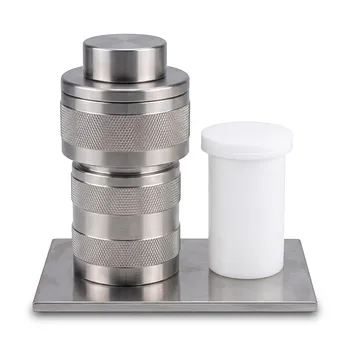
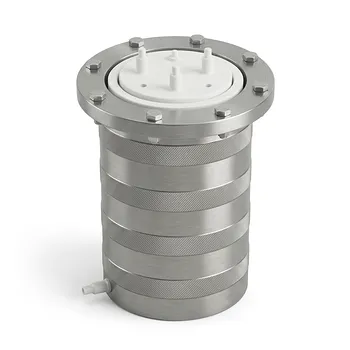
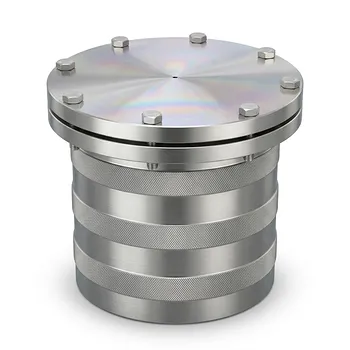
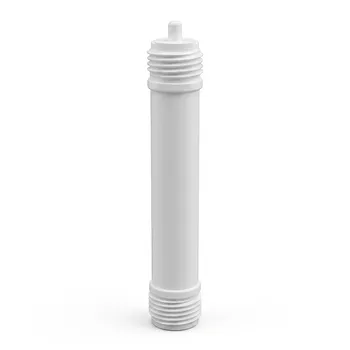
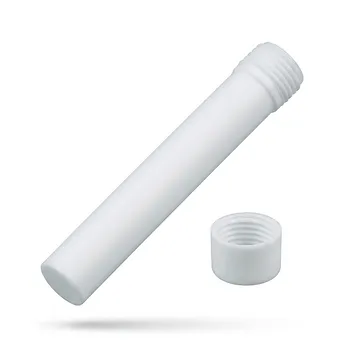
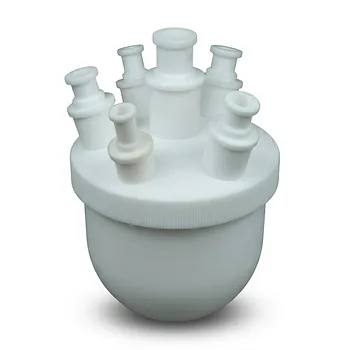
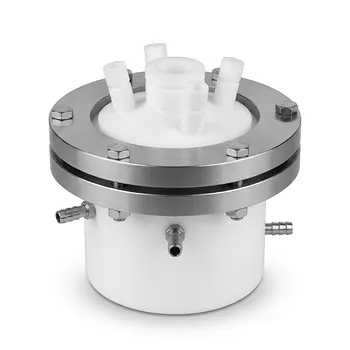
A Polytetrafluoroethylene (PTFE) liner is essential because it provides a chemically inert barrier that prevents highly reactive precursors from corroding the autoclave and contaminating the resulting nanomaterials. In the hydrothermal synthesis of zinc nitrate-based materials, the combination of high temperature and pressure creates a corrosive environment that would otherwise degrade the stainless steel reactor and introduce unwanted metal ions into the sample.
Core Takeaway: The PTFE liner serves as a critical isolation layer that protects the structural integrity of the autoclave while ensuring the chemical purity and crystalline quality of the synthesized nanoparticles.
Protecting the Reactor from Chemical Attack
Neutralizing Corrosive Zinc Precursors
Zinc nitrate and its common reaction partners, such as the decomposition products of thioacetamide, are highly reactive under hydrothermal conditions. Without a liner, these chemicals would directly attack the internal walls of the stainless steel autoclave.
Resilience Against Extreme pH Levels
Many zinc-based syntheses require strong alkaline regulators like sodium hydroxide (NaOH) or acidic precursors to control morphology. PTFE is uniquely resistant to both strong acids and bases, maintaining its integrity where metal surfaces would pit or dissolve.
Managing High-Pressure Environments
The liner acts as the primary containment vessel within the secondary pressure-bearing steel shell. It allows the reaction to reach the necessary energy states for nanomaterial nucleation without the risk of the chemicals breaching the outer safety vessel through corrosion.
Ensuring High-Purity Synthesis
Eliminating Metal Ion Leaching
At high temperatures, stainless steel can leach iron, chromium, or nickel ions into the reaction solution. These impurities can integrate into the zinc oxide (ZnO) lattice, drastically altering the material’s electronic, optical, and photocatalytic properties.
Preservation of Optoelectronic Properties
For materials like polymer dots or zinc-based nanocomposites, even trace metal contamination can cause fluorescence quenching. The PTFE liner ensures a "clean" environment, preserving the precise surface functional groups required for high-performance applications.
Maintaining Precise Stoichiometry
Achieving the correct ratio of elements in complex structures, such as ZnO@MnO2 nanocomposites, requires a closed system free from external reactants. The liner prevents the autoclave body from participating in the reaction, ensuring the final product matches the intended chemical formula.
Physical and Operational Advantages
The Non-Stick Advantage
PTFE has an extremely low surface energy, which prevents synthesized precipitates from adhering to the container walls. This property is vital for maximizing the recovery rate of the final product and ensuring that the entire yield is collected.
Facilitating Crystal Growth
The stable environment provided by a PTFE liner allows for consistent crystal growth orientations. By isolating the solution from the rougher, reactive surface of the steel, the material can crystallize according to its natural kinetics rather than being influenced by the vessel's surface chemistry.
Understanding the Trade-offs
Temperature Limitations
While PTFE is chemically robust, it has a thermal ceiling, typically around 250°C. Exceeding this limit causes the material to soften or "creep," which can lead to seal failure or the release of toxic fluorinated vapors.
Thermal Insulation Effects
PTFE is an excellent insulator, which means it creates a thermal lag between the oven temperature and the actual reaction solution. Researchers must account for this delay when timing their synthesis to ensure the precursors reach the required activation energy.
Mechanical Wear and Deformation
Under repeated high-pressure cycles, PTFE liners can undergo permanent deformation. This requires periodic replacement to ensure a tight seal is maintained within the autoclave, as a warped liner can lead to pressure leaks and inconsistent results.
How to Apply This to Your Project
When selecting or using a liner for hydrothermal synthesis, consider the following technical priorities:
- If your primary focus is absolute purity: Use high-purity PTFE or PFA (perfluoroalkoxy) liners to minimize leachable impurities to the lowest possible levels.
- If your primary focus is high-yield recovery: Ensure the liner is free of scratches or surface degradation, as these imperfections can trap nanoparticles and reduce the non-stick effectiveness.
- If your primary focus is high-temperature reactions: Monitor your synthesis temperature strictly to stay below 240°C to prevent liner deformation and maintain a safe pressure seal.
By utilizing a PTFE liner, you effectively decouple the chemistry of the reaction from the mechanics of the pressure vessel, ensuring a safe, repeatable, and pure synthesis process.
Summary Table:
| Feature | Benefit for Zinc Synthesis | Impact on Results |
|---|---|---|
| Chemical Inertness | Resists corrosive zinc nitrate and pH regulators | Prevents reactor degradation and leaks |
| Purity Shield | Eliminates metal ion leaching (Fe, Cr, Ni) | Maintains optoelectronic & crystal quality |
| Non-Stick Surface | Prevents precipitates from adhering to walls | Maximizes yield recovery and cleaning ease |
| Isolation Layer | Decouples chemistry from the steel vessel | Ensures precise stoichiometry and morphology |
Elevate Your Research with Precision Fluoropolymer Solutions from KINTEK
Achieving high-purity results in hydrothermal synthesis requires more than just chemistry—it requires the highest quality containment. KINTEK specializes in high-performance fluoropolymer materials, offering an exhaustive range of labware designed to withstand the most demanding environments.
Whether you need standard PTFE/PFA liners, digestion vessels, or high-purity trace analysis instruments, we provide the absolute focus on material integrity your research deserves. Our product line extends from everyday basics like beakers, crucibles, and reagent bottles to advanced components such as custom electrochemical cells, battery testing fixtures, and microchannel reactors.
Why choose KINTEK?
- Comprehensive Range: From fluid transfer (tubing, valves) to sample prep (filters, pipettes).
- Bespoke Engineering: End-to-end custom CNC fabrication for non-standard machined parts.
- Guaranteed Purity: Absolute focus on high-performance PTFE and PFA to eliminate contamination.
Don't let equipment corrosion compromise your nanoparticles. Contact us today to discuss your custom laboratory setup or high-volume orders and experience the KINTEK advantage!
References
- Anand Gaspar, M. Sathish. Thioacetamide-Doped Zinc Nitrate Hexahydrate Nanostructures: Hydrothermal Synthesis and Characterization. DOI: 10.14233/ajchem.2025.34344
This article is also based on technical information from Kintek Knowledge Base .
Related Products
- PTFE Lined High Pressure Digestion Vessel 50ml High Temperature Hydrothermal Synthesis Tank
- High Pressure Custom TFM Reactor Stainless Steel Outer Vessel PTFE Inner Cup for Corrosive Synthesis
- Custom TFM Reaction Vessel with Stainless Steel Jacket and PTFE Inner Cup for High Corrosion Resistance
- High Purity PTFE Microwave Digestion Vessel for Soil and Food Analysis Acid Resistant Fluoropolymer Sample Preparation Liners
- High Purity TFM Microwave Digestion Vessels PTFE Acid Evaporation Liners Domestic GT-400 Equivalent Laboratory Reaction Containers
People Also Ask
- What are the benefits of using a PTFE-lined vessel for carbon-sulfur cathode treatment? Maximize Purity & Performance
- Why are PTFE-lined pressure digestion vessels required for the preparation of Ag/CeO2 catalysts? Purity & Performance
- What safety features are typically incorporated into high-pressure PTFE digestion vessel designs? Ensure Lab Safety
- What is the function of high-pressure PTFE digestion vessels in mineral analysis? Optimize Sample Mineralization
- What is the function of PTFE lined high-pressure vessels in g-C3N4 synthesis? Achieve High-Purity Material Growth