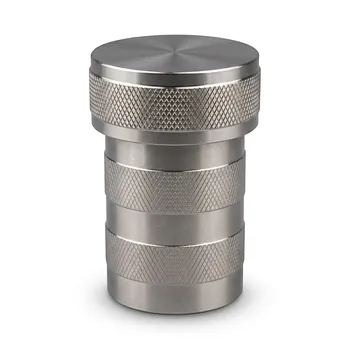
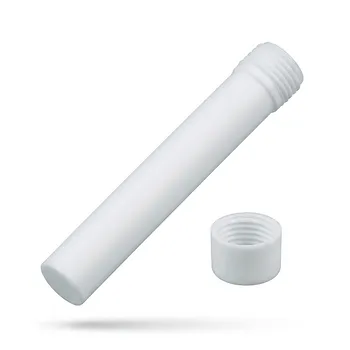
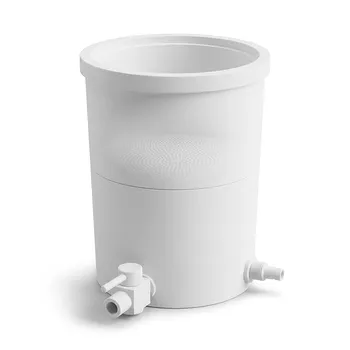
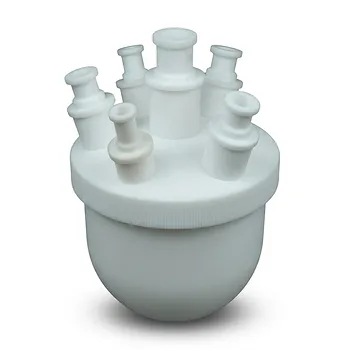
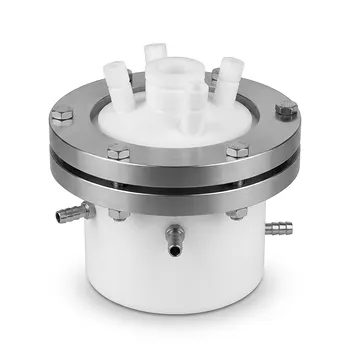
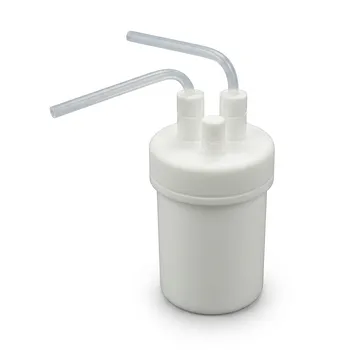
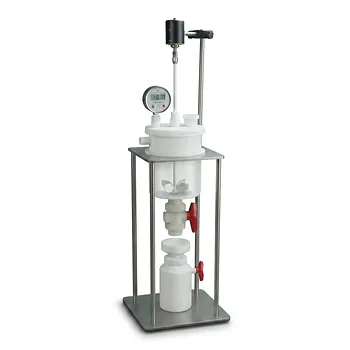
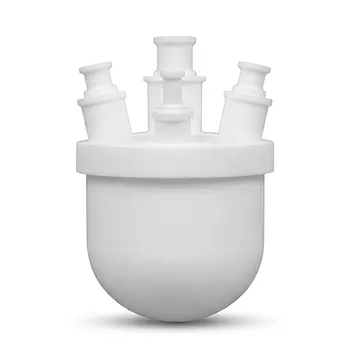
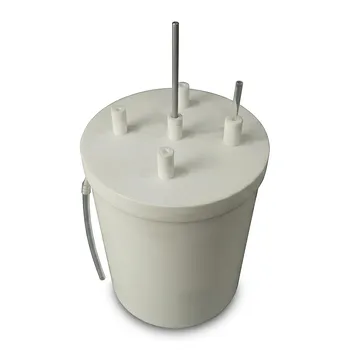
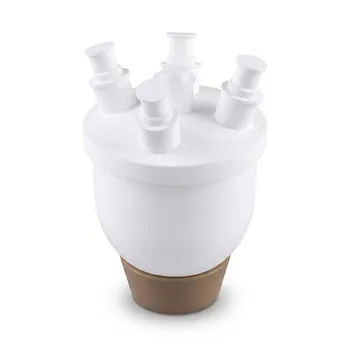
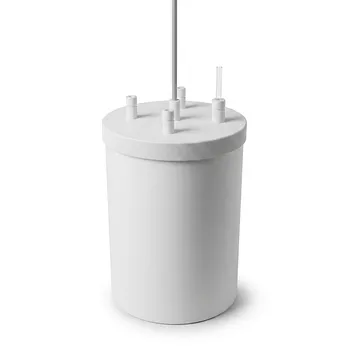
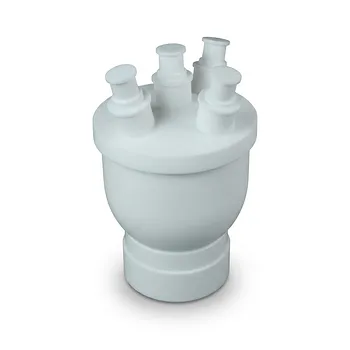
The PTFE liner is the critical safeguard for BiVO4 synthesis. It provides a chemically inert, non-stick environment capable of withstanding temperatures up to 200°C and aggressive reagents like nitric acid. This isolation prevents leaching from the stainless steel reactor shell, ensuring the high purity and specific crystal phase (such as monoclinic BiVO4) required for efficient catalytic performance.
A PTFE liner serves as both a chemical barrier and a purity safeguard in hydrothermal synthesis. It protects the reactor's structural integrity while preventing metal ion contamination that would otherwise degrade the catalyst's photocatalytic properties.
Maintaining Chemical Inertia in Harsh Environments
Resistance to Corrosive Precursors
Synthesis of BiVO4 often requires nitric acid and various pH adjusters to control the precipitation process. Polytetrafluoroethylene (PTFE) is virtually immune to these corrosive agents, preventing the reaction medium from reacting with the container walls.
Prevention of Metal Ion Leaching
Without a liner, the acidic solution would attack the stainless steel outer shell of the autoclave. This would introduce foreign metal ions (like chromium or nickel) into the solution, which act as impurities and disrupt the delicate electronic structure of the BiVO4 catalyst.
Ensuring Phase Purity and Microstructure Control
Support for Monoclinic Phase Growth
The efficiency of BiVO4 depends heavily on achieving the monoclinic scheelite phase. The high-purity environment provided by the PTFE liner ensures that crystal growth is governed solely by the intended precursors, facilitating controlled microstructure development.
Non-Stick Surface for Product Recovery
PTFE is famously non-stick, which is vital when collecting synthesized powders. This property ensures a higher yield and simplifies the cleaning process, preventing cross-contamination between different experimental batches.
Safeguarding Equipment and Personnel
Protection of the Pressure Vessel
Hydrothermal synthesis occurs under significant pressure and heat. The PTFE liner acts as a primary containment layer, ensuring that the structural stainless steel shell is never weakened by chemical erosion, which could lead to catastrophic vessel failure.
Thermal Stability Under Pressure
Standard PTFE liners are rated for temperatures up to 200°C to 220°C. This range is ideal for the hydrothermal conditions required to crystallize BiVO4 without the risk of the liner melting or releasing fluorinated volatiles into the reaction.
Understanding the Trade-offs and Limitations
Temperature and Pressure Thresholds
While PTFE is robust, it has a strict thermal ceiling; exceeding 220°C can cause the liner to soften or deform. This deformation can make the liner difficult to remove from the stainless steel sleeve or, in extreme cases, lead to a breach of the seal.
Material Memory and Deformation
Repeated heating and cooling cycles can lead to "creep" or permanent deformation of the PTFE. Over time, this may affect the airtight seal of the reactor, requiring the liner to be replaced to maintain consistent pressure conditions.
How to Optimize Your Synthesis Process
To achieve the best results when preparing BiVO4 or similar composite catalysts, consider the following recommendations:
- If your primary focus is catalyst purity: Always use high-purity, virgin PTFE liners to eliminate the risk of trace element contamination during the long hydrothermal dwell times.
- If your primary focus is equipment longevity: Inspect the liner for "necking" or thinning after every high-pressure run to ensure the stainless steel shell remains protected from acidic vapors.
- If your primary focus is experimental reproducibility: Standardize your cooling rate to prevent the PTFE from warping, which ensures a consistent internal volume and pressure profile across multiple batches.
By utilizing a PTFE liner correctly, you ensure the structural integrity of your laboratory equipment while guaranteeing the chemical precision necessary for high-performance catalyst development.
Summary Table:
| Feature | Benefit for BiVO4 Synthesis | Operational Limit/Care |
|---|---|---|
| Chemical Inertness | Prevents metal ion leaching and resists nitric acid | Maximum temperature of 200°C–220°C |
| Non-Stick Surface | Ensures high powder recovery and easier cleaning | Avoid abrasive tools to prevent scratches |
| Physical Barrier | Protects stainless steel shell from chemical erosion | Monitor for permanent deformation (creep) |
| Phase Control | Maintains purity required for monoclinic phase growth | Standardize cooling rates for reproducibility |
Elevate Your Research with KINTEK’s Precision Fluoropolymers
At KINTEK, we understand that the success of your hydrothermal synthesis depends on the purity of your environment. We manufacture an exhaustive range of high-performance laboratory supplies crafted exclusively from PTFE and PFA.
Whether you need everyday basic labware (beakers, crucibles, reagent bottles), advanced reaction apparatus like hydrothermal synthesis liners and microwave digestion vessels, or complex fluid transfer components (tubing, valves, and fittings), we have you covered.
Why choose KINTEK?
- Expert Fabrication: From high-volume standard orders to complex, non-standard machined parts via end-to-end custom CNC fabrication.
- Specialized Focus: Absolute dedication to fluoropolymer materials for trace analysis and aggressive chemical environments.
- Comprehensive Range: Everything from sample prep tools and filtration to battery testing fixtures and electrochemical cells.
Protect your equipment and guarantee the chemical precision of your catalysts. Contact us today to discuss your custom requirements!
References
- Ting Cheng, Gang Chen. Synthesis of Fly Ash Magnetic GlassMicrosphere@BiVO<sub>4</sub> and Its Hybrid Actionof Visible-Light Photocatalysisand Adsorption Process. DOI: 10.15244/pjoes/127918
This article is also based on technical information from Kintek Knowledge Base .
Related Products
- PTFE Lined High Pressure Digestion Vessel 50ml High Temperature Hydrothermal Synthesis Tank
- High Pressure Custom TFM Reactor Stainless Steel Outer Vessel PTFE Inner Cup for Corrosive Synthesis
- High Temperature Corrosion Resistant Hydrothermal Synthesis Reactor with TFM Inner Liner and Straight Cylinder Design
- Custom TFM Reaction Vessel with Stainless Steel Jacket and PTFE Inner Cup for High Corrosion Resistance
- High Purity TFM Microwave Digestion Vessels PTFE Acid Evaporation Liners Domestic GT-400 Equivalent Laboratory Reaction Containers
People Also Ask
- What are the benefits of using a PTFE-lined vessel for carbon-sulfur cathode treatment? Maximize Purity & Performance
- Why are PTFE-lined pressure digestion vessels required for the preparation of Ag/CeO2 catalysts? Purity & Performance
- What safety features are typically incorporated into high-pressure PTFE digestion vessel designs? Ensure Lab Safety
- What is the function of PTFE lined high-pressure vessels in g-C3N4 synthesis? Achieve High-Purity Material Growth
- Role of High-Pressure Digestion Tanks in Perovskite Synthesis: Achieve Superior Stability and Latent Heat