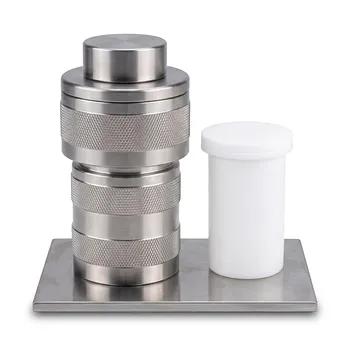
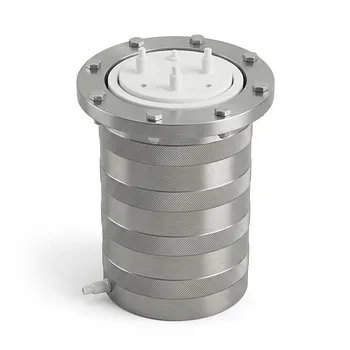
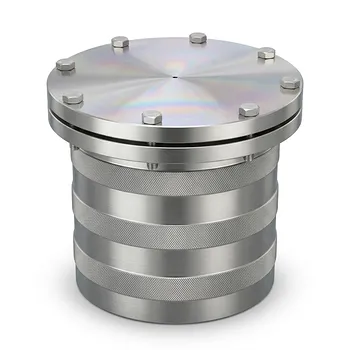
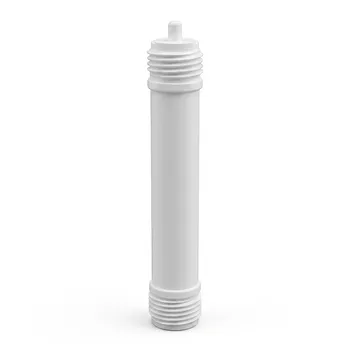
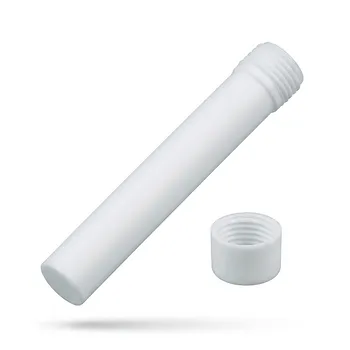
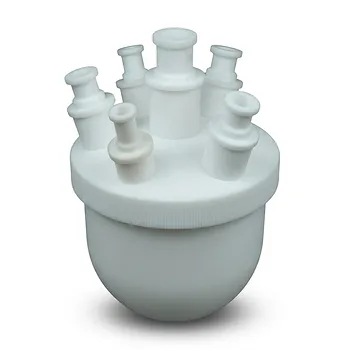
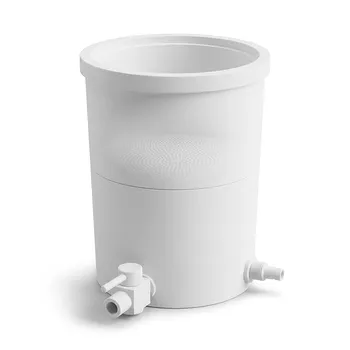
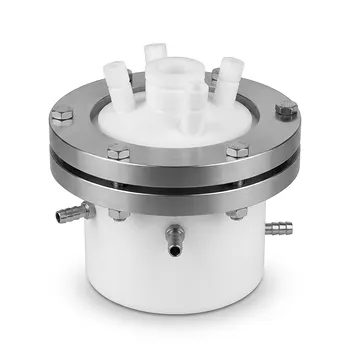
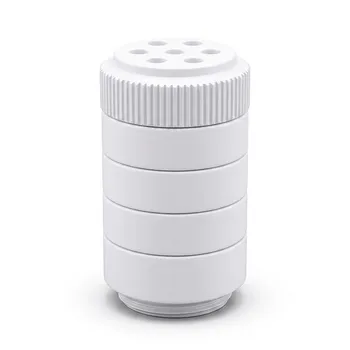
The necessity of a Polytetrafluoroethylene (PTFE) liner stems from its ability to provide a chemically inert reaction environment under high-pressure conditions. In the synthesis of $ZnWO_4/BiOBr$ composites, the liner must withstand highly corrosive precursors, such as acidic bismuth nitrate and alkaline sodium hydroxide. By isolating these chemicals from the autoclave's metal walls, the PTFE liner prevents metal ion contamination and ensures the high purity and precise stoichiometry required for effective photocatalysis.
Core Takeaway: A PTFE liner acts as an essential chemical and physical barrier during hydrothermal synthesis. It protects the structural integrity of the pressure vessel while ensuring the synthesized $ZnWO_4/BiOBr$ composite remains free from metallic impurities that would otherwise degrade its performance.
Maintaining Chemical Purity and Structural Integrity
Resisting Corrosive Precursors
The synthesis of $ZnWO_4/BiOBr$ involves precursors with extreme pH levels, including bismuth nitrate (acidic) and sodium hydroxide (alkaline). PTFE possesses exceptional chemical inertness, allowing it to contain these reactive species without undergoing degradation or side reactions.
Preventing Metal Ion Contamination
Without a liner, the internal stainless steel walls of an autoclave would leach metal ions—such as iron, nickel, or chromium—into the reaction solution. The PTFE liner serves as a chemical barrier, ensuring that the resulting composite maintains the high purity necessary for specialized applications like photocatalysis.
Protecting the External Pressure Vessel
Hydrothermal reactions occur under conditions of high temperature and high pressure, which accelerate the rate of metal corrosion. By isolating the corrosive medium, the PTFE liner prevents the "pitting" or weakening of the outer metal shell, significantly extending the service life of the hydrothermal reactor.
Enhancing Material Quality and Collection
Facilitating Controlled Microstructural Growth
A stable, enclosed environment is critical for the controlled growth of the $ZnWO_4/BiOBr$ microstructure. The chemical neutrality of PTFE ensures that the crystal growth process is dictated solely by the precursors and reaction parameters, leading to high crystallinity and phase purity.
Simplifying Post-Reaction Recovery
PTFE is renowned for its non-stick properties, which prevent the synthesized precipitates from adhering to the container walls. This characteristic facilitates the complete recovery of the sample and ensures that the reactor is easily cleaned for subsequent experiments.
Ensuring Process Safety
By preventing the corrosion of the metal autoclave body, the PTFE liner maintains the structural safety of the high-pressure system. A compromised metal vessel is a significant safety hazard; the liner acts as the first line of defense against catastrophic pressure failures caused by chemical erosion.
Understanding the Trade-offs
Temperature Limitations
While PTFE is highly resilient, it has a distinct thermal limit, typically around 220°C to 250°C. Exceeding these temperatures can cause the liner to soften or deform, potentially leading to leaks or the release of toxic vapors.
Thermal Expansion Disparity
PTFE expands at a different rate than the stainless steel shell of the autoclave. If the cooling process is too rapid, this differential expansion can cause the liner to warp or crack, compromising its ability to protect the metal shell in future runs.
Pressure Sensitivity
The liner itself is not designed to hold pressure; it relies on the support of the metal autoclave. If there is a gap between the liner and the vessel wall, the high internal pressure can cause the liner to collapse or rupture, exposing the metal to the corrosive reaction medium.
Making the Right Choice for Your Goal
To achieve the best results in your hydrothermal synthesis, consider the specific requirements of your material:
- If your primary focus is maximum photocatalytic activity: Use a high-purity PTFE liner to eliminate any trace metal contamination that could act as unintended recombination centers for electron-hole pairs.
- If your primary focus is synthesizing at temperatures above 250°C: Seek alternative liner materials, such as PPL (Polyphenylene polymers) or quartz, which offer higher thermal stability than standard PTFE.
- If your primary focus is consistent material stoichiometry: Ensure the PTFE liner is properly sealed to prevent the selective evaporation of volatile precursors during the heating cycle.
- If your primary focus is high-throughput testing: Leverage the non-stick properties of PTFE to reduce cleaning time between batches, ensuring no cross-contamination between different composite formulations.
By choosing and maintaining the correct PTFE liner, you ensure both the safety of your laboratory operations and the scientific integrity of your synthesized composites.
Summary Table:
| Feature | Benefit for Synthesis | Impact on Material Quality |
|---|---|---|
| Chemical Inertness | Resists acidic bismuth nitrate & alkaline NaOH | Ensures high purity & precise stoichiometry |
| Metal Isolation | Prevents leaching from autoclave walls | Eliminates metallic impurities in photocatalysts |
| Non-Stick Surface | Prevents precipitates from adhering | Facilitates easy sample recovery & cleaning |
| Corrosion Barrier | Protects stainless steel vessel shell | Extends reactor life & ensures process safety |
| Thermal Stability | Operates reliably up to 250°C | Supports controlled microstructural growth |
Elevate Your Synthesis Precision with KINTEK
Maximize the purity and performance of your composite materials with industry-leading fluoropolymer solutions. At KINTEK, we specialize in high-performance PTFE and PFA laboratory supplies designed to withstand the most corrosive environments and demanding hydrothermal conditions.
From essential hydrothermal synthesis liners, microwave digestion vessels, and high-purity beakers to custom-engineered CNC machined parts and complex fluid transfer components, we provide the tools you need for absolute experimental integrity. Whether you require standard consumables like stirring bars and reagent bottles or bespoke reaction apparatus, KINTEK delivers end-to-end fabrication tailored to your specific research goals.
Ready to protect your equipment and ensure superior material quality?
Contact KINTEK Today for Custom Lab Solutions
References
- Mohammad Farhan, Gandharve Kumar. Hydrothermal Synthesis of Z-Scheme ZnWO4/BiOBr Nanocomposite for Photocatalytic Degradation of Rhodamine B Dye. DOI: 10.14233/ajchem.2025.34552
This article is also based on technical information from Kintek Knowledge Base .
Related Products
- PTFE Lined High Pressure Digestion Vessel 50ml High Temperature Hydrothermal Synthesis Tank
- High Pressure Custom TFM Reactor Stainless Steel Outer Vessel PTFE Inner Cup for Corrosive Synthesis
- Custom TFM Reaction Vessel with Stainless Steel Jacket and PTFE Inner Cup for High Corrosion Resistance
- High Purity PTFE Microwave Digestion Vessel for Soil and Food Analysis Acid Resistant Fluoropolymer Sample Preparation Liners
- High Purity TFM Microwave Digestion Vessels PTFE Acid Evaporation Liners Domestic GT-400 Equivalent Laboratory Reaction Containers
People Also Ask
- What are the benefits of using a PTFE-lined vessel for carbon-sulfur cathode treatment? Maximize Purity & Performance
- Why are PTFE-lined pressure digestion vessels required for the preparation of Ag/CeO2 catalysts? Purity & Performance
- What safety features are typically incorporated into high-pressure PTFE digestion vessel designs? Ensure Lab Safety
- What is the function of PTFE lined high-pressure vessels in g-C3N4 synthesis? Achieve High-Purity Material Growth
- Role of High-Pressure Digestion Tanks in Perovskite Synthesis: Achieve Superior Stability and Latent Heat