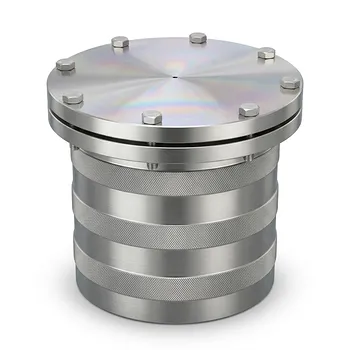
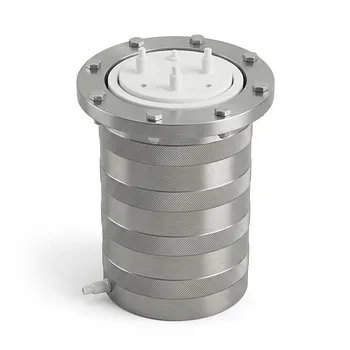
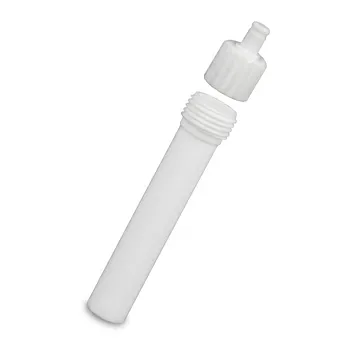
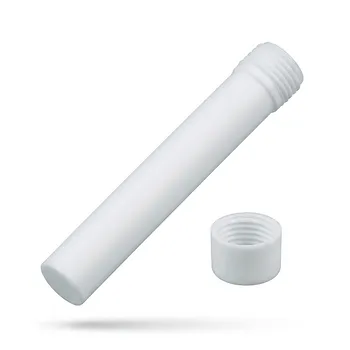
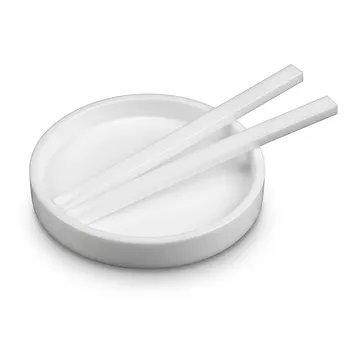
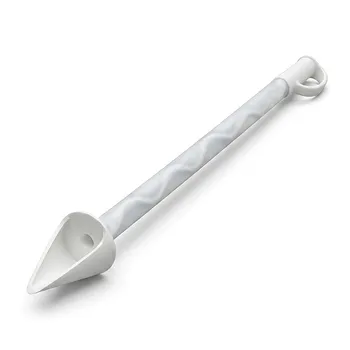
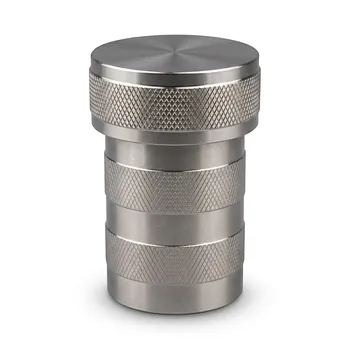
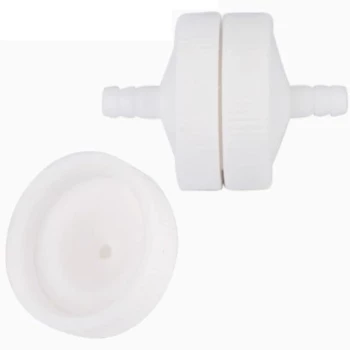
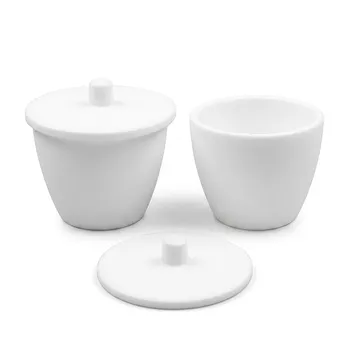
Hydrothermal synthesis of $\text{NiWO}_4$ and MXene requires a PTFE-lined stainless steel autoclave to create a chemically inert, high-pressure environment. This specialized vessel allows for the reaction of aggressive precursors at temperatures often reaching $180^\circ\text{C}$ without compromising the purity of the material. The combination of a resilient polymer interior and a high-strength metal exterior is essential for achieving the specific crystal growth and electrochemical properties required for these advanced materials.
Core Takeaway: The PTFE liner acts as a sacrificial and protective barrier that ensures chemical purity and reactor longevity by isolating corrosive synthesis gels from the structural stainless steel shell under extreme pressure and temperature.
The Role of the PTFE Liner in Chemical Integrity
Chemical Inertness Against Aggressive Precursors
The synthesis of $\text{NiWO}_4$ and MXenes often involves strong alkaline environments or corrosive acidic reagents that would rapidly degrade standard metals. Polytetrafluoroethylene (PTFE) is chosen for its exceptional resistance to chemical attack, ensuring it does not react with precursors during the long duration of the hydrothermal process. This inertness allows the chemical reaction to proceed exactly as intended by the researcher without interference from the vessel walls.
Preventing Metal Ion Leaching and Contamination
High-temperature and high-pressure conditions can cause metal ions, such as iron, chromium, or nickel, to leach from the stainless steel autoclave walls into the reaction solution. For materials like MXenes and $\text{NiWO}_4$, even trace amounts of metallic impurities can significantly impair electrochemical performance and catalytic activity. The PTFE liner provides a total physical seal, ensuring that the synthesized product maintains a high level of purity and high quantum yields.
Facilitating Specific Crystal Growth
The isolated environment within the liner allows for precise control over nucleation and crystal growth by maintaining a stable chemical concentration. This is particularly vital for $\text{NiWO}_4$, where the specific morphology and interlayer spacing determine the effectiveness of the final material. By eliminating side reactions with the reactor body, the PTFE liner ensures that the resulting nanostructures are uniform and high-quality.
The Structural Necessity of the Stainless Steel Shell
Managing High-Pressure Autogenous Conditions
While PTFE provides chemical resistance, it lacks the mechanical strength to withstand the autogenous pressure generated at high temperatures. The stainless steel outer shell provides the necessary structural integrity to contain the pressure safely throughout the reaction. This "dual-material" approach combines the chemical benefits of polymers with the physical strength of metallurgy.
Maintaining a Sealed Reaction Environment
Hydrothermal synthesis relies on the reaction occurring in a liquid phase above its boiling point, which is only possible in a hermetically sealed system. The stainless steel body provides the heavy-duty threading and sealing mechanism required to maintain this environment over many hours. This ensures that the solvent does not evaporate, keeping the precursor concentrations constant for the duration of the synthesis.
Understanding the Trade-offs and Limitations
Temperature Constraints of PTFE
While highly resilient, PTFE has a definitive thermal ceiling, typically around $220^\circ\text{C}$ to $250^\circ\text{C}$, beyond which it may begin to soften or release toxic fumes. If a synthesis requires temperatures exceeding this range, researchers must pivot to alternative liners like PPL (Polyphenylene polymers) or gold-lined vessels. Exceeding the temperature limit of a PTFE liner can lead to permanent deformation and leakage.
Differential Thermal Expansion
Stainless steel and PTFE expand at significantly different rates when heated, which can cause the liner to become stuck or "press-fit" into the autoclave after a reaction. To mitigate this, autoclaves must be cooled slowly to room temperature before opening. Rapid cooling can cause the liner to contract unevenly, potentially cracking the polymer or compromising the seal for future uses.
How to Apply This to Your Project
Making the Right Choice for Your Goal
- If your primary focus is electrochemical purity: Ensure your PTFE liners are thoroughly cleaned with dilute acid between uses to remove any residual ions from previous experiments.
- If your primary focus is high-temperature synthesis (above $200^\circ\text{C}$): Verify the specific grade of your liner, as standard PTFE may deform; consider PPL liners for reactions up to $280^\circ\text{C}$.
- If your primary focus is long-term reactor safety: Regularly inspect the PTFE liner for "crazing" or discoloration, which indicates the polymer is reaching the end of its functional life.
By strictly adhering to the use of PTFE-lined vessels, you ensure that the complex chemistry of $\text{NiWO}_4$ and MXene synthesis remains uncontaminated and structurally sound.
Summary Table:
| Component | Primary Function | Key Advantage |
|---|---|---|
| PTFE Liner | Chemical Inertness | Prevents leaching and ensures high purity |
| Stainless Steel Shell | Mechanical Strength | Safely manages high autogenous pressures |
| Hermetic Seal | Concentration Control | Facilitates uniform crystal and nanostructure growth |
| Thermal Range | Temperature Stability | Supports reactions up to 220°C - 250°C |
Optimize Your Advanced Material Synthesis with KINTEK
Precision in hydrothermal synthesis demands equipment that can withstand aggressive chemical environments without compromising sample integrity. At KINTEK, we specialize in high-performance fluoropolymer solutions tailored for the most demanding laboratory applications.
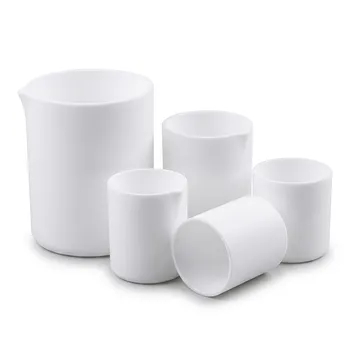
Our extensive manufacturing capabilities cover everything from everyday basic labware—including PTFE and PFA beakers, crucibles, and reagent bottles—to sophisticated hydrothermal synthesis liners, microwave digestion vessels, and custom electrochemical cells. Whether your research involves MXene synthesis, battery testing, or complex fluid transfer with precision tubing, valves, and fittings, our end-to-end custom CNC fabrication ensures you receive components that meet your exact specifications.
From high-volume orders of general consumables like stirring bars and gaskets to bespoke, non-standard machined parts, KINTEK provides the high-performance materials necessary for scientific breakthroughs.
Ready to elevate your lab's performance? Contact us today to discover how our specialized PTFE and PFA solutions can support your next project.
References
- Sana Ullah Asif, Muhammad Ahmed Khan. Ion transport dynamics and cation mobility in hydrothermally synthesized MXene-NiWO <sub>4</sub> composite electrodes for advanced energy storage. DOI: 10.1039/d5ra07538f
This article is also based on technical information from Kintek Knowledge Base .
Related Products
- Custom TFM Reaction Vessel with Stainless Steel Jacket and PTFE Inner Cup for High Corrosion Resistance
- PTFE Lined High Pressure Digestion Vessel 50ml High Temperature Hydrothermal Synthesis Tank
- High Pressure Custom TFM Reactor Stainless Steel Outer Vessel PTFE Inner Cup for Corrosive Synthesis
- High Purity PTFE Microwave Digestion Vessel Replacement Liner for Acid Sample Preparation and Trace Analysis
- High Purity TFM Microwave Digestion Vessels PTFE Acid Evaporation Liners Domestic GT-400 Equivalent Laboratory Reaction Containers
People Also Ask
- Why are high-performance pressure-resistant reaction vessels required for oxygen-assisted hydrothermal conversion at 150 °C?
- How do magnetic stirring and reaction vessels impact MOF-derived carbon quality? Optimize Your Composite Performance
- Why are high-quality fluoropolymer-lined reaction vessels required for alk-Ti3C2Tx MXene? Ensure Purity & HF Resistance
- Why are PTFE-lined reaction vessels necessary for forced degradation studies? Ensure high-purity results and accuracy.
- Why is a high-purity PTFE lined reaction vessel required for the acidic etching of MXenes? Ensure Material Purity.