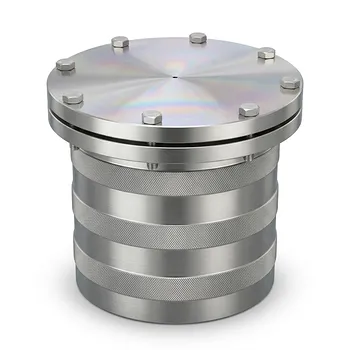
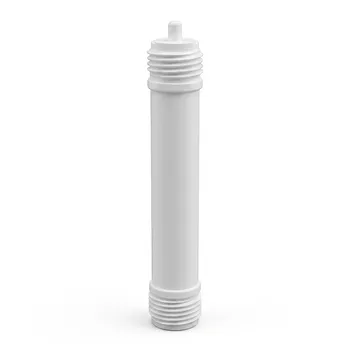
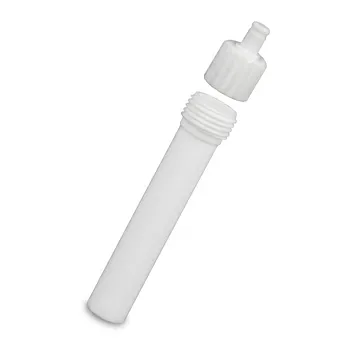
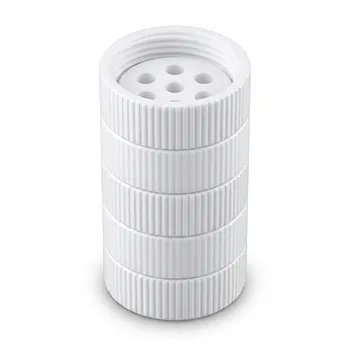
The necessity of PTFE-lined stainless steel autoclaves in the synthesis of zeolites like ECNU-45 stems from the dual requirement of extreme physical containment and absolute chemical inertness. These vessels provide the high-pressure, high-temperature environment needed for crystallization while the PTFE liner protects the reaction from metal contamination and prevents the corrosive alkaline synthesis gel from damaging the autoclave itself. This specific configuration is the industry standard for ensuring the purity and structural integrity of the resulting zeolite framework.
Core Takeaway: A PTFE-lined autoclave is a synergistic tool where the stainless steel shell manages the mechanical stress of autogenous pressure, while the PTFE liner provides a chemically "invisible" reaction chamber that withstands the aggressive alkaline conditions required for zeolite growth.
The Mechanical Role of the Stainless Steel Shell
Managing High Autogenous Pressure
During hydrothermal synthesis, the reaction mixture is heated above its boiling point within a sealed volume, creating significant internal pressure. The stainless steel outer body provides the necessary mechanical strength to safely contain this autogenous pressure without deforming or rupturing.
Maintaining Thermal Stability
Zeolite synthesis often requires maintaining constant temperatures, typically between 90°C and 150°C, for extended periods ranging from hours to days. Stainless steel acts as a stable thermal mass, ensuring that the internal environment remains consistent throughout the dissolution-recrystallization process.
The Chemical Necessity of the PTFE Liner
Resistance to Extreme Alkalinity
The synthesis of zeolites like ECNU-45 frequently involves highly corrosive alkaline synthesis gels, often containing high concentrations of sodium hydroxide (NaOH). Polytetrafluoroethylene (PTFE) is used because it is almost entirely chemically inert and will not degrade or react when exposed to these strong bases at high temperatures.
Preventing Metal Ion Leaching
Without a liner, the alkaline reaction fluid would attack the interior walls of the stainless steel vessel. This corrosion would release metal ions (such as iron, nickel, or chromium) into the synthesis gel, which would then be incorporated into the zeolite framework as impurities, potentially ruining its catalytic or structural properties.
Compatibility with Organic Additives
Many zeolite synthesis protocols utilize organic structure-directing agents or solvents like DMF. PTFE’s universal chemical resistance ensures that these organic components do not react with the container, maintaining the precise chemistry required to guide the formation of the specific ECNU-45 structure.
Understanding the Trade-offs and Limitations
Temperature Constraints
While PTFE is exceptionally inert, it has a functional temperature ceiling, typically around 250°C. Exceeding this limit can cause the liner to soften, deform, or release toxic vapors, meaning researchers must carefully monitor thermal loads during synthesis.
Differential Thermal Expansion
PTFE and stainless steel expand at different rates when heated. If the liner is not properly fitted or if the cooling process is too rapid, the mechanical seal can fail, leading to leaks or the collapse of the liner ("vacuum-collapse") during the cooling phase.
Porosity and Memory Effects
Although highly resistant, PTFE is slightly porous at a microscopic level. Over time, it can "absorb" trace amounts of previous reactions, which may lead to cross-contamination if the liners are not rigorously cleaned or replaced between different zeolite batches.
How to Apply This to Your Synthesis Goals
Choosing the right autoclave configuration depends on the specific requirements of your material's crystallization path.
- If your primary focus is High Framework Purity: Ensure your PTFE liner is high-quality and free of surface scratches where metal ions or old precursors could lodge.
- If your primary focus is Safety in High-Pressure Synthesis: Regularly inspect the stainless steel threads and pressure relief valves, as the external shell is your primary defense against vessel failure.
- If your primary focus is Consistency across Batches: Use dedicated liners for specific zeolite types to eliminate the risk of "seeding" a new reaction with trace remnants of a previous structure.
The proper integration of these materials transforms a potentially hazardous chemical reaction into a controlled, repeatable process for advanced material discovery.
Summary Table:
| Feature | Stainless Steel Outer Shell | PTFE (Teflon) Inner Liner |
|---|---|---|
| Primary Role | Mechanical Strength & Safety | Chemical Protection & Purity |
| Resists | High Autogenous Pressure | Corrosive Alkaline Gels (NaOH) |
| Temperature | Stable Thermal Mass | Operating Limit up to 250°C |
| Function | Prevents Vessel Rupture | Prevents Metal Ion Leaching |
Elevate Your Laboratory Precision with KINTEK
Maximize the success of your hydrothermal synthesis and chemical research with high-performance materials designed for extreme environments. KINTEK is your specialist partner, manufacturing virtually all imaginable laboratory supplies crafted from premium PTFE and PFA.
From everyday basic labware (beakers, measuring cylinders, crucibles, dishes, reagent/wash bottles, centrifuge and digestion tubes), high-purity trace analysis instruments, and cleaning/storage tanks, to comprehensive fluid transfer components (tubing, fittings, valves), sample prep and filtration tools (separatory funnels, burettes, filters, pipettes, tweezers, spatulas), and general consumables (stirring bars, O-rings, gaskets, seal tapes, caps, septa), we provide the tools you need for absolute chemical inertness.
Our expertise extends to advanced derivative and reaction apparatus, including:
- Hydrothermal synthesis liners and microwave digestion vessels
- Standard or custom electrochemical cells and battery testing fixtures
- Microchannel reactors and condensation/reflux devices
Backed by end-to-end custom CNC fabrication, KINTEK is equipped to deliver everything from complex non-standard machined parts and bespoke laboratory setups to high-volume orders, maintaining an exclusive focus on high-performance fluoropolymers.
Ready to upgrade your lab setup? Contact our experts today to discuss your custom requirements!
References
- Yi Luo, Peng Wu. Atomic-scale insights into topotactic transformations in an extra-large-pore zeolite using time-resolved 3D electron diffraction. DOI: 10.1038/s44160-024-00715-1
This article is also based on technical information from Kintek Knowledge Base .
Related Products
- Custom TFM Reaction Vessel with Stainless Steel Jacket and PTFE Inner Cup for High Corrosion Resistance
- PTFE Lined High Pressure Digestion Vessel 50ml High Temperature Hydrothermal Synthesis Tank
- High Pressure Custom TFM Reactor Stainless Steel Outer Vessel PTFE Inner Cup for Corrosive Synthesis
- High Purity PTFE Microwave Digestion Vessel for Soil and Food Analysis Acid Resistant Fluoropolymer Sample Preparation Liners
- High Purity PTFE Microwave Digestion Vessel Replacement Liner for Acid Sample Preparation and Trace Analysis
People Also Ask
- Why are high-performance pressure-resistant reaction vessels required for oxygen-assisted hydrothermal conversion at 150 °C?
- Why are PTFE-lined reaction vessels necessary for forced degradation studies? Ensure high-purity results and accuracy.
- How do magnetic stirring and reaction vessels impact MOF-derived carbon quality? Optimize Your Composite Performance
- Why are high-quality fluoropolymer-lined reaction vessels required for alk-Ti3C2Tx MXene? Ensure Purity & HF Resistance
- Why is a high-purity PTFE lined reaction vessel required for the acidic etching of MXenes? Ensure Material Purity.