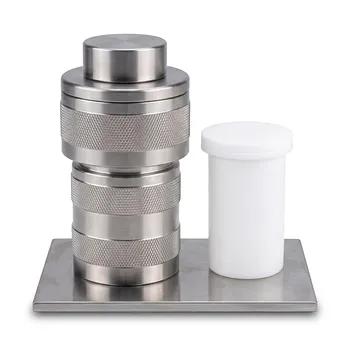
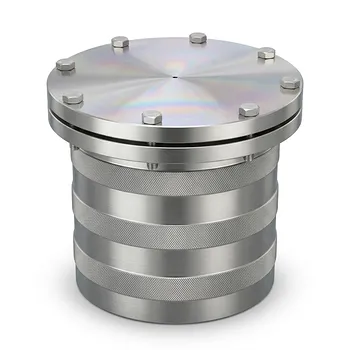
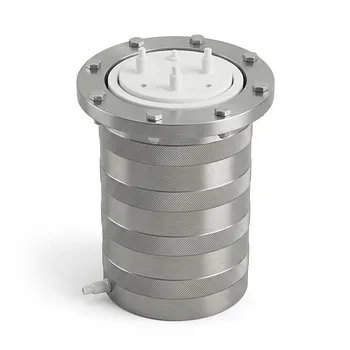
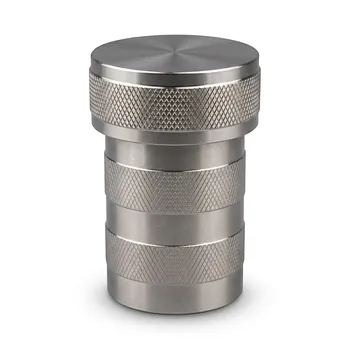
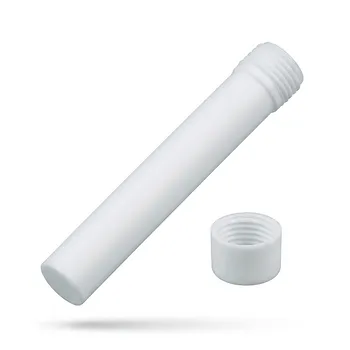
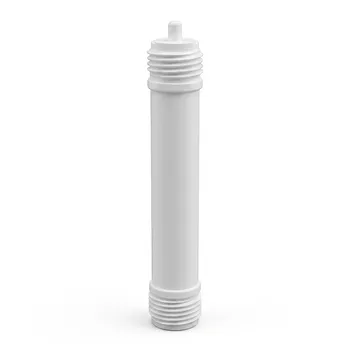
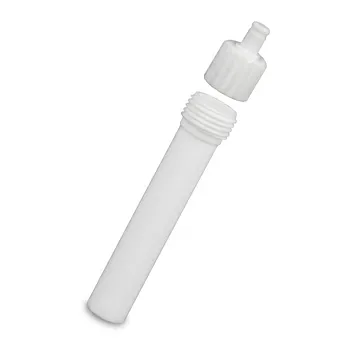
A PTFE-lined pressure autoclave is required because it provides a chemically inert environment that prevents metal precursors and organic solvents from corroding the reactor or contaminating the HEA nanozymes. This specific setup allows the reaction to occur at high temperatures and pressures—conditions necessary for the synthesis—without the risk of introducing metallic impurities from the stainless steel outer shell.
The core necessity of a PTFE liner lies in its ability to separate highly reactive chemical precursors from the structural steel of the autoclave. This ensures both the structural integrity of the equipment and the high purity of the synthesized high-entropy alloy (HEA) nanozymes.
Ensuring Chemical Stability and Purity
Resistance to Corrosive Precursors and Solvents
The solvothermal synthesis of HEAs involves a mixture of diverse metal precursors and organic solvents like acetone and ethanol. At elevated temperatures (often reaching 200°C), these substances become highly aggressive and can easily corrode standard metallic surfaces.
PTFE (Polytetrafluoroethylene) possesses exceptional chemical stability. It acts as a sacrificial but durable barrier that remains unaffected by the harsh chemical environment inside the vessel.
Prevention of Metal Ion Contamination
HEAs are defined by their complex, high-purity atomic structures. If the reaction were in direct contact with a stainless steel shell, iron, nickel, or chromium ions could leach into the solution.
The PTFE liner ensures that the only metals present in the final nanozyme are those specifically added as precursors. This level of control is vital for maintaining the intended catalytic properties of the nanozyme.
Structural Synergy in High-Pressure Environments
The Role of the Stainless Steel Outer Shell
While PTFE is chemically inert, it lacks the mechanical strength to contain the high internal pressures generated during solvothermal heating. The stainless steel reactor provides the necessary "skeleton" to prevent the vessel from bursting.
The combination of the two materials allows for a sealed, high-pressure environment. This pressure is critical for forcing the precursors into the specific crystalline phases required for HEA formation.
Facilitating Product Recovery
The surface of a PTFE liner is extremely smooth and non-stick. This property is essential for the "collection phase" of synthesis.
Synthesized HEA nanozymes often form as precipitates or sediments. The non-stick nature of the liner ensures that the solid powders can be fully recovered without sticking to the walls, maximizing yield and simplifying the cleaning process.
Understanding the Trade-offs
Temperature Limitations
While PTFE is highly resistant, it has a definite thermal ceiling, typically around 250°C. Exceeding these temperatures can cause the liner to soften or undergo thermal decomposition, potentially releasing toxic fumes and ruining the experiment.
Pressure Sensitivity and Seal Integrity
The effectiveness of the autoclave depends entirely on the mechanical seal between the PTFE liner, its lid, and the stainless steel cap. If the liner is deformed by excessive heat or improper tightening, the pressure may leak, leading to inconsistent crystalline development or failed synthesis.
How to Apply This to Your Project
Selecting the Right Setup
- If your primary focus is High Purity: Always use a fresh or thoroughly acid-washed PTFE liner to ensure no cross-contamination from previous synthesis batches.
- If your primary focus is High-Temperature Stability: Monitor your reaction temperature strictly to stay below the 250°C limit of the PTFE material to prevent liner deformation.
- If your primary focus is Maximum Yield: Leverage the non-stick properties of the PTFE liner by using ultrasonic baths or gentle scraping to recover all precipitated HEA powders.
By utilizing a PTFE-lined autoclave, you create the precise, uncontaminated, and high-energy environment necessary to successfully synthesize complex HEA nanozymes.
Summary Table:
| Feature | Benefit for HEA Nanozyme Synthesis |
|---|---|
| Chemical Inertness | Prevents metal precursors from reacting with the vessel and ensures high purity. |
| Non-stick Surface | Facilitates complete recovery of solid HEA powders and simplifies cleaning. |
| Corrosion Resistance | Withstands aggressive organic solvents and metal salts at elevated temperatures. |
| Pressure Containment | Works with the steel shell to create the high-pressure environment needed for crystal growth. |
| Thermal Stability | Provides a safe and stable environment for reactions up to 250°C. |
Elevate Your Nanozyme Synthesis with KINTEK’s High-Performance Fluoropolymer Solutions
Precise research requires uncontaminated environments and durable equipment. KINTEK specializes in manufacturing virtually all laboratory supplies from PTFE and PFA, ensuring your solvothermal synthesis is free from metallic impurities and chemical interference.
From our standard PTFE autoclave liners and microwave digestion vessels to high-purity labware (beakers, crucibles, and reagent bottles) and complex custom fluid transfer components, we provide the tools you need for advanced materials science. Whether you require high-volume consumables or bespoke laboratory setups via our end-to-end custom CNC fabrication, KINTEK is your partner in high-performance fluoropolymers.
Ready to optimize your lab's performance? Contact us today to discuss your custom requirements!
References
- Man Luo, Yi Luo. Physics-informed, dual-objective optimization of high-entropy-alloy nanozymes by a robotic AI chemist. DOI: 10.1016/j.matt.2025.102009
This article is also based on technical information from Kintek Knowledge Base .
Related Products
- PTFE Lined High Pressure Digestion Vessel 50ml High Temperature Hydrothermal Synthesis Tank
- Custom TFM Reaction Vessel with Stainless Steel Jacket and PTFE Inner Cup for High Corrosion Resistance
- High Pressure Custom TFM Reactor Stainless Steel Outer Vessel PTFE Inner Cup for Corrosive Synthesis
- Custom Polytetrafluoroethylene PTFE Constant Pressure Dropping Funnel Corrosion Resistant Fluid Control Assembly with Conversion Stopper Compatibility
- Custom PTFE Constant Pressure Separatory Funnel Corrosion Resistant Low Background Labware for PFA Flasks
People Also Ask
- What are the benefits of using a PTFE-lined vessel for carbon-sulfur cathode treatment? Maximize Purity & Performance
- Why are PTFE-lined pressure digestion vessels required for the preparation of Ag/CeO2 catalysts? Purity & Performance
- What safety features are typically incorporated into high-pressure PTFE digestion vessel designs? Ensure Lab Safety
- What is the function of PTFE lined high-pressure vessels in g-C3N4 synthesis? Achieve High-Purity Material Growth
- Role of High-Pressure Digestion Tanks in Perovskite Synthesis: Achieve Superior Stability and Latent Heat