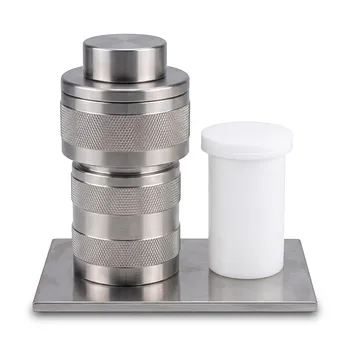
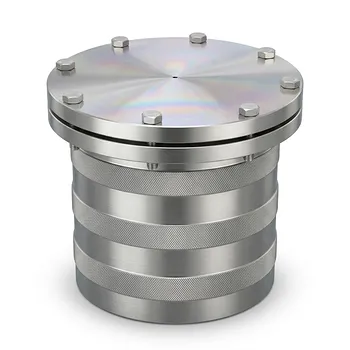
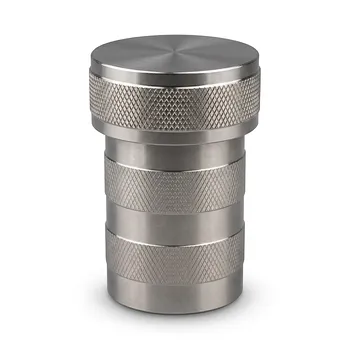
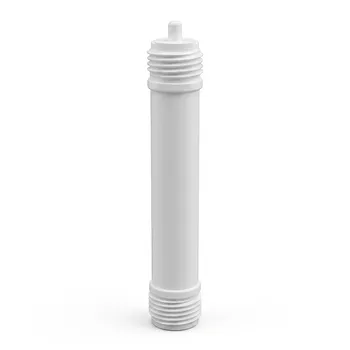
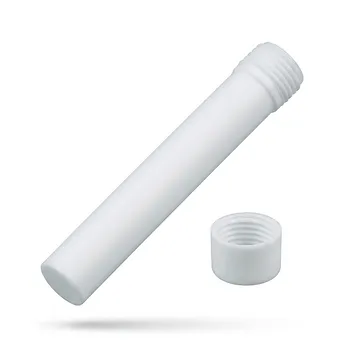
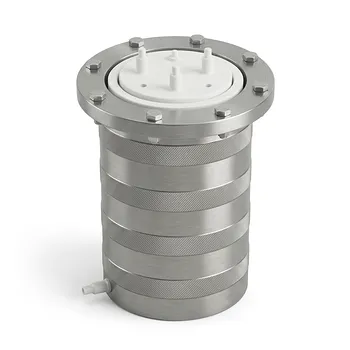
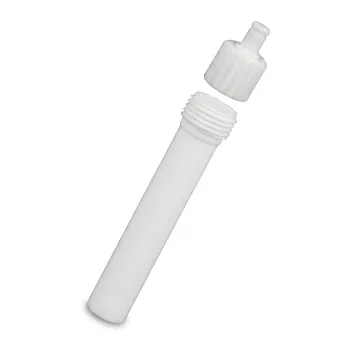
A PTFE-lined hydrothermal autoclave is critical for synthesizing Zinc Oxide (ZnO) tribocatalysts because it provides an inert, corrosion-resistant environment that protects both the sample and the equipment. In the hydrothermal method, the combination of high temperatures, high pressures, and strong alkaline precursors would otherwise corrode the stainless steel reactor, leading to equipment failure and impure catalysts.
Core Takeaway: The PTFE liner acts as a sacrificial yet resilient barrier that ensures the chemical purity of ZnO nanoparticles by preventing metal ion contamination from the autoclave body while simultaneously resisting the caustic effects of the reaction solution.
Protecting Equipment Integrity
Resistance to Chemical Corrosion
Hydrothermal synthesis of ZnO frequently employs strong alkaline solutions, such as sodium hydroxide (NaOH) in concentrations ranging from 3M to 6M. These caustic environments are highly corrosive to standard stainless steel at elevated temperatures. The Polytetrafluoroethylene (PTFE) liner serves as a chemically inert shield, ensuring the structural integrity of the outer pressure vessel.
Handling High Temperature and Pressure
The synthesis process requires a sealed environment to generate autogenous pressure, which facilitates the crystalline development of the ZnO nanostructures. PTFE is uniquely suited for this because it maintains its mechanical properties and chemical stability under the specific temperature and pressure conditions (often up to 150°C–200°C) required for hydrothermal reactions.
Ensuring Catalyst Performance and Purity
Prevention of Metal Ion Contamination
If the reaction solution were in direct contact with the stainless steel autoclave walls, metal ions (such as iron, nickel, or chromium) could leach into the sample. These impurities would disrupt the crystalline lattice of the ZnO, potentially altering its electronic properties and degrading its performance as a tribocatalyst.
Promoting Phase Purity and Crystallinity
The stable, isolated environment provided by the PTFE liner allows for the precise control of the reaction kinetics. This ensures high phase purity and crystallinity, which are essential for the mechanical-to-chemical energy conversion efficiency required in tribocatalysis.
Optimizing Product Recovery and Yield
Low Surface Energy and Non-Stick Properties
PTFE is renowned for its low surface energy, which creates a non-stick interface between the reaction medium and the vessel. This characteristic effectively reduces the adhesion of catalyst particles to the walls of the liner during the growth process.
Improving Stable Powder Yields
Because the particles do not stick to the PTFE surface, researchers can achieve more stable powder yields and easier recovery of the synthesized material. This is particularly important when working with expensive precursors or when precise stoichiometric control of the final ZnO product is required.
Understanding the Trade-offs and Limitations
Thermal Thresholds
While PTFE is highly resilient, it has a definite thermal limit, typically around 200°C to 250°C for standard liners. Exceeding these temperatures can cause the liner to soften or deform, which may compromise the seal and lead to dangerous pressure leaks.
Pressure Limitations and Deformation
Under extreme pressure, PTFE is susceptible to "creep" or permanent deformation over repeated cycles. This requires users to inspect liners regularly for thinning or warping to ensure the safety of the hydrothermal process.
How to Apply This to Your Synthesis Goals
Selecting the Right Equipment Parameters
Choosing a PTFE-lined autoclave is a fundamental requirement for ZnO synthesis, but your specific goals will dictate how you manage the equipment.
- If your primary focus is High Chemical Purity: Ensure the PTFE liner is thoroughly cleaned with acid between uses to remove any residual trace elements from previous reactions.
- If your primary focus is High Particle Yield: Leverage the non-stick properties of the liner by using ultrasonic baths during the recovery phase to dislodge any loosely bound ZnO powders.
- If your primary focus is Safety and Longevity: Strictly adhere to the temperature ratings of your specific liner and avoid rapid cooling cycles that could cause the PTFE to crack or pull away from the stainless steel walls.
By utilizing a PTFE liner, you ensure a controlled, clean, and safe environment that is indispensable for producing high-quality Zinc Oxide tribocatalysts.
Summary Table:
| Feature | Benefit | Impact on ZnO Synthesis |
|---|---|---|
| Chemical Inertness | Resists strong alkalis (NaOH) | Prevents vessel corrosion and sample contamination |
| Non-Stick Surface | Low surface energy | Maximizes powder recovery and simplifies cleaning |
| Metal-Free Barrier | Eliminates ion leaching | Ensures high phase purity and electronic performance |
| Thermal Stability | Operates up to 200°C-250°C | Enables autogenous pressure for crystal growth |
| Structural Protection | Shields stainless steel | Extends the lifespan of the pressure vessel |
Elevate Your Research with KINTEK’s Precision Fluoropolymer Solutions
Achieving high-purity results in hydrothermal synthesis requires equipment that can withstand the most aggressive chemical environments. At KINTEK, we specialize exclusively in high-performance fluoropolymers, providing the reliability you need for sensitive applications like Zinc Oxide tribocatalyst production.
Our extensive range includes:
- Basic Labware: Beakers, crucibles, reagent bottles, and digestion tubes.
- Fluid Transfer: High-purity tubing, fittings, valves, and gaskets.
- Reaction Apparatus: Standard and custom PTFE-lined autoclaves, hydrothermal synthesis liners, and microwave digestion vessels.
- Advanced Tools: Electrochemical cells, battery testing fixtures, and microchannel reactors.
Whether you need standard consumables or bespoke laboratory setups crafted through our end-to-end custom CNC fabrication, KINTEK delivers unmatched quality from single prototypes to high-volume orders.
Ready to optimize your lab's performance? Contact our experts today to discuss your specific requirements and see how our PTFE and PFA expertise can support your next breakthrough.
References
- Nina Kaneva. Tribocatalysis of Cefuroxime Axetil: Effect of Stirring Speed, Magnetic Rods, and Beaker Material Type. DOI: 10.3390/inorganics13090301
This article is also based on technical information from Kintek Knowledge Base .
Related Products
- PTFE Lined High Pressure Digestion Vessel 50ml High Temperature Hydrothermal Synthesis Tank
- Custom TFM Reaction Vessel with Stainless Steel Jacket and PTFE Inner Cup for High Corrosion Resistance
- High Temperature Corrosion Resistant Hydrothermal Synthesis Reactor with TFM Inner Liner and Straight Cylinder Design
- High Purity PTFE Microwave Digestion Vessel for Soil and Food Analysis Acid Resistant Fluoropolymer Sample Preparation Liners
- High Purity TFM Microwave Digestion Vessels PTFE Acid Evaporation Liners Domestic GT-400 Equivalent Laboratory Reaction Containers
People Also Ask
- What are the benefits of using a PTFE-lined vessel for carbon-sulfur cathode treatment? Maximize Purity & Performance
- Why are PTFE-lined pressure digestion vessels required for the preparation of Ag/CeO2 catalysts? Purity & Performance
- What is the function of high-pressure PTFE digestion vessels in mineral analysis? Optimize Sample Mineralization
- What safety features are typically incorporated into high-pressure PTFE digestion vessel designs? Ensure Lab Safety
- What is the function of PTFE lined high-pressure vessels in g-C3N4 synthesis? Achieve High-Purity Material Growth