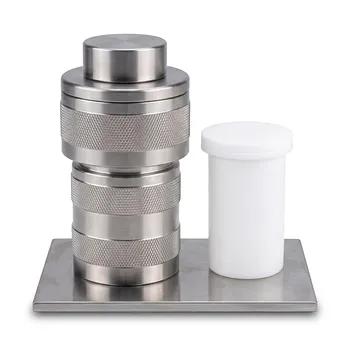
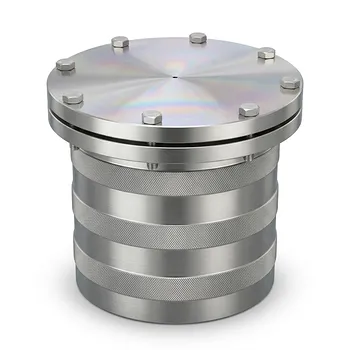
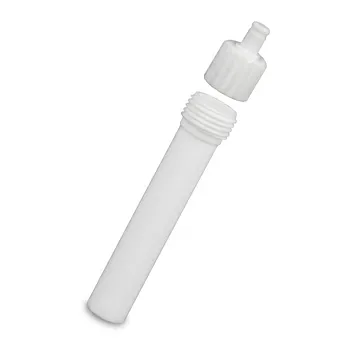
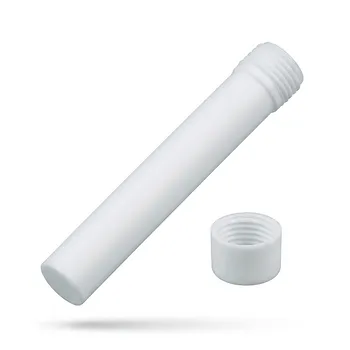
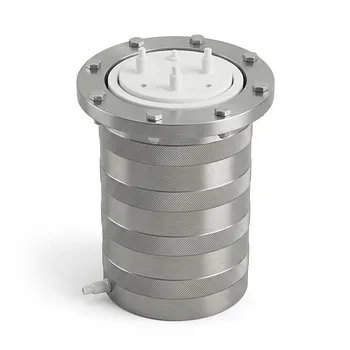
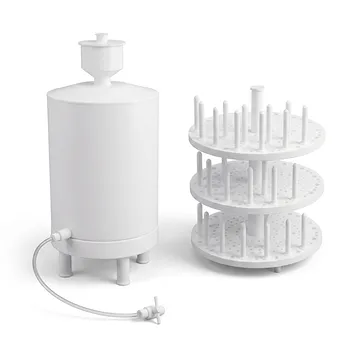
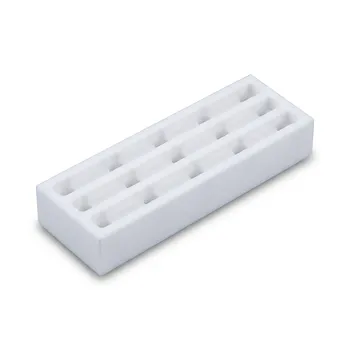
PTFE-lined autoclaves are the industry standard for hydrothermal synthesis because they provide an chemically inert environment capable of withstanding extreme pressure and temperature. This specific lining prevents corrosive reaction media—such as highly alkaline or oxidative solutions—from reacting with the autoclave’s metal shell, which would otherwise lead to metal ion leaching. By isolating the reaction, the PTFE liner ensures the high purity and structural integrity of the metal oxide electrocatalysts grown on substrates.
A PTFE-lined autoclave is essential for hydrothermal synthesis because it creates a "clean-room" environment under high pressure, preventing container corrosion and unwanted metallic contamination. This allows for the precise growth of high-purity crystalline structures required for efficient electrocatalysis.
Maintaining Chemical Purity and Integrity
Prevention of Metal Ion Leaching
Hydrothermal synthesis often involves aggressive chemicals like sodium hydroxide (NaOH) or hydrochloric acid (HCl). The PTFE lining acts as a physical barrier, preventing these corrosive agents from attacking the stainless steel walls of the reactor. This isolation is critical because even trace amounts of leached iron or chromium from the reactor shell can poison the electrocatalyst and alter its performance.
Protection of the Reaction Vessel
Beyond protecting the sample, the liner protects the autoclave itself from structural degradation. Highly oxidative reaction solutions can cause pitting or stress corrosion cracking in unprotected metal shells. The exceptional chemical inertness of PTFE ensures the longevity and safety of the high-pressure equipment.
Structural Integrity of the Catalyst
For electrocatalytic applications, the morphology of the catalyst (such as nanosheets or single crystals) is vital. By preventing side reactions between the vessel walls and the precursors, PTFE ensures that metal hydroxide precursors grow with the intended crystalline phase and orientation.
Facilitating the Hydrothermal Environment
Enabling Subcritical Solvent Conditions
The sealed environment of a PTFE-lined autoclave allows solvents to remain in a liquid state well above their atmospheric boiling points. These subcritical conditions significantly enhance the solubility and reactivity of metal salts. This increased reactivity is what allows for the synthesis of materials that are impossible to produce at standard pressure.
Promoting Controlled Nucleation
The high internal pressure generated within the liner facilitates a state of supersaturation in the precursor solution. This environment is necessary for the uniform nucleation and slow growth of high-quality crystals. For electrocatalysts like MnO2 or TiO2, this results in a highly crystalline phase that improves electron transfer during catalysis.
Non-Stick Surface for Higher Yields
PTFE possesses very low surface energy, which translates to a non-stick surface. This prevents catalyst particles or powders from adhering to the vessel walls during the cooling phase. This feature is crucial for maintaining stable powder yields and ensuring that the synthesized material can be easily recovered.
Understanding the Trade-offs
Temperature Limitations
While PTFE is highly resistant to chemicals, it has a definite thermal ceiling, typically around 220°C to 250°C. Exceeding these temperatures can cause the liner to soften or undergo "cold flow," leading to permanent deformation or failure of the seal. For reactions requiring higher temperatures, researchers must pivot to more expensive materials like PEEK or gold-plated liners.
Thermal Expansion Disparity
PTFE expands significantly more than the stainless steel sleeve when heated. If the liner is not properly sized or if the heating rate is too aggressive, the differential expansion can lead to internal stresses. This can result in the liner becoming stuck inside the autoclave or, in extreme cases, causing the liner to crack.
How to Select the Right Setup for Your Project
Recommendations Based on Synthesis Goals
- If your primary focus is high-purity electrocatalysis: Always use a high-purity PTFE liner to eliminate the risk of metallic impurities interfering with the catalytic activity of your metal oxides.
- If your primary focus is synthesis above 220°C: Avoid standard PTFE and opt for a Para-polyphenylene (PPL) liner, which can safely handle temperatures up to 280°C.
- If your primary focus is maximizing yield of fine powders: Leverage the non-stick properties of PTFE to ensure that the majority of your synthesized catalyst remains in the solution rather than caking on the reactor walls.
The selection of a PTFE-lined autoclave is a fundamental decision that bridges the gap between basic chemical reactions and the sophisticated materials science required for high-performance electrocatalytic electrodes.
Summary Table:
| Feature | Benefit for Hydrothermal Synthesis | Considerations |
|---|---|---|
| Chemical Inertness | Prevents metal ion leaching and corrosive damage. | Ideal for NaOH/HCl environments. |
| Non-Stick Surface | Ensures easy sample recovery and higher powder yields. | Low surface energy of PTFE. |
| Thermal Stability | Maintains integrity up to 220°C—250°C. | Use PPL for >250°C. |
| Pressure Resistance | Enables subcritical conditions for better nucleation. | Critical for crystalline morphology. |
Elevate Your Research with KINTEK’s Precision Fluoropolymer Solutions
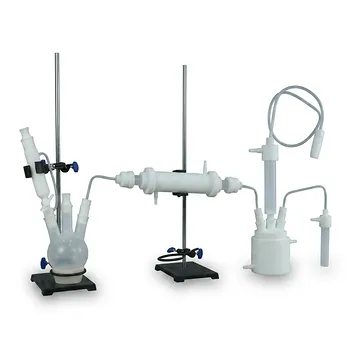
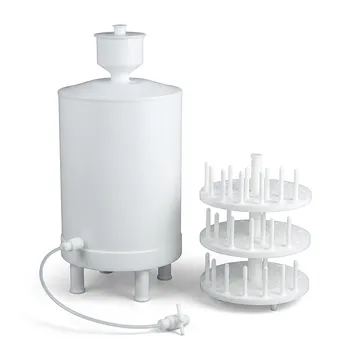
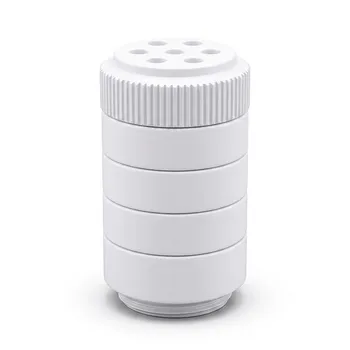
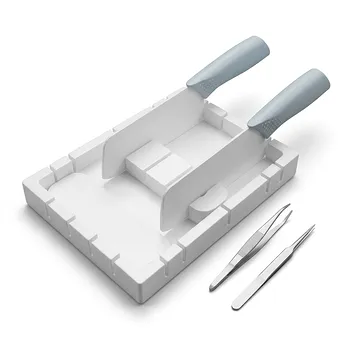
At KINTEK, we specialize in high-performance fluoropolymers, providing everything from everyday basic labware—such as PTFE beakers, crucibles, and reagent bottles—to advanced reaction apparatus like hydrothermal synthesis liners and custom electrochemical cells.
Whether you require high-purity trace analysis instruments, complex fluid transfer components (tubing, fittings, valves), or bespoke non-standard parts crafted through our end-to-end custom CNC fabrication, we deliver the purity and durability your research demands. From high-volume orders to unique laboratory setups, KINTEK ensures your materials meet the most rigorous standards.
Ready to optimize your synthesis workflow? Contact KINTEK today to discover how our PTFE and PFA expertise can support your next breakthrough.
References
- Shuhan Xiao, Yang Yang. Cellulose Valorization via Electrochemical Oxidation: Efficient Formate Generation for Green Energy Storage. DOI: 10.3390/biomass5020027
This article is also based on technical information from Kintek Knowledge Base .
Related Products
- PTFE Lined High Pressure Digestion Vessel 50ml High Temperature Hydrothermal Synthesis Tank
- Custom TFM Reaction Vessel with Stainless Steel Jacket and PTFE Inner Cup for High Corrosion Resistance
- High Purity PTFE Microwave Digestion Vessel Replacement Liner for Acid Sample Preparation and Trace Analysis
- High Purity TFM Microwave Digestion Vessels PTFE Acid Evaporation Liners Domestic GT-400 Equivalent Laboratory Reaction Containers
- High Pressure Custom TFM Reactor Stainless Steel Outer Vessel PTFE Inner Cup for Corrosive Synthesis
People Also Ask
- What are the benefits of using a PTFE-lined vessel for carbon-sulfur cathode treatment? Maximize Purity & Performance
- Why are PTFE-lined pressure digestion vessels required for the preparation of Ag/CeO2 catalysts? Purity & Performance
- What is the function of high-pressure PTFE digestion vessels in mineral analysis? Optimize Sample Mineralization
- What safety features are typically incorporated into high-pressure PTFE digestion vessel designs? Ensure Lab Safety
- What is the function of PTFE lined high-pressure vessels in g-C3N4 synthesis? Achieve High-Purity Material Growth