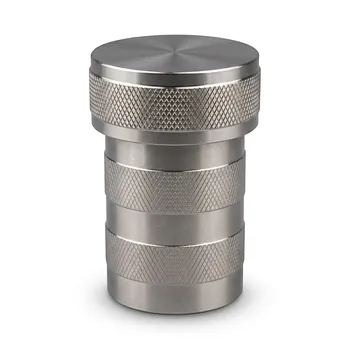
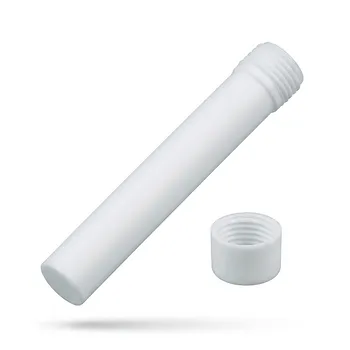
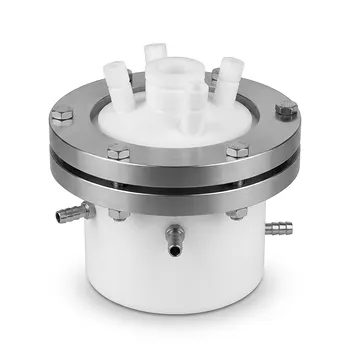
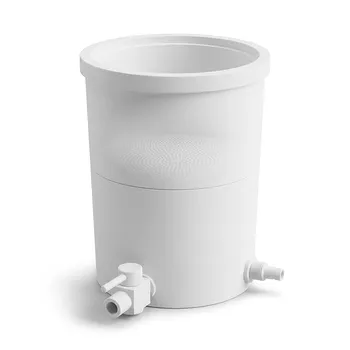
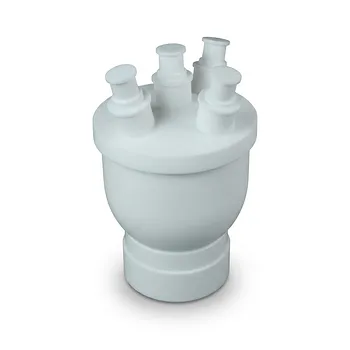
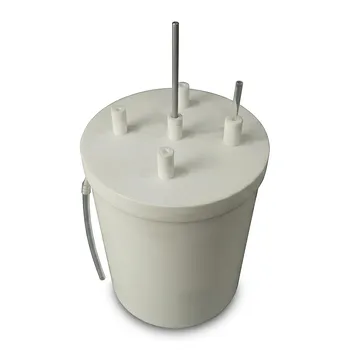
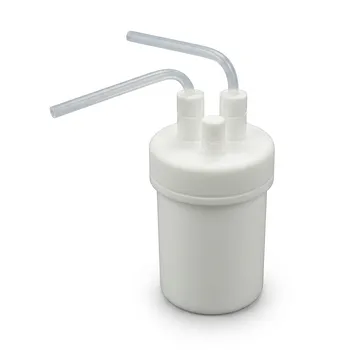
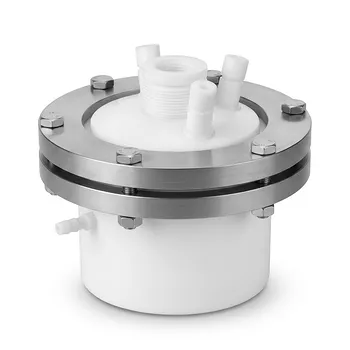
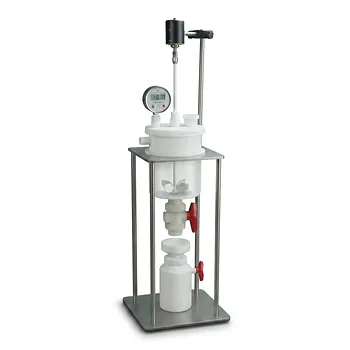
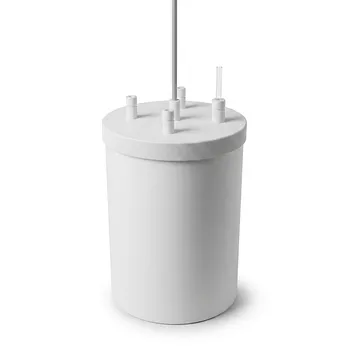
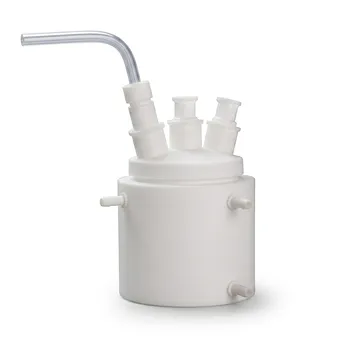
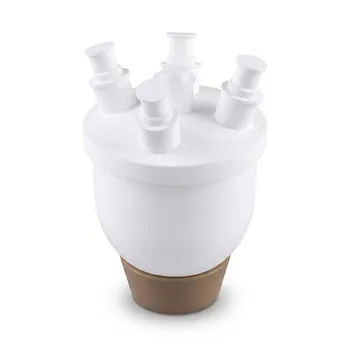
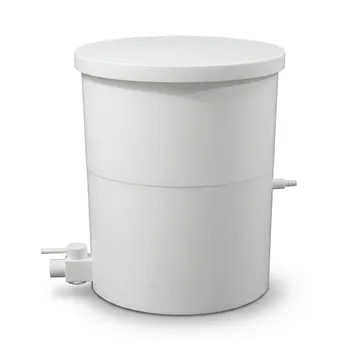
Synthesizing high-performance Carbon Nanotube/Manganese Dioxide (CNT/MnO2) cathode materials requires a hydrothermal synthesis reactor equipped with a Polytetrafluoroethylene (PTFE) liner to ensure uniform crystal growth and high product purity. The PTFE liner provides a chemically inert, non-stick environment that can withstand the high temperatures, autogenous pressures, and aggressive oxidizing agents necessary for the reaction. Without this liner, the synthesis process would risk metal contamination from the reactor walls and poor material recovery.
The Core Takeaway: A PTFE liner is indispensable because it creates a controlled, contamination-free microenvironment that protects both the chemical integrity of the CNT/MnO2 nanocomposite and the physical integrity of the stainless steel reactor vessel under extreme hydrothermal conditions.
Creating the Ideal Crystallization Environment
Managing Autogenous Pressure and Temperature
Hydrothermal synthesis relies on autogenous pressure generated within a sealed vessel to facilitate reactions that would not occur at standard pressure. The PTFE liner allows the system to reach temperatures often ranging from 120°C to 200°C, providing the energy required for the uniform crystallization of manganese dioxide.
Facilitating Uniform Growth on CNTs
For a cathode material to be effective, the MnO2 must deposit evenly onto the carbon nanotube framework. The stable thermal environment maintained within the liner ensures that the nucleation and growth phases of the MnO2 crystals are consistent, resulting in a high-quality nanocomposite.
Safeguarding Purity and Vessel Integrity
Resisting High-Oxidizing Reaction Systems
The synthesis of MnO2 often involves strong oxidants, such as potassium permanganate, and various pH adjusters like nitric acid or sodium hydroxide. PTFE’s exceptional chemical inertness ensures that the liner does not react with these aggressive chemicals, keeping the reaction environment pure.
Preventing Metal Leaching and Shell Corrosion
The external shell of a hydrothermal reactor is typically made of stainless steel, which is susceptible to corrosion from the precursor solutions. The PTFE liner acts as a critical barrier, preventing metal ion leaching from the steel into the solution and protecting the outer vessel from structural damage.
Enhancing Process Efficiency and Recovery
The Advantage of Non-Stick Surfaces
PTFE is renowned for its low friction coefficient and non-stick properties. During the synthesis of CNT/MnO2, these characteristics prevent the nanomaterials from scaling or sticking to the reactor walls, ensuring maximum product recovery.
Simplifying Maintenance and Cleaning
The non-stick nature of the liner also makes the post-synthesis process significantly more efficient. Because the precipitates do not adhere strongly to the PTFE surface, the vessel is easier to clean, reducing the risk of cross-contamination between different experimental batches.
Understanding the Trade-offs
Temperature and Pressure Limitations
While PTFE is highly versatile, it has a definitive thermal ceiling, typically around 250°C, above which it may begin to soften or release toxic fumes. Users must carefully monitor the internal temperature to ensure it does not exceed the liner's rated capacity, as this could lead to vessel failure.
Structural Sensitivity
PTFE is a relatively soft material compared to the metal autoclave it sits within. It can be prone to deformation (creep) under extreme pressure over long durations, meaning liners must be regularly inspected for thinning or "necking" to maintain a proper seal.
How to Apply This to Your Project
Recommendations for Material Synthesis
- If your primary focus is Maximum Purity: Prioritize the use of high-purity, virgin PTFE liners and implement a rigorous pre-cleaning cycle with dilute acid to remove any trace surface contaminants.
- If your primary focus is High Yield and Recovery: Utilize the non-stick properties of the liner by using mechanical agitation or ultrasonic cleaning to ensure all synthesized CNT/MnO2 is recovered from the vessel.
- If your primary focus is Reactor Longevity: Always operate within the recommended temperature range (usually below 200°C for standard PTFE) and inspect the liner for signs of chemical pitting or physical deformation after every use.
By understanding the synergy between the PTFE liner and the hydrothermal process, researchers can consistently produce high-quality cathode materials while maintaining the safety and durability of their laboratory equipment.
Summary Table:
| Key Feature | Benefit for CNT/MnO2 Synthesis | Technical Significance |
|---|---|---|
| Chemical Inertness | Prevents sample contamination | Resists aggressive oxidants like $KMnO_4$ and acids |
| Non-Stick Surface | Maximizes product recovery | Prevents nanomaterial scaling on reactor walls |
| Thermal Stability | Facilitates uniform nucleation | Enables controlled growth at 120°C - 200°C |
| Protective Barrier | Preserves vessel integrity | Stops metal leaching from the stainless steel shell |
| Easy Maintenance | Reduces cross-contamination | Simplifies cleaning between experimental batches |
Elevate Your Nanomaterial Synthesis with KINTEK Precision
Achieving high-performance CNT/MnO2 cathode materials requires uncompromising material purity and equipment reliability. At KINTEK, we specialize in high-performance fluoropolymer solutions tailored for the most demanding laboratory environments.
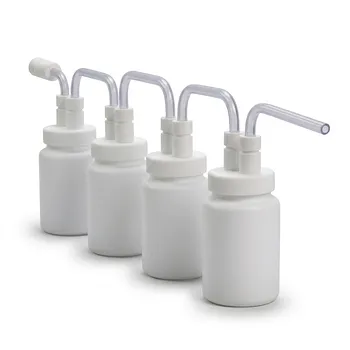
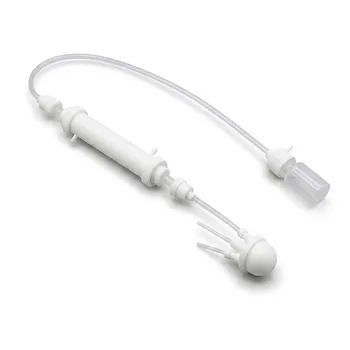
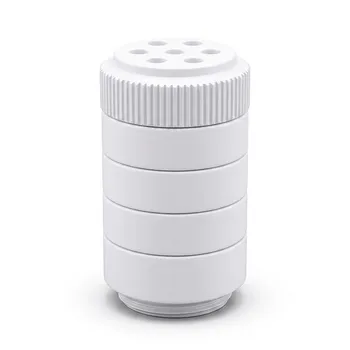
From everyday basic labware like beakers, crucibles, and reagent bottles to advanced hydrothermal synthesis liners, microwave digestion vessels, and custom electrochemical cells, we manufacture virtually all imaginable laboratory supplies crafted from PTFE and PFA. Our expertise extends to comprehensive fluid transfer components (tubing, valves), sample prep tools, and general consumables like high-quality stirring bars and gaskets.
Why partner with KINTEK?
- Unmatched Customization: Backed by end-to-end custom CNC fabrication, we deliver everything from complex non-standard machined parts to bespoke laboratory setups.
- High-Purity Focus: We maintain an exclusive focus on high-performance fluoropolymers to ensure zero contamination in trace analysis and sensitive reactions.
- Scalable Solutions: We are equipped to handle both precision custom orders and high-volume requirements with absolute consistency.
Don't let equipment limitations compromise your research outcomes. Contact KINTEK today to discover how our fluoropolymer expertise can optimize your laboratory’s performance.
References
- Guohong Ma, Jizhang Chen. Biomimetic and biodegradable separator with high modulus and large ionic conductivity enables dendrite-free zinc-ion batteries. DOI: 10.1038/s41467-025-56325-8
This article is also based on technical information from Kintek Knowledge Base .
Related Products
- PTFE Lined High Pressure Digestion Vessel 50ml High Temperature Hydrothermal Synthesis Tank
- High Temperature Corrosion Resistant Hydrothermal Synthesis Reactor with TFM Inner Liner and Straight Cylinder Design
- High Pressure Custom TFM Reactor Stainless Steel Outer Vessel PTFE Inner Cup for Corrosive Synthesis
- Custom TFM Reaction Vessel with Stainless Steel Jacket and PTFE Inner Cup for High Corrosion Resistance
- High Purity TFM Microwave Digestion Vessels PTFE Acid Evaporation Liners Domestic GT-400 Equivalent Laboratory Reaction Containers
People Also Ask
- What are the benefits of using a PTFE-lined vessel for carbon-sulfur cathode treatment? Maximize Purity & Performance
- Why are PTFE-lined pressure digestion vessels required for the preparation of Ag/CeO2 catalysts? Purity & Performance
- What is the function of high-pressure PTFE digestion vessels in mineral analysis? Optimize Sample Mineralization
- What safety features are typically incorporated into high-pressure PTFE digestion vessel designs? Ensure Lab Safety
- What is the function of PTFE lined high-pressure vessels in g-C3N4 synthesis? Achieve High-Purity Material Growth