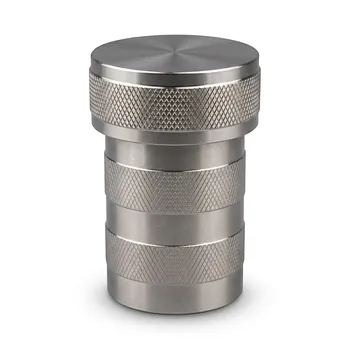
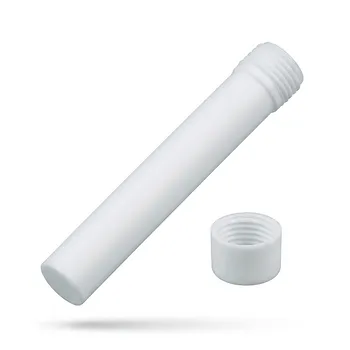
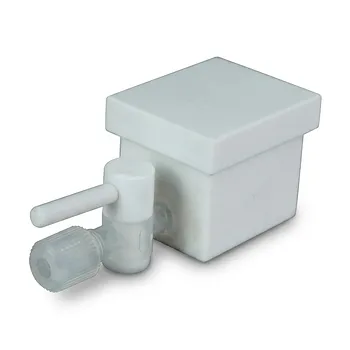
The necessity of a PTFE-lined autoclave for Bismuth Vanadate (BiVO4) synthesis stems from the material's requirement for extreme reaction conditions that would otherwise destroy or contaminate the vessel. To achieve the specific decahedron structure and monoclinic phase of BiVO4, the reaction must occur at temperatures around 180°C to 200°C under high pressure. The PTFE liner acts as a chemically inert shield, protecting the reactor from corrosive precursors like nitric acid and sodium hydroxide while preventing metal ions from the stainless steel body from leaching into the crystals.
Core Takeaway: A PTFE liner is the only viable interface for BiVO4 synthesis because it simultaneously survives aggressive chemical pH adjusters and maintains a high-purity environment, ensuring the resulting nanostructures are free from metallic contamination.
Facilitating Kinetic Growth Environments
Achieving Critical High-Pressure Thresholds
Hydrothermal synthesis of BiVO4 requires a closed system to reach the high-pressure and high-temperature environment (typically 180°C) necessary for kinetic growth. This energy-intensive state allows the precursor molecules to crystallize into specific geometries, such as decahedron structures, which are not possible at atmospheric pressure.
Maintaining Thermal Stability
The PTFE liner provides a stable thermal field that ensures uniform crystallization across the sample. This stability is vital for the anisotropic growth of the crystals, allowing the BiVO4 to develop into the desired phase and morphology consistently.
Chemical Stability in Harsh Precursor Solutions
Resisting Corrosive pH Adjusters
BiVO4 synthesis involves highly aggressive chemicals, including concentrated nitric acid (HNO3) and sodium hydroxide (NaOH), used to adjust the pH of the precursor solution. PTFE is exceptionally resistant to these substances, preventing the vessel from being dissolved or degraded during the long reaction hours.
Protecting the Reactor Structural Integrity
Without the liner, these corrosive agents would directly attack the stainless steel autoclave body. This corrosion would not only lead to equipment failure over time but could also pose a significant safety risk as the structural integrity of the pressure vessel becomes compromised.
Preserving Material Purity and Phase
Eliminating Metal Ion Contamination
The high-purity PTFE liner creates a clean reaction interface that isolates the solution from the metal walls. This prevents the introduction of metal impurity ions (like iron or chromium from the steel) into the BiVO4, which would otherwise alter its electronic properties and chemical purity.
Enhancing Sample Recovery and Phase Purity
PTFE has an extremely low surface energy, which prevents the synthesized nanostructures from adhering to the walls of the vessel. This "non-stick" property ensures higher recovery rates of the sample and prevents the formation of secondary, unwanted phases by maintaining a consistent reaction environment.
Understanding the Trade-offs and Limitations
Temperature Ceiling Constraints
While PTFE is highly durable, it has a functional limit of approximately 200°C to 250°C. Exceeding these temperatures can cause the liner to deform or "creep," potentially leading to a seal failure or the release of toxic fluorinated vapors.
Thermal Lag Considerations
PTFE is a thermal insulator, meaning there is a delay between the heating of the external autoclave shell and the internal solution reaching the target temperature. Researchers must account for this lag to ensure the reaction time at the specific 180°C setpoint is accurate.
Applying These Principles to Your Synthesis
Making the Right Choice for Your Goal
- If your primary focus is high-purity monoclinic BiVO4: Use a high-purity PTFE liner to ensure no transition metals from the autoclave body interfere with the crystal lattice.
- If your primary focus is complex morphology (like decahedrons): Ensure the autoclave is rated for at least 200°C to provide a safety margin for the 180°C kinetic growth process.
- If your primary focus is high-yield sample recovery: Leverage the anti-adhesion properties of the PTFE liner by ensuring it is polished and free of deep scratches where crystals could lodge.
By utilizing a PTFE-lined autoclave, you secure the chemical integrity and structural precision required to produce high-performance Bismuth Vanadate nanostructures.
Summary Table:
| Feature | Benefit for Bismuth Vanadate (BiVO4) Synthesis |
|---|---|
| Chemical Inertness | Resists aggressive HNO3 and NaOH used for pH adjustment. |
| Metal-Free Interface | Prevents iron/chromium leaching to maintain crystal electronic purity. |
| Low Surface Energy | Non-stick surface ensures high sample recovery of nanostructures. |
| Thermal Stability | Maintains a stable environment for anisotropic growth at 180°C-200°C. |
| Reactor Protection | Shields the stainless steel body from corrosion and structural failure. |
Elevate Your Material Synthesis with KINTEK Precision
At KINTEK, we understand that achieving the perfect monoclinic phase of Bismuth Vanadate requires equipment that never compromises on purity. We manufacture a comprehensive range of high-performance fluoropolymer laboratory supplies, specializing in PTFE hydrothermal synthesis liners, microwave digestion vessels, and high-purity trace analysis instruments.
From everyday essentials like PFA beakers and centrifuge tubes to bespoke laboratory setups and complex CNC-machined parts, our end-to-end fabrication capabilities ensure your research is backed by the highest chemical resistance and thermal stability. Whether you are performing advanced electrochemical testing or high-volume sample preparation, KINTEK provides the absolute focus on quality your lab deserves.
Ready to optimize your synthesis workflow? Contact KINTEK today for standard or custom fluoropolymer solutions tailored to your research.
References
- Duygu Takanoğlu Bulut. Exploring the dual role of BiVO4 nanoparticles: unveiling enhanced antimicrobial efficacy and photocatalytic performance. DOI: 10.1007/s10971-025-06682-z
This article is also based on technical information from Kintek Knowledge Base .
Related Products
- PTFE Lined High Pressure Digestion Vessel 50ml High Temperature Hydrothermal Synthesis Tank
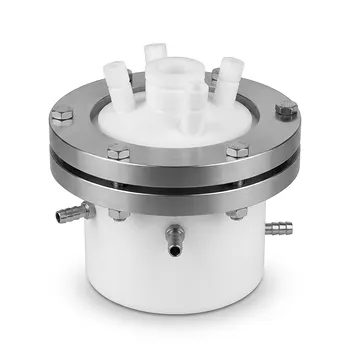
- High Temperature Corrosion Resistant Hydrothermal Synthesis Reactor with TFM Inner Liner and Straight Cylinder Design
- Custom TFM Reaction Vessel with Stainless Steel Jacket and PTFE Inner Cup for High Corrosion Resistance
- High Pressure Custom TFM Reactor Stainless Steel Outer Vessel PTFE Inner Cup for Corrosive Synthesis
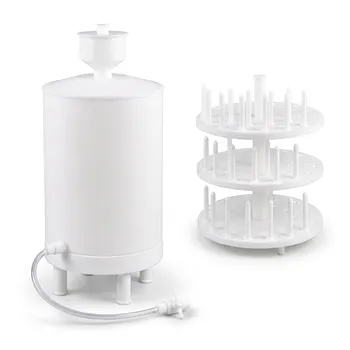
- PTFE Acid Steam Cleaning System HF Resistant Trace Analysis Beaker Digestion Tank Customizable
People Also Ask
- What are the benefits of using a PTFE-lined vessel for carbon-sulfur cathode treatment? Maximize Purity & Performance
- Why are PTFE-lined pressure digestion vessels required for the preparation of Ag/CeO2 catalysts? Purity & Performance
- What safety features are typically incorporated into high-pressure PTFE digestion vessel designs? Ensure Lab Safety
- What is the function of PTFE lined high-pressure vessels in g-C3N4 synthesis? Achieve High-Purity Material Growth
- Role of High-Pressure Digestion Tanks in Perovskite Synthesis: Achieve Superior Stability and Latent Heat