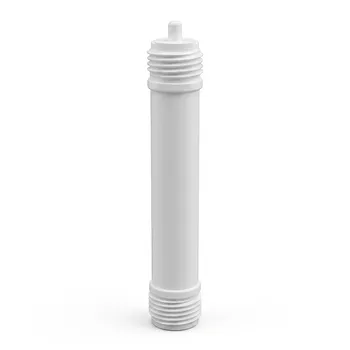
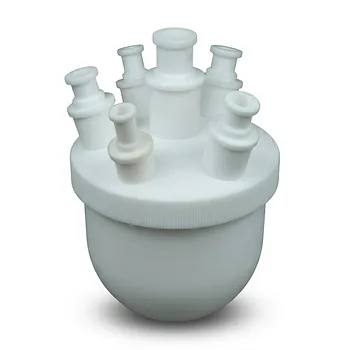
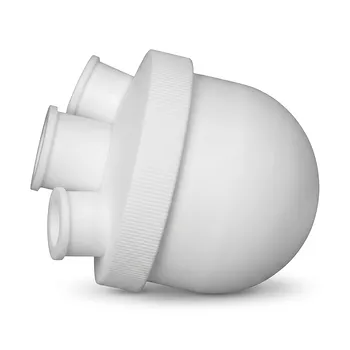
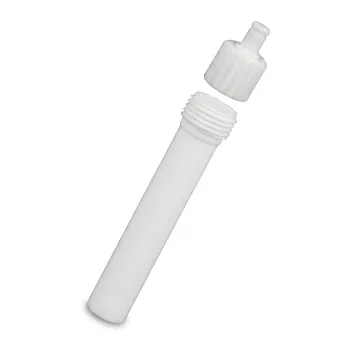
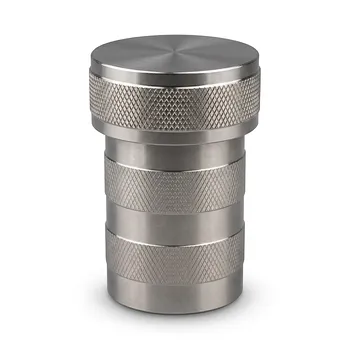
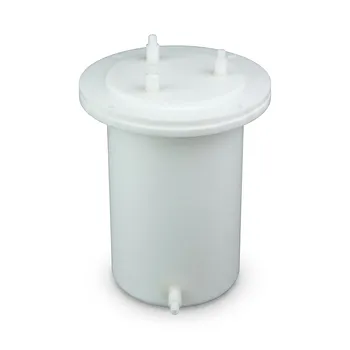
A high-purity PTFE (polytetrafluoroethylene) liner is essential because it provides an inert, non-stick environment that survives the corrosive precursors and high pressures required for crystal growth. By isolating the reaction from the metal autoclave, the liner prevents metal ion contamination and ensures that alpha-Ga2O3 nanorods grow exclusively on the intended substrate rather than the vessel walls.
Core Takeaway: The PTFE liner serves as a critical chemical and physical barrier that maintains the high purity of the reaction environment while facilitating the precise, directional growth of nanostructures by preventing unwanted adhesion and chemical interference.
Maintaining Chemical Purity in Aggressive Environments
Resistance to Corrosive Precursors
Hydrothermal synthesis of alpha-Ga2O3 often utilizes strong alkalis like sodium hydroxide (NaOH) or dilute acids to facilitate mineralized growth. High-purity PTFE is one of the few materials capable of withstanding these "aggressive" media at elevated temperatures without undergoing chemical erosion.
Prevention of Metal Ion Leaching
Standard hydrothermal reactors are typically constructed from stainless steel, which can release metal impurity ions when exposed to high heat and corrosive chemicals. The PTFE liner acts as an absolute barrier, ensuring these ions do not leach into the precursor solution and degrade the crystalline quality of the Ga2O3 nanorods.
Facilitating Controlled Nanostructure Growth
Ensuring Directional Growth on Substrates
For alpha-Ga2O3 nanorods to form uniform arrays on an FTO (Fluorine-doped Tin Oxide) substrate, the reaction environment must remain stable. The low surface energy of PTFE prevents the nanorods from adhering to the container walls, forcing the precursors to interact specifically with the targeted substrate.
Preserving Crystalline Integrity
Any impurities introduced by a lower-quality vessel can disrupt the lattice structure of the growing gallium oxide. Using a high-purity liner ensures the optoelectronic properties and phase purity of the alpha-Ga2O3 are not compromised by external chemical interference.
Understanding the Trade-offs
Temperature Limitations
While PTFE is chemically superior, it has a thermal threshold, typically losing structural integrity above 220°C to 250°C. If a synthesis requires temperatures exceeding this range, researchers must shift to more expensive materials like PFA or specialized metallic alloys, which may introduce new contamination risks.
Pressure Sensitivity and Deformation
Under extreme hydrothermal pressures, PTFE liners can undergo "cold flow" or permanent deformation. This necessitates the use of a properly fitted stainless steel outer shell to provide the mechanical support that the soft PTFE material lacks.
How to Apply This to Your Project
Selecting the right liner configuration is critical for successful nanorod synthesis. Consider these factors based on your specific synthesis goals:
- If your primary focus is phase purity: Always utilize a high-purity PTFE liner to eliminate the risk of chromium or nickel contamination from the autoclave walls.
- If your primary focus is array uniformity: Ensure the liner is thoroughly cleaned with aqua regia or nitric acid between runs to maintain the low-energy surface required for directional growth.
- If your primary focus is high-temperature synthesis (>250°C): Move away from standard PTFE and evaluate PFA liners or gold-plated reaction vessels to maintain chemical inertness at higher thermal loads.
The PTFE liner is not merely a container, but a foundational component that dictates the chemical environment and structural success of the alpha-Ga2O3 synthesis.
Summary Table:
| Feature | Benefit for Ga2O3 Synthesis | Technical Consideration |
|---|---|---|
| Chemical Inertness | Resists corrosive precursors like NaOH and acids | Temperature limit: 220°C–250°C |
| Metal-Free Barrier | Prevents leaching of Cr/Ni ions from steel autoclaves | Preserves optoelectronic properties |
| Low Surface Energy | Prevents adhesion to walls; promotes substrate growth | Facilitates uniform nanorod arrays |
| Material Purity | Eliminates lattice defects from external impurities | High-purity PTFE or PFA recommended |
Elevate Your Research with High-Performance Fluoropolymer Labware
Ensure the integrity of your hydrothermal synthesis with KINTEK’s premium PTFE and PFA solutions. From high-purity hydrothermal synthesis liners and microwave digestion vessels to everyday essentials like beakers, crucibles, and reagent bottles, we provide the inert environment your high-precision research demands.
At KINTEK, we specialize in high-performance fluoropolymers, offering a comprehensive range of products including:
- Basic Labware: Beakers, measuring cylinders, and reagent/wash bottles.
- Fluid Transfer: High-purity tubing, fittings, and valves.
- Sample Prep: Filtration tools, separatory funnels, and trace analysis instruments.
- Advanced Apparatus: Custom electrochemical cells, battery testing fixtures, and microchannel reactors.
Backed by end-to-end custom CNC fabrication, we deliver everything from high-volume standard consumables to complex, bespoke laboratory setups tailored to your specific parameters.
Don’t let contamination compromise your crystalline quality. Contact KINTEK today for high-purity labware and custom-machined parts designed for excellence.
References
- Xin Zhou, Heping Zeng. Mg‐doped α‐Ga<sub>2</sub>O<sub>3</sub> Nanorods for the Construction of Photoelectrochemical‐Type Self‐Powered Solar Blind UV Photodetectors and Underwater Imaging Application. DOI: 10.1002/advs.202413074
This article is also based on technical information from Kintek Knowledge Base .
Related Products
- PTFE Lined High Pressure Digestion Vessel 50ml High Temperature Hydrothermal Synthesis Tank
- High Purity TFM Microwave Digestion Vessels PTFE Acid Evaporation Liners Domestic GT-400 Equivalent Laboratory Reaction Containers
- High Purity PTFE Microwave Digestion Vessel for Soil and Food Analysis Acid Resistant Fluoropolymer Sample Preparation Liners
- Custom Multi Neck PTFE Flask 18L Laboratory Chemical Reactor Vessel for High Purity Synthesis and Stirring Applications
- Custom Multi Neck PTFE Round Bottom Flask for Chemical Synthesis and High Purity Laboratory Research
People Also Ask
- What are the benefits of using a PTFE-lined vessel for carbon-sulfur cathode treatment? Maximize Purity & Performance
- Why are PTFE-lined pressure digestion vessels required for the preparation of Ag/CeO2 catalysts? Purity & Performance
- What is the function of high-pressure PTFE digestion vessels in mineral analysis? Optimize Sample Mineralization
- What safety features are typically incorporated into high-pressure PTFE digestion vessel designs? Ensure Lab Safety
- What is the function of PTFE lined high-pressure vessels in g-C3N4 synthesis? Achieve High-Purity Material Growth