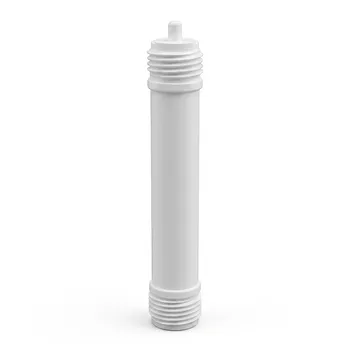
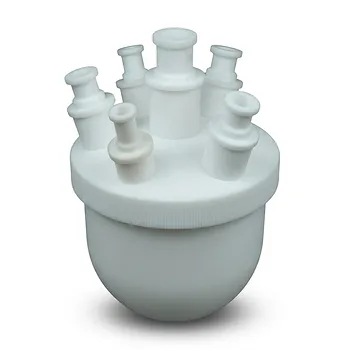
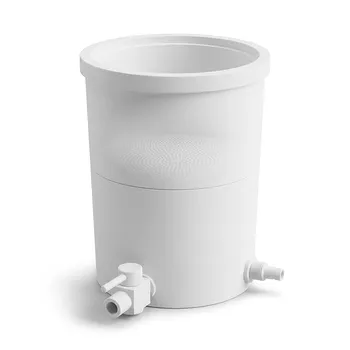
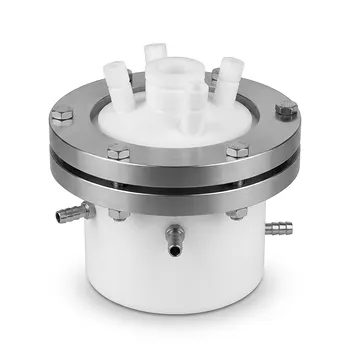
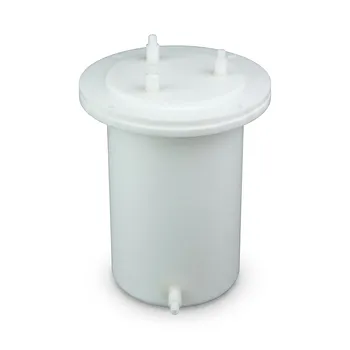
High-purity PTFE liners are the fundamental safeguard in hydrothermal synthesis, acting as a chemically inert barrier between aggressive reaction media and the metal reactor body. This isolation is critical because it prevents corrosive precursors, such as strong acids or sulfides, from attacking the stainless steel autoclave. Furthermore, it ensures that no metal ions from the equipment walls leach into the solution, which is vital for maintaining the precise chemical composition of the synthesized nanomaterials.
The central takeaway is that a high-purity PTFE liner provides a dual-protection mechanism: it preserves the structural integrity of the autoclave while simultaneously ensuring the chemical purity and morphological uniformity of the final product.
Chemical Isolation and Equipment Longevity
Neutralizing Corrosive Precursors
In hydrothermal synthesis, reactions often involve strong alkaline, acidic, or sulfide solutions that would rapidly degrade stainless steel. The PTFE liner acts as an impermeable shield, containing these chemicals within a non-reactive environment.
Extending Reactor Service Life
By preventing direct contact between corrosive media and the autoclave's inner walls, the liner prevents pitting and stress corrosion cracking. This significantly extends the operational lifespan of the high-pressure equipment and ensures laboratory safety.
Maintaining Material Purity and Integrity
Eliminating Metal Ion Contamination
Even trace amounts of metal ions leached from a reactor wall can act as dopants or catalysts, fundamentally altering the results of a synthesis. High-purity PTFE has an extremely low leaching rate, ensuring that the synthesized crystals remain free from unwanted metallic impurities.
Facilitating Controlled Crystal Growth
A clean reaction environment is essential for the controlled growth of microstructures and the development of optoelectronic properties. Without the protection of a high-purity liner, the crystal structure of the synthesized material could be compromised by foreign ions.
Operational and Thermal Advantages
Stability Under Extreme Conditions
PTFE liners are designed to maintain their chemical and thermal stability under the high-temperature and high-pressure conditions of a hydrothermal process. This stability ensures that the liner does not degrade or release organic contaminants into the reaction mixture.
Mold-Release and Sample Recovery
The non-stick properties of PTFE make it easy to collect synthesized nanopowders or single-crystal materials after the reaction is complete. This "mold-release" capability minimizes product loss and prevents cross-contamination between different experimental batches.
Understanding the Trade-offs and Limitations
Temperature and Pressure Constraints
While PTFE is highly resistant to chemicals, it has a fixed thermal ceiling, typically around 220°C to 260°C. Exceeding these temperatures can cause the liner to soften or "creep," which may lead to seal failure or vessel deformation.
Thermal Expansion Mismatch
PTFE expands at a different rate than the stainless steel outer shell when heated. This requires precise engineering of the liner dimensions to ensure a tight seal is maintained without putting excessive mechanical stress on the polymer during the heating cycle.
How to Apply This to Your Synthesis Project
When selecting or using a PTFE liner for your hydrothermal units, consider the specific requirements of your material science goals.
- If your primary focus is high-purity nanocomposites: Always opt for the highest grade of PTFE to minimize leaching and ensure the integrity of your material's optoelectronic properties.
- If your primary focus is reactor safety and longevity: Regularly inspect the liner for signs of "creep" or staining, and never exceed the manufacturer's maximum rated temperature.
- If your primary focus is high-yield powder recovery: Leverage the non-stick nature of the liner to ensure complete collection, but avoid using metal spatulas that could scratch and compromise the PTFE surface.
The high-purity PTFE liner is not merely a container, but a critical component that defines the success and safety of the hydrothermal synthesis process.
Summary Table:
| Key Feature | Benefit to Synthesis | Operational Advantage |
|---|---|---|
| Chemical Inertness | Isolation from aggressive acids/bases | Prevents reactor corrosion & extends life |
| Ultra-Low Leaching | Eliminates trace metal contamination | Ensures morphological & chemical purity |
| Non-stick Surface | High recovery of nanopowders | Minimizes product loss & cross-contamination |
| Thermal Stability | Stable performance up to 260°C | Maintains seal integrity under high pressure |
| Custom Fabrication | Tailored to fit specific autoclaves | Prevents stress from thermal expansion mismatch |
Elevate Your Research with KINTEK’s Fluoropolymer Expertise
Don’t let contamination or equipment failure compromise your materials science breakthroughs. KINTEK specializes in high-performance PTFE and PFA laboratory supplies, providing the absolute chemical resistance and ultra-high purity essential for successful hydrothermal synthesis.
Our extensive manufacturing capabilities cover everything your lab requires:
- Everyday Essentials: Beakers, measuring cylinders, crucibles, reagent/wash bottles, and centrifuge tubes.
- Sample Prep & Filtration: Separatory funnels, burettes, filters, pipettes, and high-purity tweezers.
- Fluid Transfer: Comprehensive tubing, fittings, and valves.
- Advanced Apparatus: Standard and custom hydrothermal synthesis liners, microwave digestion vessels, electrochemical cells, and microchannel reactors.
Backed by end-to-end custom CNC fabrication, KINTEK is equipped to deliver everything from high-volume consumables to complex, non-standard machined parts tailored to your unique experimental setup.
Ready to upgrade to premium laboratory supplies? Contact KINTEK today to discuss your project requirements.
References
- Ümit Bayram, Erkan Yılmaz. Comparison of Photocatalytic and Adsorption Properties of ZnS@ZnO, CdS@ZnO, and PbS@ZnO Nanocomposites to Select the Best Material for the Bifunctional Removal of Methylene Blue. DOI: 10.1021/acsomega.4c07910
This article is also based on technical information from Kintek Knowledge Base .
Related Products
- PTFE Lined High Pressure Digestion Vessel 50ml High Temperature Hydrothermal Synthesis Tank
- High Pressure Custom TFM Reactor Stainless Steel Outer Vessel PTFE Inner Cup for Corrosive Synthesis
- Custom TFM Reaction Vessel with Stainless Steel Jacket and PTFE Inner Cup for High Corrosion Resistance
- High Purity PTFE Microwave Digestion Vessel for Soil and Food Analysis Acid Resistant Fluoropolymer Sample Preparation Liners
- High Purity TFM Microwave Digestion Vessels PTFE Acid Evaporation Liners Domestic GT-400 Equivalent Laboratory Reaction Containers
People Also Ask
- What are the benefits of using a PTFE-lined vessel for carbon-sulfur cathode treatment? Maximize Purity & Performance
- Why are PTFE-lined pressure digestion vessels required for the preparation of Ag/CeO2 catalysts? Purity & Performance
- What safety features are typically incorporated into high-pressure PTFE digestion vessel designs? Ensure Lab Safety
- What is the function of PTFE lined high-pressure vessels in g-C3N4 synthesis? Achieve High-Purity Material Growth
- Role of High-Pressure Digestion Tanks in Perovskite Synthesis: Achieve Superior Stability and Latent Heat