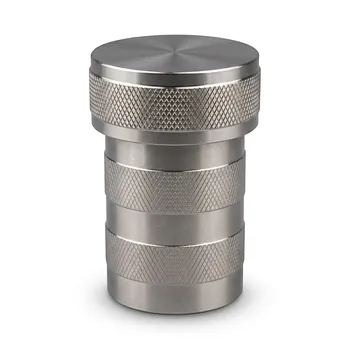
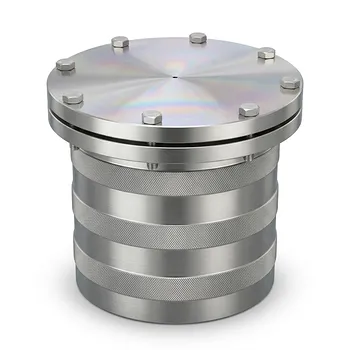
A high-pressure hydrothermal autoclave is indispensable for NiFe-LDH/NF synthesis because it creates a supercritical environment that forces reactants into solution and dictates their crystal growth. At temperatures such as 120°C, the vessel maintains solvents in a liquid state well above their atmospheric boiling point, driving the uniform nucleation of nickel-iron layered double hydroxide (NiFe-LDH) directly onto the nickel foam (NF) substrate. This process is essential for achieving the specific 2D nanosheet morphology required for high-performance electrochemical applications.
The autoclave enables a "bottom-up" synthesis that is impossible at atmospheric pressure by combining thermal energy with autogenous pressure. This synergy ensures high precursor solubility and controlled reaction kinetics, resulting in the well-structured, high-surface-area nanosheet arrays necessary for efficient catalysis.
Thermodynamic and Kinetic Drivers of Synthesis
Overcoming Solubility Barriers
Standard atmospheric conditions often fail to fully dissolve the precursor salts required for NiFe-LDH. The high-pressure environment within the autoclave significantly increases the solubility of metal ions, ensuring a homogeneous reaction medium that is critical for consistent material quality.
Driving Urea Hydrolysis and Precipitation
The synthesis typically relies on the slow release of precipitating agents through reactions like urea hydrolysis. The elevated temperature and pressure within the sealed vessel provide the necessary kinetic energy to drive these reactions, producing the precipitants required to form the LDH structure on the nickel foam.
Controlled Nucleation and Oriented Growth
By providing a stable, closed environment, the autoclave promotes uniform nucleation across the complex geometry of the nickel foam framework. The constant pressure facilitates the slow, oriented growth of crystals, which is why the final product exhibits a well-defined 2D nanosheet array rather than irregular, bulk aggregates.
Material Integrity and Phase Purity
The Critical Role of PTFE Liners
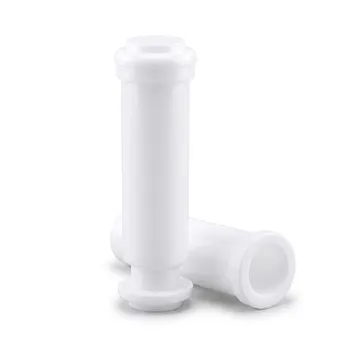
Hydrothermal reactions often involve corrosive alkaline solutions that would damage standard laboratory glassware or stainless steel. High-performance Polytetrafluoroethylene (PTFE) liners are used to provide a chemically inert environment, preventing the reaction solution from leaching metallic impurities from the autoclave’s outer shell.
Prevention of Solvent Loss
Because the vessel is hermetically sealed, it prevents the evaporation of solvents during the long reaction times often required for crystallization. This maintenance of stoichiometric precision ensures that the ratio of nickel to iron remains constant throughout the growth process, resulting in a pure LDH phase.
Achieving Subcritical Fluid States
The autoclave allows the solvent to reach subcritical or supercritical states, where its physical properties—such as viscosity and dielectric constant—change. These states enhance the mass transfer of ions to the surface of the nickel foam, facilitating the formation of tight heterojunction interfaces.
Understanding the Trade-offs and Risks
Pressure Management and Safety
The primary risk in hydrothermal synthesis is the autogenous pressure generated inside the vessel, which increases exponentially with temperature. If the filling degree (the volume of liquid relative to the total volume) is too high, the internal pressure can exceed the safety limits of the stainless steel shell, leading to equipment failure.
Sensitivity to Cooling Rates
While the autoclave controls the growth phase perfectly, the cooling rate after the reaction is equally critical. Rapidly depressurizing or cooling the vessel can cause thermal shock to the nanosheets, potentially leading to the delamination of the NiFe-LDH from the nickel foam substrate or Altering the intended morphology.
How to Apply This to Your Project
Recommendations for Experimental Design
- If your primary focus is maximizing active surface area: Prioritize a precise temperature hold at 120°C to ensure the slow, uniform growth of the 2D nanosheet arrays rather than rapid, disordered precipitation.
- If your primary focus is material purity: Always utilize a high-quality PTFE or PFA liner and ensure it is meticulously cleaned to avoid the introduction of transitional metal impurities that could skew catalytic results.
- If your primary focus is structural stability: Control the cooling phase of the autoclave strictly, opting for natural benchtop cooling rather than water quenching to preserve the adhesion between the LDH and the nickel foam.
The high-pressure autoclave is not merely a container, but a sophisticated chemical reactor that utilizes thermodynamics to transform simple metal salts into complex, high-performance nanostructures.
Summary Table:
| Key Feature | Role in NiFe-LDH/NF Synthesis | Benefit to Final Product |
|---|---|---|
| Autogenous Pressure | Increases metal ion solubility and forces reactants into solution. | Ensures a homogeneous medium for consistent material quality. |
| High Temperature | Provides kinetic energy for urea hydrolysis and nucleation. | Drives the formation of well-structured 2D nanosheet arrays. |
| PTFE/PFA Liners | Provides a chemically inert environment against alkaline solutions. | Prevents metallic contamination and maintains phase purity. |
| Hermetic Sealing | Prevents solvent evaporation during long reaction cycles. | Maintains stoichiometric precision of the Nickel-to-Iron ratio. |
| Subcritical State | Enhances mass transfer of ions to the nickel foam substrate. | Facilitates tight heterojunction interfaces for catalysis. |
Elevate Your Nanomaterial Synthesis with KINTEK
Achieving the precise morphology and phase purity required for high-performance NiFe-LDH/NF precursors demands more than just standard equipment—it requires the specialized performance of high-grade fluoropolymers. At KINTEK, we specialize in the engineering and manufacture of premium laboratory supplies crafted exclusively from PTFE and PFA to ensure your electrochemical research remains free from contamination.
Whether you need everyday basic labware like beakers, crucibles, and reagent bottles, or specialized high-purity trace analysis instruments and digestion tubes, our products provide the chemical inertness your experiments depend on. Our capabilities extend from comprehensive fluid transfer components (tubing, fittings, valves) and sample prep tools (filters, pipettes, spatulas) to advanced reaction apparatus, including custom electrochemical cells, hydrothermal synthesis liners, and microwave digestion vessels.
Why choose KINTEK?
- Custom Fabrication: Our end-to-end CNC machining delivers everything from complex non-standard parts to bespoke laboratory setups.
- High-Volume Reliability: We maintain an absolute focus on high-performance fluoropolymers to support both small-scale research and high-volume industrial orders.
- Precision Engineering: Backed by expertise in fluidics and reaction kinetics, we provide the tools necessary for oriented crystal growth and structural stability.
Ensure your synthesis success with the industry's most trusted fluoropolymer experts. Contact KINTEK today to discuss your custom project or request a quote!
References
- Yu Gao, Xiaoteng Liu. In situ growth of three-dimensional walnut-like nanostructures of W-Ni2P@NiFe LDH/NF as efficient bifunctional electrocatalysts for water decomposition. DOI: 10.1007/s42114-024-01176-y
This article is also based on technical information from Kintek Knowledge Base .
Related Products
- High Temperature Corrosion Resistant Hydrothermal Synthesis Reactor with TFM Inner Liner and Straight Cylinder Design
- PTFE Lined High Pressure Digestion Vessel 50ml High Temperature Hydrothermal Synthesis Tank
- Custom TFM Reaction Vessel with Stainless Steel Jacket and PTFE Inner Cup for High Corrosion Resistance
- High Performance TFM Microwave Digestion Vessel Rack 15 Position Customizable Sample Preparation Support
- High Pressure Custom TFM Reactor Stainless Steel Outer Vessel PTFE Inner Cup for Corrosive Synthesis
People Also Ask
- What is the role of a corrosion-resistant reactor in the synthesis of lignin-based carbon dots? Ensure Maximum Purity
- What are the technical advantages of using hydrothermal synthesis reactors for advanced electronic & optical nanomaterials?
- How does a hydrothermal synthesis reactor facilitate the production of crystalline materials with tailored morphologies? Precision Crystal Growth
- Why is the sealing reliability of a hydrothermal synthesis reactor critical for 24-hour cycles? Ensure Nano-Precision
- What role do hydrothermal synthesis reactors play in CQD preparation? Achieve High-Purity Nanomaterial Synthesis