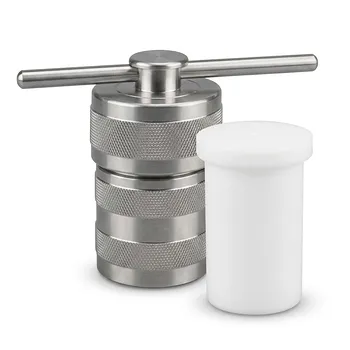
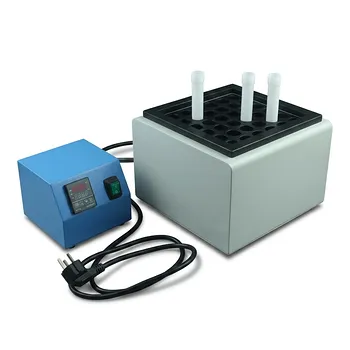
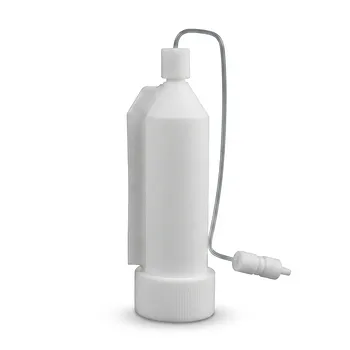
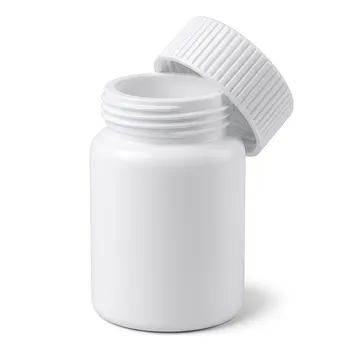
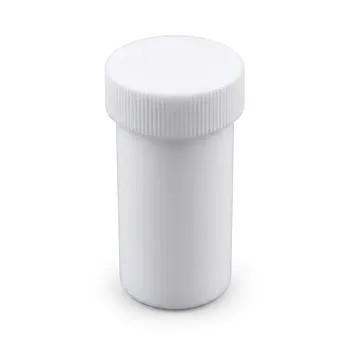
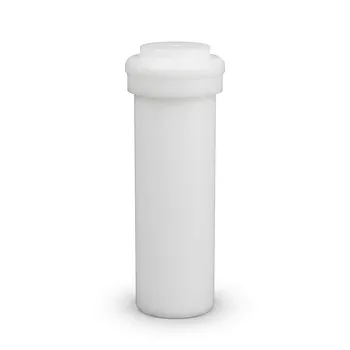
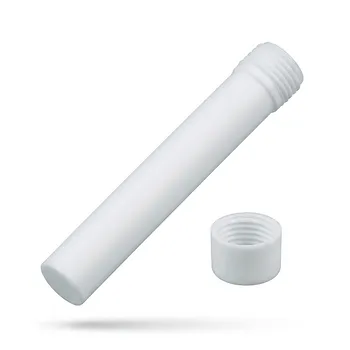
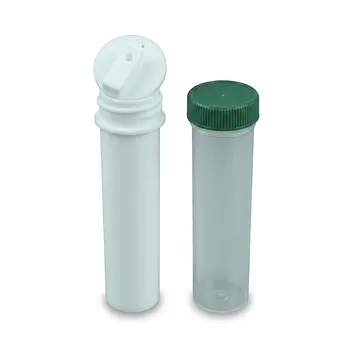
High-pressure digestion vessels equipped with fluoropolymer liners are essential for hematite transformation at 75°C because they provide a dual-defense system: the metal vessel provides necessary pressure containment, while the liner ensures total chemical isolation. This combination allows the reaction to occur in a pressurized, acidic environment without corroding the equipment or contaminating the sample with leached metal ions.
Core Takeaway: The use of a fluoropolymer-lined digestion vessel ensures a strictly controlled chemical environment by combining the structural strength of a high-pressure outer shell with the extreme acid resistance and chemical inertness of a PTFE or PFA liner.
Ensuring Structural Integrity Under Thermal Stress
Pressure Containment at Elevated Temperatures
Even at a moderate temperature of 75°C, mineral transformation experiments involving acids can generate internal pressure that exceeds atmospheric limits. The high-pressure vessel acts as a protective "exoskeleton," providing the mechanical strength necessary to safely contain these forces throughout the transformation process.
Thermal Stability of the Reaction Environment
High-performance fluoropolymers like PTFE or PFA are selected for their ability to maintain physical integrity at 75°C and above. This thermal stability ensures that the liner does not deform or degrade, keeping the hermetic seal intact and preventing the loss of volatile sample components.
Maintaining Chemical Purity and Precision
Preventing Metal Contamination
The primary role of the fluoropolymer liner is to act as an impenetrable barrier between the acidic reaction solution and the metal body of the digestion vessel. Without this liner, the oxalic or hydrochloric acid would react with the metal vessel, leaching foreign ions into the solution and compromising the integrity of the hematite study.
Exceptional Resistance to Acidic Reagents
Hematite transformation often requires aggressive reagents like oxalic acid and hydrochloric acid. Fluoropolymers are uniquely resistant to these corrosive agents, ensuring that the chemical environment remains focused solely on the dissolution and recrystallization of the iron oxide rather than side reactions with the container.
Minimizing Trace Element Loss
Fluoropolymers possess extremely low surface energy, which prevents the adsorption of trace metal elements onto the vessel walls. This ensures that the concentration of ions in the solution remains accurate, which is critical for high-precision mineralogical analysis and quantitative recovery.
Understanding the Trade-offs and Limitations
Temperature and Pressure Boundaries
While these vessels are robust, every fluoropolymer has a specific maximum operating temperature (often around 200°C–250°C) and pressure rating. Exceeding these limits can cause the liner to "creep" or deform, potentially leading to a catastrophic seal failure or permanent damage to the outer metal canister.
Risk of Cross-Contamination
Despite their inertness, fluoropolymers can be porous at a microscopic level. If the liners are not rigorously cleaned between experiments—especially when switching between different mineral matrices—residual trace elements from previous runs can lead to cross-contamination.
How to Apply This to Your Project
Making the Right Choice for Your Goal
To ensure the success of your hematite transformation or mineral digestion project, consider your specific experimental priorities:
- If your primary focus is trace element purity: Prioritize PFA liners over PTFE, as PFA typically offers a smoother surface finish and even lower trace element background values.
- If your primary focus is cost-effective routine digestion: Standard PTFE liners are the industry benchmark, providing excellent resistance to most acids including HF and HCl at a lower price point.
- If your primary focus is working with silicate-rich minerals: Ensure your fluoropolymer system is rated for use with hydrofluoric acid (HF), as this is the only way to break down silicates without destroying the vessel.
By matching the specific fluoropolymer material to your chemical reagents, you ensure a safe, stable, and uncontaminated environment for precise mineralogical research.
Summary Table:
| Feature | Benefit | Scientific Importance |
|---|---|---|
| Metal Outer Shell | Pressure Containment | Safely manages internal forces generated at 75°C and above. |
| Fluoropolymer Liner | Chemical Isolation | Prevents acidic corrosion of the vessel and metal ion leaching. |
| Low Surface Energy | Minimal Adsorption | Ensures accurate trace element concentrations and high sample recovery. |
| Thermal Stability | Hermetic Seal | Prevents deformation of the liner, maintaining a leak-proof reaction environment. |
Elevate Your Research with High-Performance Fluoropolymer Solutions
Precision in hematite transformation and trace analysis requires equipment that never compromises on purity. At KINTEK, we manufacture virtually every laboratory supply imaginable crafted from high-grade PTFE and PFA.
Our extensive range includes:
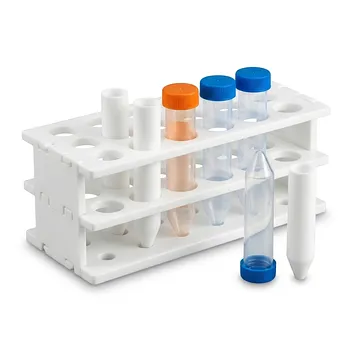
- Everyday Labware: Beakers, measuring cylinders, crucibles, reagent bottles, and centrifuge/digestion tubes.
- Fluid Transfer & Prep: High-purity tubing, valves, filters, pipettes, and separatory funnels.
- Advanced Apparatus: Hydrothermal synthesis liners, microwave digestion vessels, electrochemical cells, and microchannel reactors.
Backed by end-to-end custom CNC fabrication, KINTEK delivers everything from complex non-standard machined parts to high-volume orders with an absolute focus on fluoropolymer performance.
Contact KINTEK Today to discuss your custom project or standard supply needs and ensure your lab is equipped for excellence.
References
- Sandra D. Taylor, Kevin M. Rosso. Facet-dependent growth and dissolution of hematite resulting from autocatalytic interactions with Fe(<scp>ii</scp>) and oxalic acid. DOI: 10.1039/d4en01004c
This article is also based on technical information from Kintek Knowledge Base .
Related Products
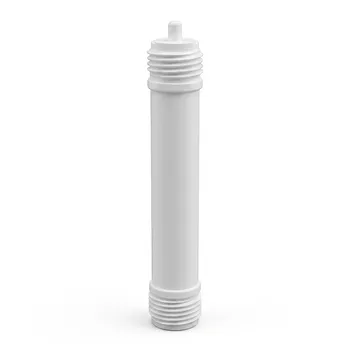
- 5ml High Pressure PTFE Digestion Vessel for Geological Mineral Analysis Corrosion Resistant Polytetrafluoroethylene TFM Digestion Inner Liner
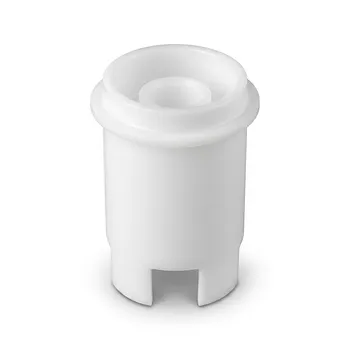
- High Purity PTFE Microwave Digestion Vessel for Soil and Food Analysis Acid Resistant Fluoropolymer Sample Preparation Liners
- High Performance PTFE Microwave Digestion Vessel Replacement Bespoke Fluoropolymer Acid Digestion Tank Intelligent Sample Preparation Labware
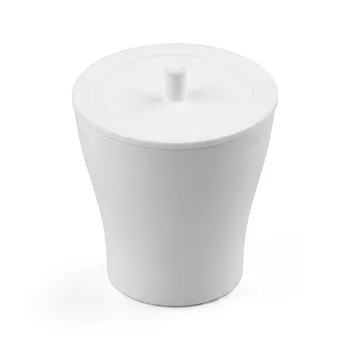
- High Purity 30ml PTFE Corrosion Resistant Fluoropolymer Crucible with Graphite Heating Block Compatibility
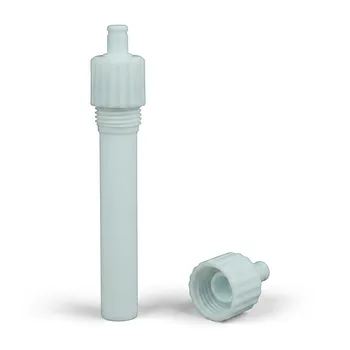
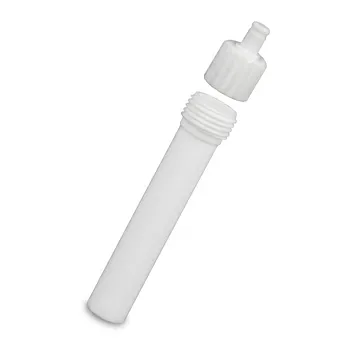
- Custom PTFE Digestion Tube Double Sided Openable High Temperature Corrosion Resistant Low Background
People Also Ask
- What safety features are typically incorporated into high-pressure PTFE digestion vessel designs? Ensure Lab Safety
- What is the function of high-pressure PTFE digestion vessels in mineral analysis? Optimize Sample Mineralization
- Why is a PTFE liner utilized in V2O5 synthesis? Ensure Chemical Purity and Corrosion Resistance
- What is the primary function of a PTFE liner? Key Benefits for Purity and Safety in Hydrothermal Synthesis
- What is the role of a PTFE liner in Bi2O3–TiO2 synthesis? Ensure High Purity and Controlled Crystal Growth