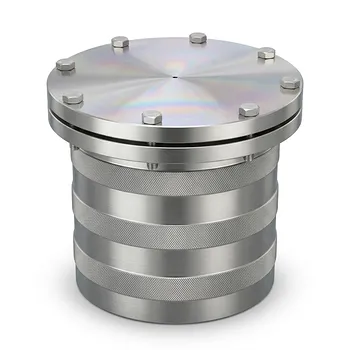
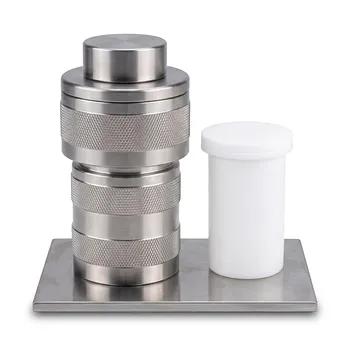
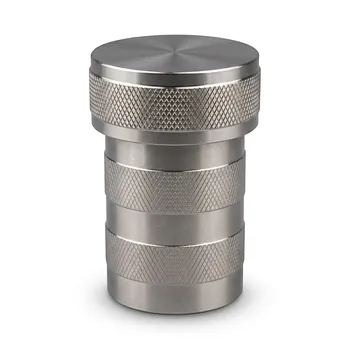
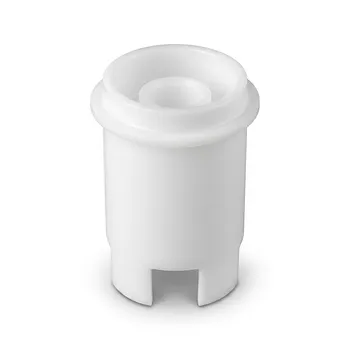
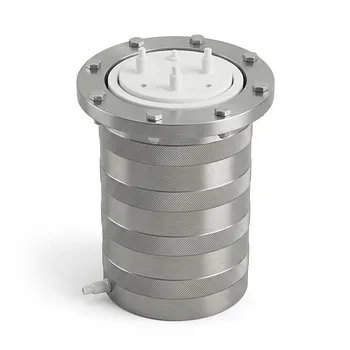
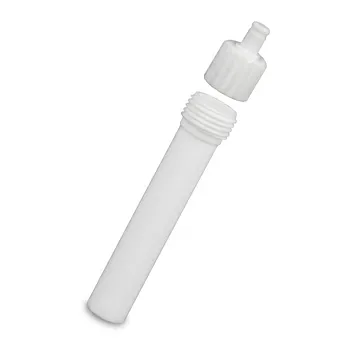
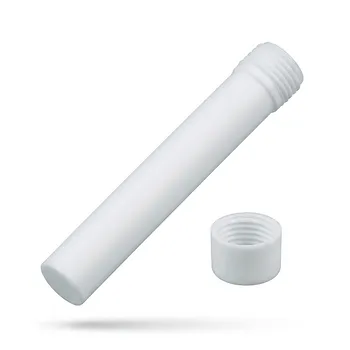
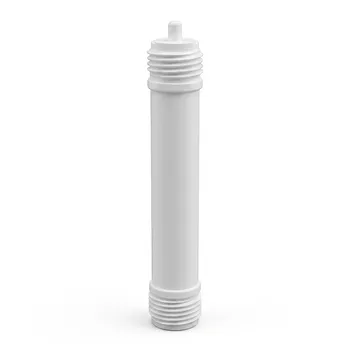
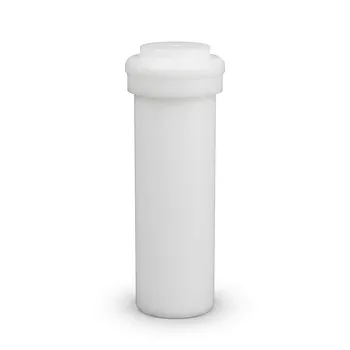
The hydrothermal synthesis of crystalline NiMo oxides demands a high-pressure autoclave with a PTFE liner to ensure chemical purity and structural integrity. This setup provides the necessary sealed environment to generate autogenous pressure at high temperatures, typically around 150°C. The PTFE liner acts as a chemically inert barrier that prevents corrosive precursor solutions from attacking the steel reactor and stops metallic impurities from leaching into the catalyst, which is vital for maintaining specific morphological growth.
A PTFE-lined autoclave is indispensable because it creates a high-temperature, pressurized reaction chamber that remains chemically neutral. This allows for the precise crystallization and oriented growth of NiMo oxides without reactor corrosion or sample contamination.
Managing High-Temperature and High-Pressure Environments
The Role of Autogenous Pressure
Hydrothermal synthesis relies on autogenous pressure, which is the internal pressure generated by heating a liquid in a sealed vessel. This pressure is essential for the uniform nucleation and oriented growth of NiMo crystals, as it forces reactants into specific crystalline phases that are impossible to achieve at atmospheric pressure.
Thermal Stability and Sealing
PTFE (polytetrafluoroethylene) liners are designed to operate within the specific thermal windows required for these reactions, often reaching up to 230°C to 250°C. The liner, combined with the stainless steel outer shell, ensures a tight seal that maintains constant pressure throughout the extended reaction times required for crystallization.
Facilitating Molecular Self-Assembly
The high-pressure environment within the liner promotes the self-assembly of Nickel and Molybdenum species. This is critical for forming complex architectures, such as spherical microstructures or vertically aligned nanosheets, which provide the high specific surface area necessary for catalytic activity.
Protecting Catalyst Purity and Reactor Integrity
Chemical Inertness Against Corrosive Precursors
NiMo oxide precursors often involve high-concentration solutions that can be highly acidic, alkaline, or oxidizing. PTFE is exceptionally resistant to chemical attack, protecting the stainless steel autoclave body from corrosion that would otherwise lead to structural failure of the vessel.
Preventing Metallic Ion Leaching
Without a liner, the reaction environment would cause the stainless steel walls to release metal ion impurities into the solution. These impurities can incorporate into the NiMo lattice, poisoning the catalyst and disrupting the regularity of its microporous structure.
Enhancing Material Recovery
The non-adhesive, smooth surface of PTFE prevents the synthesized nanosheets or powders from sticking to the walls of the reaction vessel. This ensures maximum material recovery and ensures that the morphology of the recovered product is consistent with the desired experimental design.
Understanding the Trade-offs and Limitations
Temperature Ceilings
While PTFE is robust, it has a definitive thermal limit, usually around 220°C to 250°C, above which it may begin to soften or deform. Exceeding these temperatures can lead to liner "creeping" or a loss of the hermetic seal, potentially causing a dangerous pressure release.
Thermal Conductivity Issues
PTFE is an effective thermal insulator, meaning there is a lag between the temperature of the oven and the actual temperature of the reaction solution. Researchers must account for this thermal gradient to ensure the internal solution reaches the precise temperature required for NiMo crystallization.
Porosity and Absorption
Under extreme pressures, PTFE can become slightly porous, allowing small amounts of precursor vapors to penetrate the liner and reach the steel shell. Regular inspection of the space between the liner and the autoclave wall is necessary to prevent hidden corrosion over time.
Selecting the Proper Setup for Your Goal
How to Apply This to Your Project
To achieve the best results in the synthesis of NiMo oxides or similar metallic crystals, consider the following recommendations based on your specific requirements:
- If your primary focus is maximum sample purity: Use a high-purity PTFE liner and ensure it is thoroughly acid-washed between uses to eliminate any residual metal ions.
- If your primary focus is specific morphological growth: Ensure the autoclave is filled to the correct "fill factor" (typically 60-80%) to generate the precise autogenous pressure required for oriented nanosheet formation.
- If your primary focus is high-temperature synthesis (>250°C): Replace the PTFE liner with a PPL (Polyphenylene polymers) liner, which offers higher thermal stability while maintaining chemical inertness.
The integration of a PTFE liner within a high-pressure autoclave provides the chemical isolation and pressurized environment necessary to transform liquid precursors into high-performance crystalline NiMo oxides.
Summary Table:
| Feature | Benefit for NiMo Synthesis | Key Specification |
|---|---|---|
| Chemical Inertness | Prevents metallic leaching and catalyst poisoning | Resistant to acidic/oxidizing precursors |
| Autogenous Pressure | Facilitates oriented growth and self-assembly | Essential for spherical microstructures |
| Non-Adhesive Surface | Maximizes material recovery of nanosheets | Smooth PTFE finish prevents sticking |
| Thermal Stability | Maintains a hermetic seal under heat | Operates reliably up to 230°C–250°C |
Elevate Your Research with KINTEK’s High-Performance Fluoropolymer Solutions
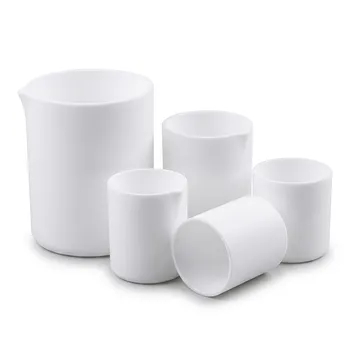
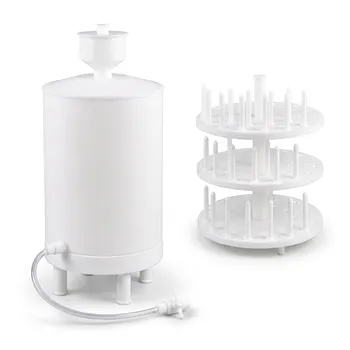
Precision in hydrothermal synthesis demands materials that never compromise. KINTEK manufactures virtually all imaginable laboratory supplies crafted from PTFE and PFA. From everyday basic labware like beakers, digestion tubes, and reagent bottles to advanced reaction apparatus such as hydrothermal synthesis liners, microwave digestion vessels, and custom electrochemical cells, we ensure your experiments achieve maximum purity.
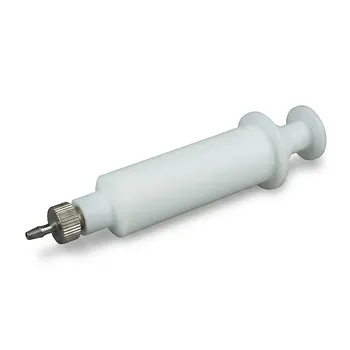
Whether you require standard consumables—including stirring bars, O-rings, and filtration tools—or complex, bespoke laboratory setups via our end-to-end custom CNC fabrication, KINTEK delivers the high-performance fluoropolymer components your research depends on.
Ready to optimize your NiMo oxide synthesis or custom lab project?
Contact KINTEK Today to discuss your requirements and discover the value of our exclusive focus on high-performance materials.
References
- Jiayi Li, Jiwei Ma. Boosting and stabilizing oxygen evolution reaction through Ru single atoms anchored amorphous NiMoOx electrocatalyst. DOI: 10.1038/s41467-025-63870-9
This article is also based on technical information from Kintek Knowledge Base .
Related Products
- Custom TFM Reaction Vessel with Stainless Steel Jacket and PTFE Inner Cup for High Corrosion Resistance
- PTFE Lined High Pressure Digestion Vessel 50ml High Temperature Hydrothermal Synthesis Tank
- High Temperature Corrosion Resistant Hydrothermal Synthesis Reactor with TFM Inner Liner and Straight Cylinder Design
- High Pressure PTFE Digestion Vessel Inner Cup Holder Custom Corrosion Resistant Low Background Teflon
- High Pressure Custom TFM Reactor Stainless Steel Outer Vessel PTFE Inner Cup for Corrosive Synthesis
People Also Ask
- Why are high-performance pressure-resistant reaction vessels required for oxygen-assisted hydrothermal conversion at 150 °C?
- Why are PTFE-lined reaction vessels necessary for forced degradation studies? Ensure high-purity results and accuracy.
- Why are high-quality fluoropolymer-lined reaction vessels required for alk-Ti3C2Tx MXene? Ensure Purity & HF Resistance
- How do magnetic stirring and reaction vessels impact MOF-derived carbon quality? Optimize Your Composite Performance
- Why is a high-purity PTFE lined reaction vessel required for the acidic etching of MXenes? Ensure Material Purity.