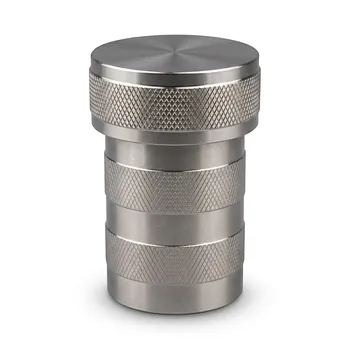
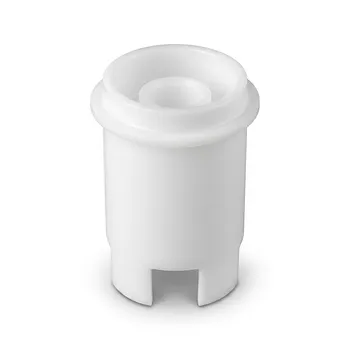
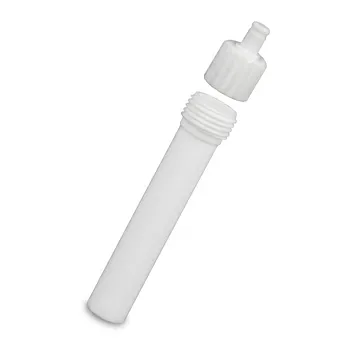
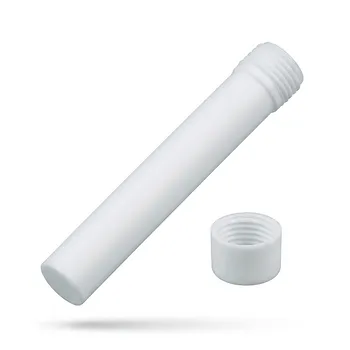
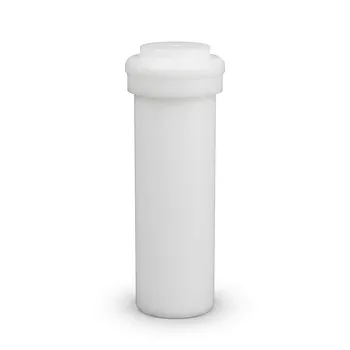
A high-pressure autoclave with a polytetrafluoroethylene (PTFE) liner is essential because it creates a chemically inert, high-pressure environment required to grow high-purity TiO2 crystals. Specifically, the PTFE liner resists the highly corrosive hydrochloric acid (HCl) used in the process, while the high-pressure vessel enables the solution to reach temperatures above its boiling point, facilitating the controlled nucleation of vertically aligned nanowires.
Core Takeaway: The combination of a PTFE liner and a high-pressure vessel provides the unique chemical resistance and thermodynamic conditions necessary to synthesize single-crystal TiO2 nanowires without introducing metallic impurities or damaging the equipment.
The Role of the PTFE Liner in Acidic Environments
Resistance to Strong Acid Corrosion
The synthesis of TiO2 nanowires typically requires the presence of hydrochloric acid (HCl). At the high temperatures used in hydrothermal synthesis, HCl is extremely corrosive and would rapidly degrade a standard stainless steel autoclave.
Prevention of Metal Contamination
Without a PTFE liner, the acidic reaction fluid would react with the metal walls of the autoclave. This reaction would leach metal ions (such as iron, chromium, or nickel) into the solution, poisoning the growth environment and compromising the purity of the TiO2 nanowires.
Maintaining a Clean Reaction Field
PTFE is chosen for its exceptional chemical inertness. It ensures that the reaction environment remains stable and free of external catalysts or impurities, which is critical for achieving high-purity hydrogen titanate precursors or TiO2 structures.
The Necessity of High Pressure and Temperature
Facilitating Heterogeneous Nucleation
The high-pressure environment allows the reaction to occur at temperatures exceeding the ambient boiling point of the solvent. This "superheated" state provides the energy needed for heterogeneous nucleation, where TiO2 grows directly onto specific substrates, like FTO glass.
Promoting Single-Crystal Growth
The sealed, high-pressure vessel creates a uniform reaction field. This allows precursor molecules to interact and reorganize at the atomic level, facilitating the formation of single-crystal nanowires with high crystallinity rather than disordered nanoparticles.
Controlling Nanowire Morphology
Precise control over pressure and temperature within the autoclave is the primary mechanism for adjusting the aspect ratio of the nanowires. This stability ensures that the nanowires grow in a vertically aligned manner with a regular structure.
Understanding the Trade-offs and Limitations
Thermal Constraints of PTFE
While PTFE is highly resistant to chemicals, it has a physical limit. Most PTFE liners are rated for temperatures up to 200°C–220°C; exceeding these limits can cause the liner to deform ("creep") or release toxic vapors.
Pressure Safety Risks
Hydrothermal synthesis generates autogenous pressure, which increases exponentially with temperature. If the autoclave is overfilled (exceeding 80% capacity), the lack of headspace can lead to a dangerous pressure spike that may exceed the safety ratings of the stainless steel shell.
Heat Transfer Latency
PTFE is an insulator, meaning it does not conduct heat as well as metal. This creates a time lag between the oven reaching the set temperature and the internal reaction fluid reaching that same temperature, which must be accounted for in the synthesis timing.
How to Apply This to Your Synthesis Goals
Success in hydrothermal synthesis depends on matching your equipment parameters to your desired material characteristics.
- If your primary focus is High Purity: Ensure the PTFE liner is thoroughly cleaned with dilute acid between runs to prevent cross-contamination from previous reactions.
- If your primary focus is Vertical Alignment: Use a high-pressure setup to ensure stable heterogeneous nucleation on your substrate, rather than homogeneous precipitation in the bulk solution.
- If your primary focus is Morphology Control: Maintain a fill level of 60-80% to ensure consistent autogenous pressure, which is vital for reproducible nanowire aspect ratios.
By providing a sealed, inert, and pressurized environment, the PTFE-lined autoclave transforms a corrosive chemical mixture into a precision growth chamber for advanced nanostructures.
Summary Table:
| Feature | Role in TiO2 Synthesis | Key Benefit |
|---|---|---|
| PTFE Liner | Resists corrosive HCl acid | Prevents metal contamination and leaching |
| High Pressure | Enables superheated solvent state | Facilitates heterogeneous nucleation on substrates |
| Thermal Stability | Maintains uniform reaction field | Promotes single-crystal growth and alignment |
| Sealed Design | Contains autogenous pressure | Allows precise control over nanowire morphology |
Elevate Your Research with KINTEK’s High-Performance Fluoropolymer Solutions
Achieving precision in hydrothermal synthesis requires equipment that stands up to the toughest chemical environments. KINTEK specializes in high-performance PTFE and PFA laboratory supplies, providing the chemical inertness and durability essential for high-purity trace analysis and nanostructure growth.
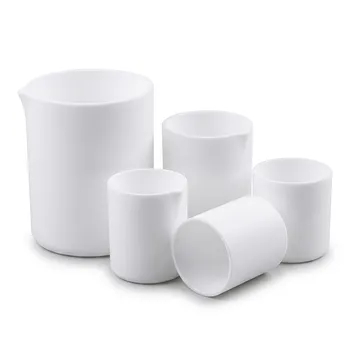
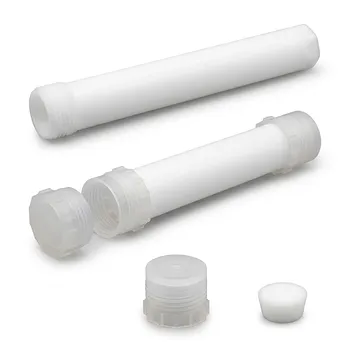
From everyday essentials like beakers, digestion tubes, and reagent bottles to advanced custom-machined autoclave liners, electrochemical cells, and microchannel reactors, we offer an exhaustive range of fluoropolymer products. Whether you require standard consumables (filters, stirring bars, and tubing) or complex, non-standard components crafted via our end-to-end CNC fabrication, KINTEK delivers the reliability your lab demands.
Ready to optimize your synthesis workflow? Contact us today to discuss your custom requirements or high-volume orders and discover how our expertise in high-performance materials can support your next breakthrough.
References
- Virgil Andrei, Peidong Yang. Perovskite-driven solar C2 hydrocarbon synthesis from CO2. DOI: 10.1038/s41929-025-01292-y
This article is also based on technical information from Kintek Knowledge Base .
Related Products
- PTFE Lined High Pressure Digestion Vessel 50ml High Temperature Hydrothermal Synthesis Tank
- Custom TFM Reaction Vessel with Stainless Steel Jacket and PTFE Inner Cup for High Corrosion Resistance
- High Temperature Corrosion Resistant Hydrothermal Synthesis Reactor with TFM Inner Liner and Straight Cylinder Design
- High Pressure Custom TFM Reactor Stainless Steel Outer Vessel PTFE Inner Cup for Corrosive Synthesis
- High Pressure PTFE Digestion Vessel Inner Cup Holder Custom Corrosion Resistant Low Background Teflon
People Also Ask
- What are the benefits of using a PTFE-lined vessel for carbon-sulfur cathode treatment? Maximize Purity & Performance
- Why are PTFE-lined pressure digestion vessels required for the preparation of Ag/CeO2 catalysts? Purity & Performance
- What is the function of high-pressure PTFE digestion vessels in mineral analysis? Optimize Sample Mineralization
- What safety features are typically incorporated into high-pressure PTFE digestion vessel designs? Ensure Lab Safety
- What is the function of PTFE lined high-pressure vessels in g-C3N4 synthesis? Achieve High-Purity Material Growth