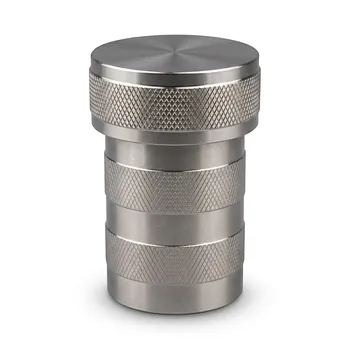
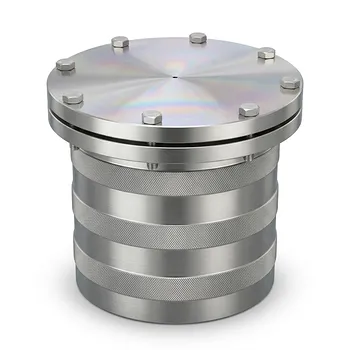
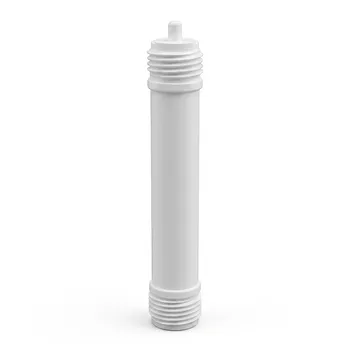
A high-pressure autoclave is the cornerstone of upconversion nanoparticle synthesis because it enables a closed system where solvents can be heated far beyond their atmospheric boiling points. This environment creates the necessary internal pressure to increase reactant solubility and accelerate the reaction kinetics required to form high-quality, crystalline rare earth fluorides.
Core Takeaway: The autoclave and its liner provide a high-energy, chemically isolated environment that allows for precise control over the phase, size, and purity of upconversion nanoparticles, which would be impossible to achieve under standard atmospheric conditions.
The Physics of High-Pressure Environments
Overcoming the Boiling Point Barrier
In an open system, a solvent cannot be heated beyond its boiling point without evaporating. A sealed autoclave prevents this evaporation, allowing the solvent to reach temperatures that facilitate the nucleation and growth of nanoparticles while remaining in a liquid state.
Enhancing Solubility and Reaction Kinetics
Under the high pressure generated inside the vessel, the solubility of solid precursors—particularly rare earth salts—is significantly increased. This "solvothermal" environment accelerates the solid-phase reaction kinetics, ensuring that the precursors react fully and uniformly to form stable crystal structures.
Precision Control of Crystal Properties
Regulating Phase Transformation and Morphology
Upconversion nanoparticles (UCNPs) require specific crystal phases (such as the highly efficient hexagonal $\beta$-phase) to function correctly. The autoclave allows researchers to fine-tune the temperature and pressure to drive these phase transformations and dictate the final shape or morphology of the particles.
Facilitating Uniform Doping
UCNPs rely on the precise co-precipitation or doping of multiple metal ions into a single host lattice. The high-pressure environment ensures that these ions are distributed evenly throughout the crystal structure, which is critical for achieving high upconversion luminescence efficiency.
Engineering Specific Crystal Facets
The internal pressure within the autoclave facilitates the dissolution and recrystallization of precursors. This process allows for "crystal facet engineering," where growth can be directed toward specific crystal planes to optimize the particle's chemical and optical properties.
The Critical Role of the Polymer Liner
Ensuring Chemical Inertness
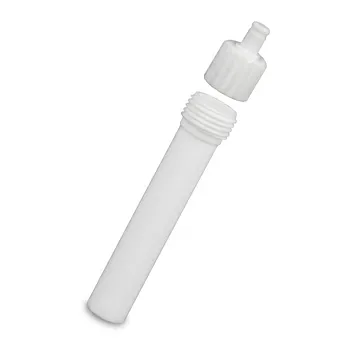
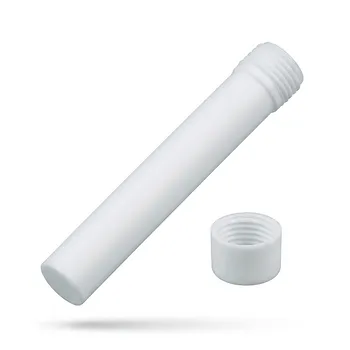
The internal liner, typically made of PTFE (Teflon) or PFA, provides exceptional resistance to high-temperature corrosion. This is vital when using aggressive precursors or strong alkaline solutions, such as 3 M NaOH, which would otherwise damage the reactor.
Preventing Metal Ion Contamination
Without a liner, the high-temperature reaction fluid would leach metal ions from the stainless steel autoclave walls. These impurities can quench the luminescence of upconversion nanoparticles or alter their chemical composition, making the fluoropolymer barrier essential for high-purity synthesis.
Understanding the Trade-offs and Risks
Safety and Pressure Management
While higher pressures yield better crystallinity, they also increase the risk of mechanical failure. Operators must strictly adhere to the fill-level limits of the liner (usually 60-80%) to allow for thermal expansion and prevent catastrophic pressure release.
Scaling and Heating Uniformity
Solvothermal synthesis in an autoclave is inherently a batch process, which can make large-scale production difficult. Additionally, ensuring uniform heating throughout a large-volume autoclave is a technical challenge that can lead to variations in nanoparticle size distribution if not managed correctly.
Making the Right Choice for Your Goal
When setting up your synthesis, the equipment specifications must align with your desired nanoparticle characteristics:
- If your primary focus is Maximum Luminescence Efficiency: Utilize a high-pressure autoclave to drive the transformation to the hexagonal ($\beta$) crystal phase at temperatures above 200°C.
- If your primary focus is High Chemical Purity: Ensure you use a high-purity PTFE or PFA liner to prevent any metal leaching from the reactor body into your rare earth solution.
- If your primary focus is Morphology Control: Use an autoclave that allows for precise temperature increments to regulate the nucleation rate and specific crystal plane growth.
The synergy between the pressure-resistant autoclave and the chemically inert liner is what ultimately enables the creation of nanoparticles with the "tuned" properties required for advanced imaging and sensing.
Summary Table:
| Feature | Role in UCNP Synthesis | Benefit to Final Product |
|---|---|---|
| High-Pressure Vessel | Enables solvothermal conditions > boiling point | Promotes hexagonal $\beta$-phase crystalline growth |
| PTFE/PFA Liner | Provides a chemically inert reaction environment | Prevents metal leaching & preserves luminescence |
| Solubility Enhancement | Dissolves rare earth salts effectively | Ensures uniform doping & reaction kinetics |
| Morphology Control | Regulates nucleation & facet engineering | Dictates precise particle size and optical properties |
Elevate Your Nanomaterial Synthesis with KINTEK
Achieving the perfect hexagonal $\beta$-phase in upconversion nanoparticles requires equipment that never compromises on purity or performance. KINTEK specializes in high-performance fluoropolymer solutions tailored for the most demanding solvothermal environments.
From high-purity PTFE and PFA hydrothermal synthesis liners and digestion tubes to essential labware like beakers, crucibles, and high-purity fluid transfer components (tubing, fittings, valves), we ensure your reaction remains free from metal ion contamination. Our expertise extends from everyday consumables—such as stirring bars, O-rings, and seal tapes—to advanced custom CNC-fabricated reaction apparatus, including electrochemical cells and microwave digestion vessels.
Whether you need bespoke laboratory setups or high-volume orders for your research facility, KINTEK delivers end-to-end precision. Contact us today to discover how our absolute focus on high-performance fluoropolymers can optimize your laboratory’s efficiency and results.
References
- Jinghan Zhang, Guanying Chen. Recent Advances in Upconversion Nanoparticles for Therapeutics: From Fundamentals to Cutting‐Edge Applications. DOI: 10.1002/elt2.70012
This article is also based on technical information from Kintek Knowledge Base .
Related Products
- High Temperature Corrosion Resistant Hydrothermal Synthesis Reactor with TFM Inner Liner and Straight Cylinder Design
- PTFE Lined High Pressure Digestion Vessel 50ml High Temperature Hydrothermal Synthesis Tank
- Custom TFM Reaction Vessel with Stainless Steel Jacket and PTFE Inner Cup for High Corrosion Resistance
- High Pressure Custom TFM Reactor Stainless Steel Outer Vessel PTFE Inner Cup for Corrosive Synthesis
- High Purity PTFE Microwave Digestion Vessel Replacement Liner for Acid Sample Preparation and Trace Analysis
People Also Ask
- What is the role of a corrosion-resistant reactor in the synthesis of lignin-based carbon dots? Ensure Maximum Purity
- What are the technical advantages of using hydrothermal synthesis reactors for advanced electronic & optical nanomaterials?
- How does a hydrothermal synthesis reactor facilitate the production of crystalline materials with tailored morphologies? Precision Crystal Growth
- Why is the sealing reliability of a hydrothermal synthesis reactor critical for 24-hour cycles? Ensure Nano-Precision
- What role do hydrothermal synthesis reactors play in CQD preparation? Achieve High-Purity Nanomaterial Synthesis