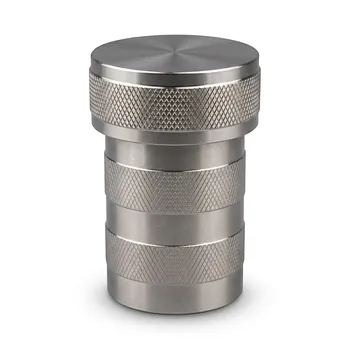
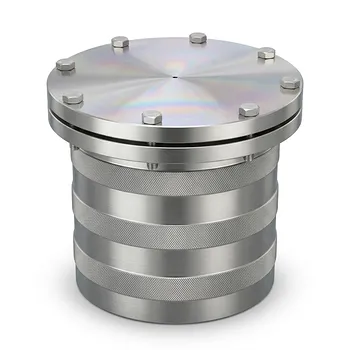
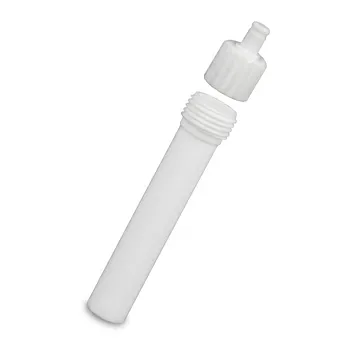
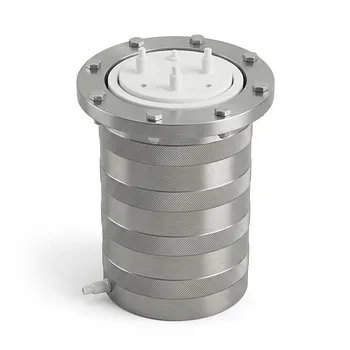
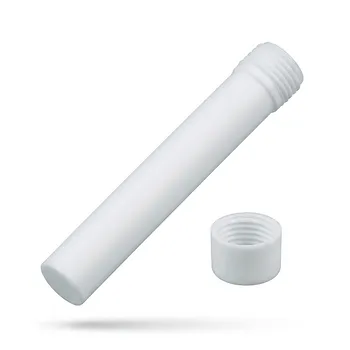
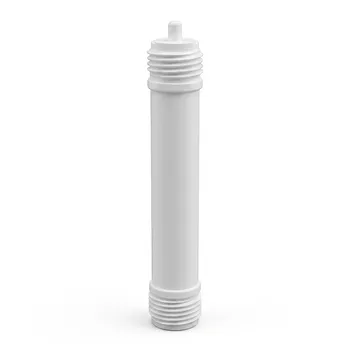
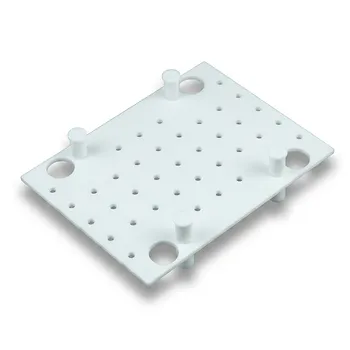
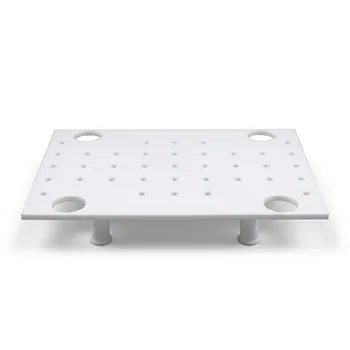
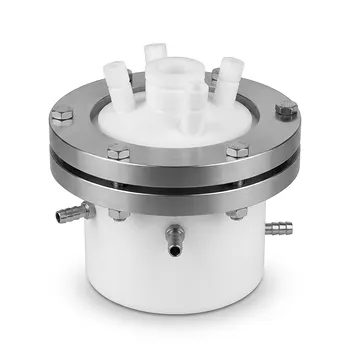
A high-pressure autoclave with a polytetrafluoroethylene (PTFE) liner is essential because it provides an entirely inert reaction environment that prevents the corrosion of the stainless steel vessel. This isolation eliminates the risk of metallic impurities leaching into the solution, which is critical for ensuring the high purity, specific crystalline structure, and electrochemical activity of the synthesized tin dioxide (SnO2) nanopowders.
The core takeaway is that the PTFE liner acts as a chemical barrier that protects the integrity of the SnO2 synthesis by preventing reactant-vessel interaction. Without this liner, acidic or basic precursors would degrade the autoclave and contaminate the product with metal ions.
Ensuring Chemical Purity and Structural Integrity
Preventing Metallic Ion Contamination
The primary function of a PTFE liner is to isolate the reaction solution—often containing acidic precursors like tin tetrachloride—from the stainless steel walls of the autoclave.
At temperatures of 120°C to 150°C, these precursors can be highly corrosive to metal.
If the solution reacts with the steel, ions such as iron, nickel, or chromium leach into the system, acting as unwanted dopants that degrade the electrochemical performance of the SnO2.
Maintaining Precise Chemical Environments
PTFE is one of the most chemically inert materials available to researchers.
In SnO2 synthesis, it ensures that the concentration of tin sources, surfactants, and urea remains exactly as intended by the researcher.
This controlled environment is necessary for the nucleation and growth of specific morphologies, such as flower-like nanostructures or tetragonal rutile nanoparticles.
Facilitating the Hydrothermal Process
Supporting Autogenous Pressure
Hydrothermal synthesis relies on autogenous pressure—pressure generated by heating a liquid in a sealed volume.
The PTFE liner, when properly fitted within a high-pressure autoclave, provides a hermetic seal that maintains this pressure.
This high-pressure environment drives the dissolution-recrystallization process, allowing SnO2 to grow directly onto substrates or into nanorod shapes without needing a seed layer.
Superior Material Recovery
PTFE possesses exceptional non-stick (mold-release) properties.
This allows synthesized nanopowders and single-crystal materials to be easily collected from the liner walls after the reaction is complete.
High recovery rates are achieved because the SnO2 particles do not bond to the liner, ensuring that the yield and monodispersity of the nanotubes or nanoparticles are preserved.
Understanding the Trade-offs
Temperature Limitations
While PTFE is highly resistant to chemicals, it has a functional temperature ceiling, typically around 250°C.
Beyond this point, PTFE begins to undergo thermal decomposition and "creep," where the material loses its structural shape under pressure.
For synthesis requiring temperatures above this range, researchers must switch to alternative liners like Polyetheretherketone (PEEK) or gold-plated vessels.
Thermal Conductivity Challenges
PTFE is an effective thermal insulator, which means it does not conduct heat as efficiently as the steel autoclave body.
This can lead to a thermal lag between the oven temperature and the actual temperature of the reaction solution inside the liner.
Researchers must account for this lag during short-duration reactions to ensure the SnO2 reaches the required activation energy for crystallization.
How to Apply This to Your Project
When selecting or operating a PTFE-lined autoclave for SnO2 synthesis, consider the following strategic guidelines:
- If your primary focus is high-purity electrochemical materials: Always use a fresh or meticulously cleaned PTFE liner to ensure zero cross-contamination from previous metallic reactions.
- If your primary focus is high-temperature synthesis (>250°C): Avoid standard PTFE liners and instead utilize PEEK or quartz liners to prevent vessel failure and liner melting.
- If your primary focus is nanostructure morphology control: Ensure the autoclave filling degree (typically 60-80%) is consistent, as the PTFE liner’s volume directly influences the autogenous pressure generated.
Utilizing a PTFE liner is not merely a preference but a technical requirement for achieving the chemical precision necessary for high-performance tin dioxide synthesis.
Summary Table:
| Feature | Benefit for SnO2 Synthesis | Key Consideration |
|---|---|---|
| Chemical Inertness | Prevents metallic ion leaching (Fe, Ni, Cr) | Critical for electrochemical purity |
| Non-stick Surface | Ensures easy recovery of nanopowders | Maintains high yield and monodispersity |
| Hermetic Sealing | Supports high autogenous pressure | Drives nucleation and crystal growth |
| Thermal Stability | Safe operation up to 250°C | Monitor thermal lag during heating |
| Corrosion Resistance | Protects steel from acidic tin precursors | Extends autoclave equipment lifespan |
Maximize Your Research Precision with KINTEK Fluoropolymer Solutions
Need high-performance materials that withstand the most corrosive environments? KINTEK specializes in an exhaustive range of laboratory supplies crafted exclusively from PTFE and PFA.
From everyday basic labware—such as beakers, crucibles, and reagent bottles—to advanced components like custom electrochemical cells, microwave digestion vessels, and microchannel reactors, we provide the tools necessary for high-purity trace analysis and complex synthesis.
Why choose KINTEK?
- Comprehensive Range: We supply everything from simple stir bars and tubing to complex fluid transfer components and filtration tools.
- Bespoke Fabrication: Backed by end-to-end custom CNC fabrication, we deliver non-standard machined parts and bespoke laboratory setups tailored to your exact specifications.
- High-Volume Reliability: We maintain an absolute focus on high-performance fluoropolymers to ensure your lab achieves consistent, contamination-free results.
Contact our technical team today to discuss your project requirements and discover how our high-performance fluoropolymer expertise can enhance your laboratory’s efficiency.
References
- Poundoss Chellamuthu, Mohammad Shabaz. CTAB modified SnO₂ PEDOT PSS heterojunction humidity sensor with enhanced sensitivity stability and machine learning evaluation. DOI: 10.1038/s41598-025-14184-9
This article is also based on technical information from Kintek Knowledge Base .
Related Products
- PTFE Lined High Pressure Digestion Vessel 50ml High Temperature Hydrothermal Synthesis Tank
- High Temperature Corrosion Resistant Hydrothermal Synthesis Reactor with TFM Inner Liner and Straight Cylinder Design
- Custom TFM Reaction Vessel with Stainless Steel Jacket and PTFE Inner Cup for High Corrosion Resistance
- High Purity PTFE Microwave Digestion Vessel Replacement Liner for Acid Sample Preparation and Trace Analysis
- High Pressure Custom TFM Reactor Stainless Steel Outer Vessel PTFE Inner Cup for Corrosive Synthesis
People Also Ask
- What are the benefits of using a PTFE-lined vessel for carbon-sulfur cathode treatment? Maximize Purity & Performance
- Why are PTFE-lined pressure digestion vessels required for the preparation of Ag/CeO2 catalysts? Purity & Performance
- What safety features are typically incorporated into high-pressure PTFE digestion vessel designs? Ensure Lab Safety
- What is the function of PTFE lined high-pressure vessels in g-C3N4 synthesis? Achieve High-Purity Material Growth
- Role of High-Pressure Digestion Tanks in Perovskite Synthesis: Achieve Superior Stability and Latent Heat