The high-pressure autoclave is the indispensable engine for synthesizing 3D rGO/g-C3N4 nanocomposites because it provides the simultaneous thermal and kinetic energy required to reduce graphene oxide while forcing its macroscopic self-assembly. Without the sealed, high-pressure environment—typically reaching temperatures around 200 °C—the chemical reduction of Graphene Oxide (GO) and the subsequent formation of a stable, porous three-dimensional network would be physically impossible.
Core Takeaway: The autoclave acts as a specialized reactor that uses high-pressure kinetics to transform liquid precursors into a solid 3D framework. It achieves this by maintaining solvents above their boiling points to drive the simultaneous deoxygenation of GO and the structural integration of g-C3N4 nanosheets.
The Kinetic Drivers of Material Transformation
Promoting the Reduction of Graphene Oxide
The primary role of the autoclave is to facilitate the deoxygenation of Graphene Oxide (GO) into reduced Graphene Oxide (rGO). Under standard atmospheric conditions, this reduction often requires harsh chemical reducing agents that can leave impurities.
In a high-pressure environment, the high-pressure kinetics provide the necessary energy to remove oxygen-containing functional groups. This process restores the π-conjugated structure of the carbon lattice, significantly enhancing the electrical conductivity of the final composite.
Driving Macroscopic Self-Assembly
The autoclave does more than just change the chemistry of the individual components; it dictates their physical architecture. The internal pressure forces rGO and g-C3N4 nanosheets to interact and interlock rather than simply restacking into useless, dense layers.
This "forced" interaction is what creates a continuous and stable three-dimensional porous network. This structure is vital for maximizing the specific surface area, ensuring that active sites are accessible for catalysis or adsorption.
Solvent Dynamics Under High Pressure
Maintaining Liquid States Above Boiling Points
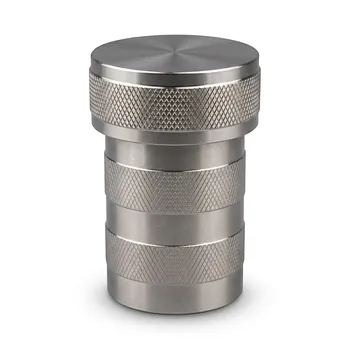
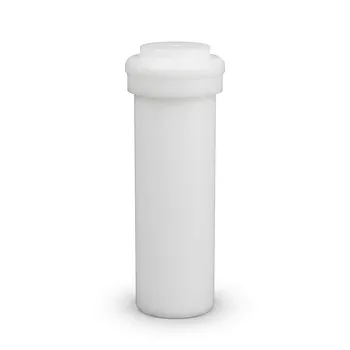
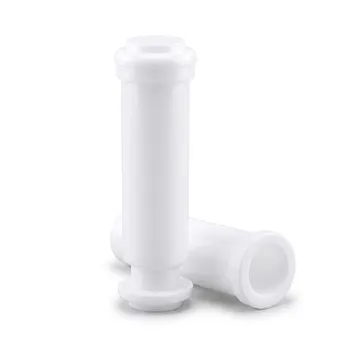
A high-pressure autoclave, typically equipped with a PTFE or PFA liner, allows solvents like water or alcohols to remain in a liquid state at temperatures significantly exceeding their normal boiling points. This creates a subcritical or supercritical environment that is highly reactive.
By preventing evaporation, the system maintains a consistent volume and concentration. This stability is essential for the uniform growth of the g-C3N4 components on the rGO template.
Enhancing Precursor Solubility and Mass Transfer
The high-pressure environment significantly increases the solubility of solid reactants. This allows precursors to dissolve and recrystallize more efficiently than they would in a standard reflux setup.
This accelerated dissolution and recrystallization ensure that the g-C3N4 nanosheets grow in-situ on the surface of the rGO. The result is a tightly integrated composite with high crystallinity and well-defined morphology.
Understanding the Trade-offs and Limitations
Safety and Equipment Fatigue
Operating at 200 °C and high autogenous pressures requires rigorous safety protocols. The PTFE liners have specific thermal limits; exceeding them can cause the liner to soften or release toxic fumes, potentially ruining the batch or damaging the stainless steel shell.
Scaling and Throughput Challenges
Hydrothermal synthesis is inherently a batch process, which can limit its industrial scalability. The time required for the autoclave to reach temperature and, more importantly, the long cooling period required to prevent structural collapse of the 3D network, results in slow production cycles.
Morphological Sensitivity
Small fluctuations in temperature or pressure can drastically alter the final structure. If the pressure is not maintained correctly, the 3D network may collapse into a 2D sediment, negating the benefits of the high surface area.
How to Apply This to Your Project
Making the Right Choice for Your Goal
- If your primary focus is maximizing specific surface area: Prioritize a slow cooling phase after the hydrothermal reaction to preserve the delicate 3D porous architecture from capillary force damage.
- If your primary focus is high electrical conductivity: Ensure the reaction temperature reaches at least 200 °C to maximize the kinetic reduction of GO into rGO.
- If your primary focus is material purity: Utilize a high-quality PTFE-lined autoclave to avoid metallic contamination from the reactor walls and eliminate the need for post-synthesis calcination.
- If your primary focus is structural stability: Focus on the ratio of g-C3N4 to GO; the autoclave's pressure will drive the coordination assembly, but the precursor ratio determines the final mechanical integrity of the 3D framework.
The high-pressure autoclave is not merely a heater, but a precision tool that uses extreme physical conditions to bridge the gap between molecular precursors and functional 3D architectures.
Summary Table:
| Feature | Role in 3D rGO/g-C3N4 Synthesis | Benefit to Nanocomposite |
|---|---|---|
| High-Pressure Kinetics | Facilitates deoxygenation of Graphene Oxide (GO) | Restores conductivity & π-conjugated structure |
| Thermal Energy (~200°C) | Maintains solvents above boiling points (subcritical) | Accelerates reaction rates & crystallinity |
| Physical Confinement | Forces macroscopic self-assembly of nanosheets | Creates stable, porous 3D network |
| PTFE/PFA Liners | Ensures chemical inertness & prevents contamination | High purity & precise morphological control |
| Solubility Enhancement | Increases dissolution & recrystallization rates | Uniform in-situ growth of g-C3N4 on rGO |
Elevate Your Research with KINTEK’s Precision Fluoropolymer Engineering
To achieve the delicate balance of pressure and temperature required for high-performance 3D rGO/g-C3N4 nanocomposites, you need equipment that never compromises on purity or durability. KINTEK specializes in high-performance fluoropolymer materials, offering an exhaustive range of laboratory supplies specifically designed for demanding hydrothermal synthesis.
From essential hydrothermal synthesis liners, microwave digestion vessels, and high-purity trace analysis instruments to everyday basic labware like PTFE/PFA beakers, crucibles, and reagent bottles, we provide the tools for success. Our expertise extends to comprehensive fluid transfer components (tubing, fittings, valves), sample prep tools (filters, pipettes, tweezers), and advanced reaction apparatus like custom electrochemical cells and battery testing fixtures.
Why choose KINTEK?
- End-to-End Custom CNC Fabrication: We deliver everything from complex, non-standard machined parts to bespoke laboratory setups.
- Absolute Material Focus: We maintain an exclusive focus on high-performance PTFE and PFA to ensure zero contamination.
- Scalable Solutions: We are equipped for both specialized custom orders and high-volume consumables.
Unlock superior material properties today. Contact us now to discuss your specific laboratory needs or custom fabrication requirements!
References
- Kesheng Cao, Wei Liu. Facile preparation of a 3D rGO/g-C<sub>3</sub>N<sub>4</sub> nanocomposite loaded with Ag NPs for photocatalytic degradation. DOI: 10.1039/d5ra02399h
This article is also based on technical information from Kintek Knowledge Base .
Related Products
- PTFE Lined High Pressure Digestion Vessel 50ml High Temperature Hydrothermal Synthesis Tank
- High Temperature Corrosion Resistant Hydrothermal Synthesis Reactor with TFM Inner Liner and Straight Cylinder Design
- Custom TFM Reaction Vessel with Stainless Steel Jacket and PTFE Inner Cup for High Corrosion Resistance
- High Performance TFM Microwave Digestion Vessel Rack 15 Position Customizable Sample Preparation Support
- High Pressure PTFE Digestion Vessel Inner Cup Holder Custom Corrosion Resistant Low Background Teflon
People Also Ask
- What are the benefits of using a PTFE-lined vessel for carbon-sulfur cathode treatment? Maximize Purity & Performance
- Why are PTFE-lined pressure digestion vessels required for the preparation of Ag/CeO2 catalysts? Purity & Performance
- What safety features are typically incorporated into high-pressure PTFE digestion vessel designs? Ensure Lab Safety
- What is the function of PTFE lined high-pressure vessels in g-C3N4 synthesis? Achieve High-Purity Material Growth
- Role of High-Pressure Digestion Tanks in Perovskite Synthesis: Achieve Superior Stability and Latent Heat