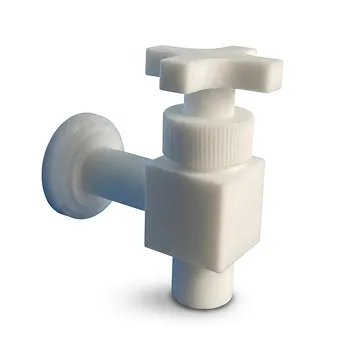
The gas sampling valve is the critical interface for safety and analytical precision in hydrothermal research. It serves as the primary mechanism for the controlled release of pressurized waste gases, such as hydrogen sulfide and carbon dioxide, once a reaction is complete. Beyond its role in hazard mitigation, the valve enables the collection of gas-phase products, which is essential for calculating mass balances and deciphering the complex decomposition mechanisms of raw materials.
A gas sampling valve transforms a hydrothermal reactor from a simple pressure vessel into a sophisticated analytical tool by enabling safe depressurization and the precise capture of gaseous reaction data.
Ensuring Laboratory Safety and Integrity
Controlled Depressurization
Hydrothermal reactions occur under high heat and pressure, often generating significant gaseous byproducts. The sampling valve allows for a gradual, manual discharge of these gases rather than an uncontrolled or explosive release.
Prevention of Sample Splashing
Sudden drops in pressure can cause the liquid phase inside the reactor to surge or splash violently. By regulating the exit flow, the valve protects the laboratory environment and ensures that the liquid sample remains undisturbed for post-reaction analysis.
Management of Hazardous Effluents
Many hydrothermal processes produce toxic or corrosive gases like hydrogen sulfide. The valve provides a dedicated path to vent these gases safely into a scrubber or collection vessel, preventing accidental exposure to the researcher.
Enabling Advanced Chemical Analysis
Capturing Gas-Phase Products
To understand the full scope of a chemical reaction, researchers must analyze every phase of the output. The sampling valve provides a direct, sterile path to move gases into an analyzer, such as a gas chromatograph, without contaminating the sample with atmospheric air.
Calculating Accurate Mass Balances
Scientific rigor requires accounting for every gram of material that enters and exits the reactor. By capturing and measuring the volume of evolved gases through the valve, researchers can complete a total mass balance, ensuring no data is lost to the environment.
Mapping Decomposition Mechanisms
The specific composition of the gases released provides a "fingerprint" of the reaction's progress. Analyzing these gases helps researchers determine exactly how raw materials are breaking down and what intermediate chemical pathways are being followed.
Understanding the Trade-offs and Pitfalls
The Risk of Seal Degradation
Gas sampling valves are subject to extreme thermal and chemical stress, which can lead to seal failure over time. Even a microscopic leak can compromise the pressure integrity of the experiment and lead to inaccurate mass balance data.
Clogging from Particulates
In some hydrothermal reactions, solid particulates or viscous oils can be carried into the valve assembly during venting. This can lead to clogs that are difficult to clear and may require a complete teardown of the reactor head.
Potential for Sample Cross-Contamination
If the valve and its internal pathways are not thoroughly cleaned between experiments, residual gases from a previous run can contaminate the current sample. This "memory effect" can lead to false positives in sensitive chemical analyses.
How to Apply This to Your Research
If you are integrating or utilizing a gas sampling valve in your hydrothermal setup, consider these strategic approaches based on your specific goals:
- If your primary focus is Safety and Containment: Ensure the valve is rated for at least 1.5 times your maximum operating pressure and is constructed from corrosion-resistant alloys like Hastelloy or Titanium.
- If your primary focus is Kinetic Analysis: Use the valve to extract small gas samples at specific intervals during the cooling phase to track how gas composition changes with temperature.
- If your primary focus is Mass Balance: Connect the valve directly to a gas-tight collection bag or a displacement tank to ensure that every milliliter of produced gas is captured for measurement.
By treating the gas sampling valve as a precision analytical instrument rather than a simple vent, you ensure both the safety of your laboratory and the high resolution of your experimental data.
Summary Table:
| Feature | Primary Function | Research Benefit |
|---|---|---|
| Controlled Venting | Manages high-pressure gas discharge | Prevents splashing and hazardous exposure |
| Precision Sampling | Direct gas capture to analyzers | Deciphers complex reaction mechanisms |
| Mass Balance | Quantifies evolved gas volumes | Ensures complete experimental data accounting |
| Material Integrity | Corrosion-resistant construction | Maintains pressure during extreme conditions |
Elevate your chemical research with KINTEK’s high-performance fluoropolymer solutions. From PFA hydrothermal synthesis liners and custom-machined PTFE valves to comprehensive fluid transfer components (tubing, fittings, and valves), we provide the precision tools your lab demands. Backed by end-to-end custom CNC fabrication, KINTEK manufactures virtually all imaginable laboratory supplies—including high-purity trace analysis instruments and advanced reaction apparatus—with an absolute focus on durability and chemical resistance. Contact us today to build your bespoke laboratory setup!
References
- Ahmed Yunus, Joe F. Bozeman. Facile fabrication of magnetite (Fe<sub>3</sub>O<sub>4</sub>) nanoparticles by hydrothermal carbonization of waste iron supplements. DOI: 10.1039/d5su00312a
This article is also based on technical information from Kintek Knowledge Base .
Related Products
- PTFE Bubble Absorption Bottle for Solid Waste Gas Detection and Hydrogen Chloride Sampling
- PFA Nitrogen Blowdown System 4-Position 6-Position Corrosion Resistant Multi Sample Evaporator with Customizable PFA Valves
- Custom PTFE Absorption Bottle with Condensation Jacket Corrosion Resistant Low Background High Purity
- Semiconductor Electronic Grade PFA Sampling Bottle for Ultrapure Reagent Storage and Trace Analysis
- Corrosion Resistant PTFE Polytetrafluoroethylene Valve and Customizable Laboratory Fluid Dispensing Faucet for Aggressive Chemical Handling in Industrial Storage Tanks and Plastic Drums
People Also Ask
- Is the PTFE bottle suitable for ultra-pure applications? Ensure Absolute Sample Integrity
- What are the key applications of the PTFE bottle? Ensure Chemical Safety and Sample Purity
- What material is the PTFE bottle made from? Discover the Benefits of 100% Virgin PTFE
- What makes the PTFE bottle durable? Unmatched Chemical & Thermal Stability for Demanding Applications
- How does the PTFE bottle perform in terms of chemical resistance? Unmatched Protection for Harsh Chemicals