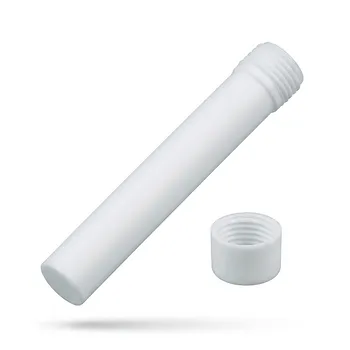
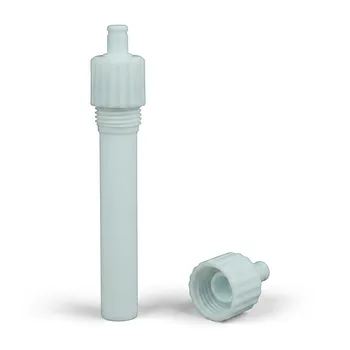
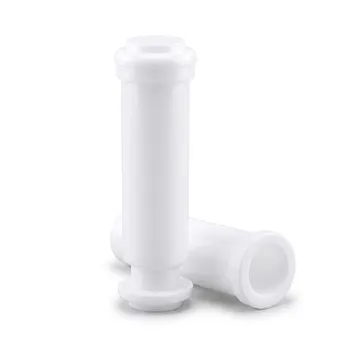
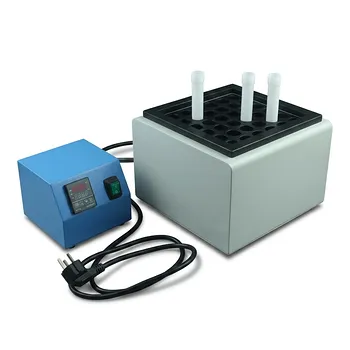
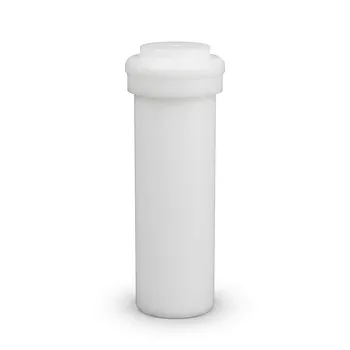
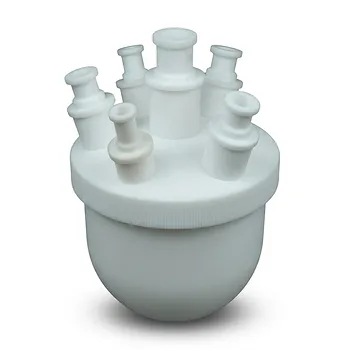
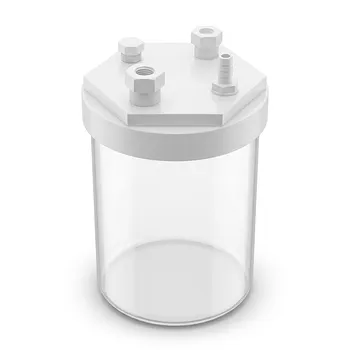
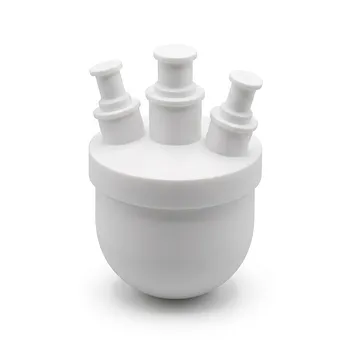
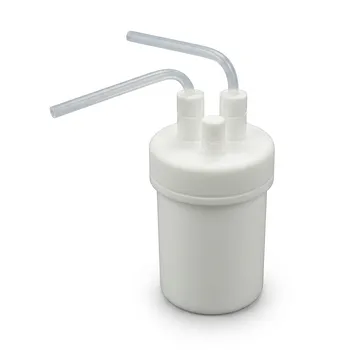
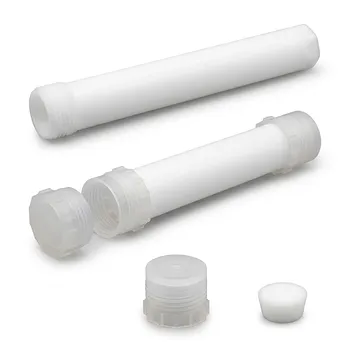
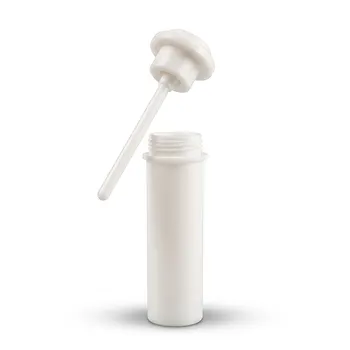
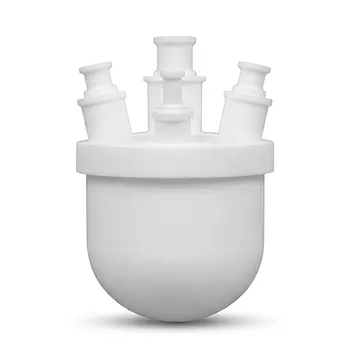
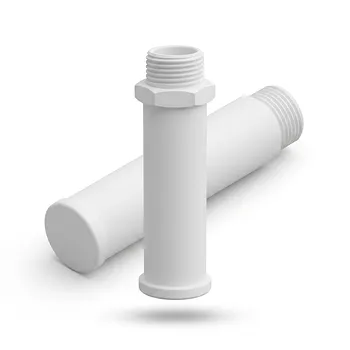
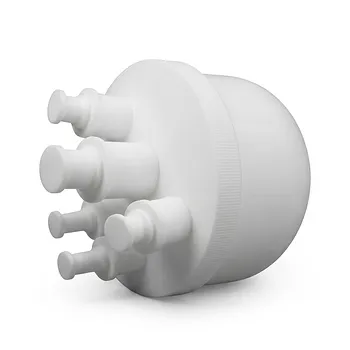
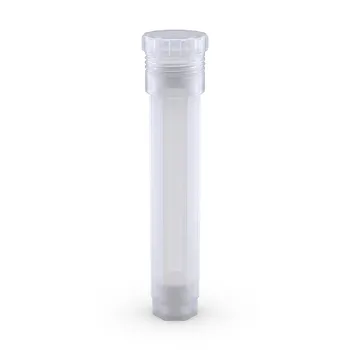
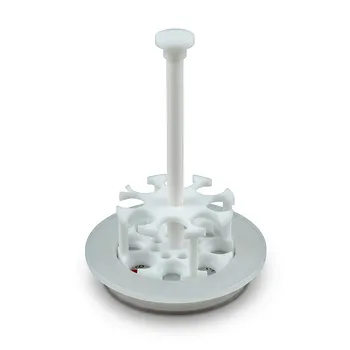
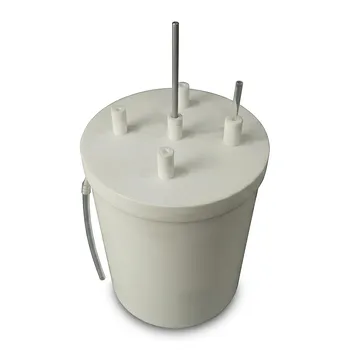
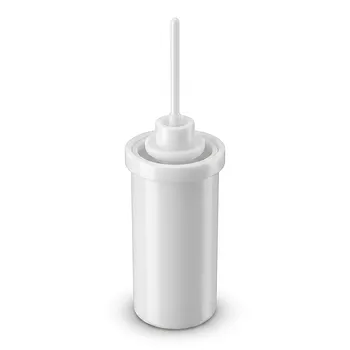
Specialized microwave synthesis reaction vessels are the critical hardware component enabling the transition from coal to high-performance carbon dots. These vessels provide the necessary microwave transparency and structural integrity to facilitate rapid, volumetric heating of coal-derived precursors like pitch or coal powder. By allowing electromagnetic energy to penetrate directly into the reaction mixture, these containers ensure the precise control over bond cleavage and nucleation required to produce nanomaterials with high quantum yields.
Specialized vessels optimize the synthesis environment by allowing microwave energy to bypass the container and interact directly with the reactants under high pressure. This results in uniform volumetric heating that accelerates chemical kinetics, ensuring narrow particle size distributions and superior optical properties in the final carbon dots.
The Role of Microwave Transparency in Energy Transfer
Achieving Volumetric Heating
Unlike traditional glassware, specialized vessels are designed with excellent microwave transparency, allowing electromagnetic waves to pass through the container walls without absorption. This enables volumetric heating, where the coal precursors absorb energy simultaneously throughout the entire volume of the solution rather than relying on conduction from the vessel walls.
Acceleration of Chemical Kinetics
This direct energy transfer utilizes the dipole rotation of polar molecules to generate heat instantly, reducing reaction times from hours to mere minutes. Rapid heating is essential for the homogeneous breaking of C–O bonds and bridge bonds within the complex coal structure, which is a prerequisite for efficient carbonization.
Structural Integrity and Pressure Management
Facilitating Carbon Core Nucleation
The synthesis of coal-based carbon dots often requires high temperatures and the generation of significant internal pressure to force the reorganization of carbon atoms. Specialized vessels possess high pressure-bearing strength, allowing the reaction to reach the critical energy thresholds necessary for the efficient nucleation and growth of carbon cores.
Resistance to Chemical Aggression
Many specialized vessels are constructed from high-performance fluoropolymers, such as PTFE or PFA, which offer exceptional corrosion resistance. This allows researchers to use aggressive reducing agents or solvents that would otherwise degrade standard laboratory equipment during the high-pressure microwave process.
Impact on Material Quality and Morphology
Precision Control of Particle Size
The uniform thermal environment provided by these vessels prevents the formation of localized temperature gradients that lead to uneven growth. This results in a narrow particle size distribution, ensuring that the carbon dots exhibit consistent physical and chemical properties across the entire batch.
Enhancing Quantum Yield
By enabling more precise control over reaction temperature and pressure, these vessels facilitate the production of carbon dots with higher quantum yields. The localized "micro-scale hot spots" generated within the transparent container promote uniform grain growth, which is vital for the fluorescence efficiency of coal-derived nanomaterials.
Understanding the Trade-offs and Constraints
Material Fatigue and Maintenance
While specialized vessels are robust, they are subject to mechanical fatigue over repeated high-pressure cycles. Failure to inspect vessels for micro-cracks or chemical etching can lead to catastrophic failure under pressure, potentially damaging the microwave system.
Precursor Sensitivity to Polarity
The efficiency of the heating process is heavily dependent on the dielectric properties of the solvent and precursors used within the vessel. If the reaction mixture lacks sufficient polarity, the "transparency" of the vessel becomes a moot point, as the contents will not effectively absorb the microwave energy.
How to Optimize Your Synthesis Strategy
Applying These Principles to Your Project
- If your primary focus is maximizing fluorescence (Quantum Yield): Prioritize high-pressure fluoropolymer vessels that allow for temperatures exceeding 180°C to ensure complete carbonization.
- If your primary focus is scalability and speed: Use vessels with the highest microwave transparency ratings to minimize energy loss and reduce synthesis time to the sub-ten-minute range.
- If your primary focus is morphological uniformity: Ensure the vessel volume is appropriately matched to the precursor load to maintain consistent volumetric heating and avoid thermal gradients.
The adoption of specialized reaction vessels is not merely a safety precaution, but a fundamental requirement for mastering the complex chemical transformations necessary to turn raw coal into high-value fluorescent nanomaterials.
Summary Table:
| Key Feature | Benefit for Carbon Dot Synthesis | Advantage of Specialized Vessels |
|---|---|---|
| Microwave Transparency | Enables uniform volumetric heating | Bypasses container to interact directly with reactants |
| Pressure Resistance | Facilitates carbon core nucleation | Safely manages high internal pressures for carbonization |
| Chemical Inertness | Prevents contamination from precursors | PTFE/PFA materials resist aggressive acids and solvents |
| Thermal Precision | Ensures narrow particle size distribution | Eliminates temperature gradients for consistent morphology |
Elevate Your Nanomaterial Synthesis with KINTEK
Precision in coal-derived carbon dot synthesis starts with the right hardware. At KINTEK, we specialize in high-performance fluoropolymer solutions designed to withstand the most demanding laboratory environments. From specialized microwave digestion vessels and hydrothermal synthesis liners to a comprehensive range of PTFE and PFA labware (including beakers, reagent bottles, and digestion tubes), we provide the tools necessary for superior volumetric heating and high-pressure stability.
Whether you need everyday basic labware, advanced fluid transfer components (tubing, fittings, valves), or custom CNC-fabricated non-standard parts for bespoke laboratory setups, KINTEK delivers end-to-end excellence. Our absolute focus on fluoropolymer materials ensures your research achieves maximum quantum yields and consistent results.
Ready to optimize your synthesis process? Contact us today to discuss your custom labware needs!
References
- Linjing Hao, Baolin Xing. Coal-based carbon/graphene quantum dots: formation mechanisms and applications. DOI: 10.1515/revic-2024-0071
This article is also based on technical information from Kintek Knowledge Base .
Related Products
- High Purity TFM Microwave Digestion Vessels PTFE Acid Evaporation Liners Domestic GT-400 Equivalent Laboratory Reaction Containers
- High Performance PTFE Microwave Digestion Vessel Replacement Bespoke Fluoropolymer Acid Digestion Tank Intelligent Sample Preparation Labware
- Custom High Purity TFM Microwave Digestion Vessel 100ml for Analytical Laboratory Sample Preparation
- High Purity PTFE Microwave Digestion Vessel Replacement for GT-400 Systems Acid Reflux and Sample Preparation
- High Purity TFM Microwave Digestion Vessels for Trace Analysis and Custom Sample Preparation Systems
People Also Ask
- How does the dielectric property of PTFE benefit microwave-assisted digestion? Unlock Rapid and Uniform Sample Heating
- What are the advantages of using microwave digestion vessels for environmental analysis? Boost speed and sample accuracy.
- What safety features are commonly integrated into microwave digestion vessels? Ensuring High-Pressure Laboratory Safety
- What are the advantages of using microwave digestion vessels? Optimize EG@MO synthesis with superior thermal control.
- How do microwave digestion vessels support pharmaceutical elemental impurity testing? Achieve Precise USP Compliance