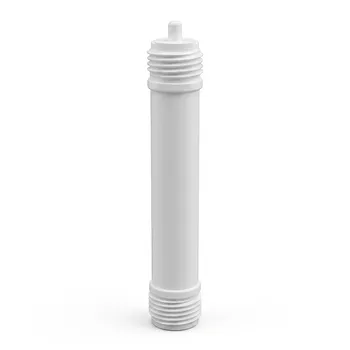
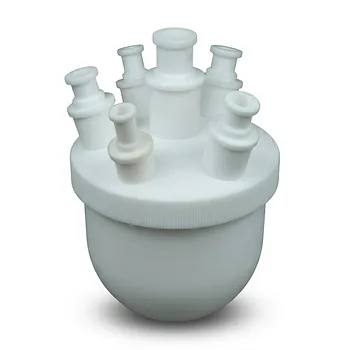
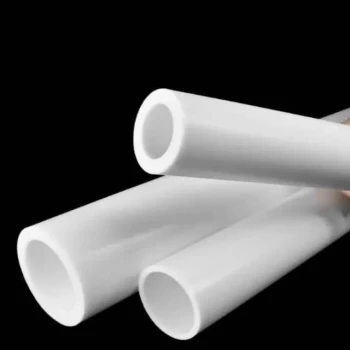
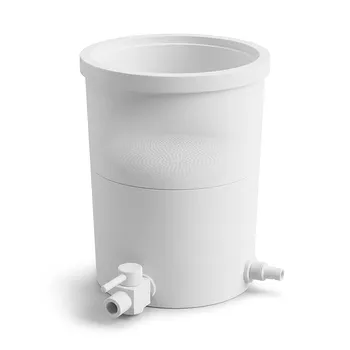
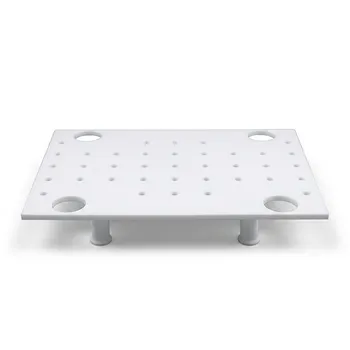
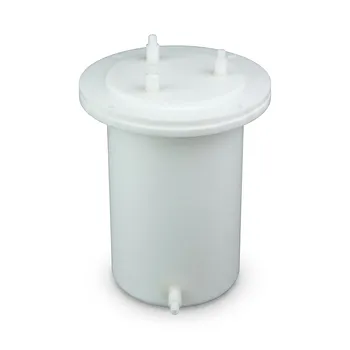
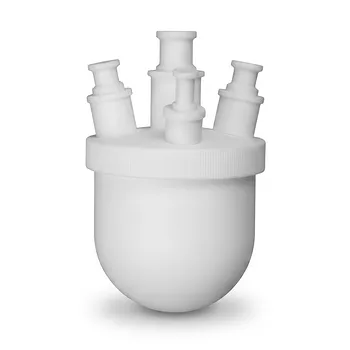
The use of PTFE or PFA liners is a critical safety and purity requirement. These fluoropolymer liners protect the stainless steel reactor shell from the highly corrosive combination of phosphoric acid and zirconium salts used during synthesis. Furthermore, they act as an essential barrier that prevents metal ions from the reactor walls from leaching into the mixture, which would otherwise degrade the electrochemical activity and purity of the carbon nanotube (CNT)/zirconium phosphate (ZrP) hybrids.
PTFE and PFA liners provide a chemically inert, non-stick interface that survives the extreme heat and pressure of hydrothermal synthesis. By isolating aggressive reagents from the metal reactor body, they ensure both the structural integrity of the equipment and the functional performance of the synthesized nanomaterials.
The Chemical Challenge of CNT/ZrP Synthesis
Resisting Aggressive Acidic Environments
The synthesis of CNT/ZrP hybrids involves strong acids, most notably phosphoric acid, and acidic zirconium salt solutions. Under hydrothermal conditions—where temperatures and pressures are significantly elevated—these chemicals become even more aggressive.
Without a liner, these acids would cause rapid corrosion of the stainless steel autoclave body. This would not only destroy expensive laboratory equipment but could also lead to catastrophic vessel failure during a pressurized run.
Maintaining Electrochemical Integrity
The "Deep Need" for these liners centers on the functional quality of the final product. CNT/ZrP particles are often prized for their electrochemical activity, which is highly sensitive to impurities.
If the reaction media were in direct contact with the steel shell, metal ions like iron, nickel, or chromium would leach into the precursor mixture. These contaminants can enter the crystal lattice of the ZrP or foul the CNT surface, rendering the material useless for precise electronic or catalytic applications.
Structural Protection and Material Purity
The Role of Chemical Inertness
PTFE (Polytetrafluoroethylene) and PFA (Perfluoroalkoxy) are utilized because they possess near-total chemical inertness. They do not react with the mineralizers or precursors used in the hydrothermal process.
This inertness creates a "clean room" environment inside a high-pressure vessel. It ensures that the chemical reactions occurring are strictly those intended by the researcher, free from interference by the reactor's own materials.
Non-Stick Surface and Product Recovery
Hydrothermal synthesis often results in the formation of nanocrystals or powder precipitates. The non-stick properties of PTFE and PFA are vital for the complete collection of these synthesized powders.
These surfaces prevent the CNT/ZrP particles from scaling or "baking" onto the reactor walls. This maximizes product yield and simplifies the cleaning process, preventing cross-contamination between different synthesis batches.
Understanding the Trade-offs
Temperature and Pressure Limitations
While PTFE and PFA are chemically superior, they have physical limits. PTFE typically has a maximum continuous service temperature of approximately 220°C to 250°C; exceeding this can cause the liner to soften or deform (a process known as "creep").
Researchers must balance the need for chemical resistance with these thermal limits. If a reaction requires temperatures exceeding 250°C, alternative liner materials or specialized high-pressure designs may be required, though they often sacrifice some level of chemical inertness.
Thermal Expansion Disparity
Fluoropolymers expand at a different rate than the stainless steel jackets surrounding them. If a liner is not properly sized or if the cooling process is too rapid, the liner can collapse or become trapped. This requires careful gradual cooling protocols to maintain the seal and the longevity of the liner.
How to Apply This to Your Project
Selecting the Right Material
- If your primary focus is extreme chemical purity: Use PFA liners, as they generally offer even lower trace element leaching than standard PTFE, making them ideal for single-atom catalysis or quantum dot synthesis.
- If your primary focus is standard acid digestion or routine synthesis: Use PTFE liners, as they are more cost-effective while still providing the necessary corrosion resistance for most phosphoric acid and zirconium salt applications.
- If your primary focus is high-yield recovery of nanoparticles: Ensure the liner surface is undamaged and smooth, as scratches in the fluoropolymer can trap nanoparticles and reduce your total recovered mass.
By prioritizing the isolation of your reaction through proper liner selection, you guarantee the high-purity environment necessary for advanced nanomaterial development.
Summary Table:
| Feature | PTFE Liner | PFA Liner |
|---|---|---|
| Primary Benefit | Cost-effective acid resistance | Ultra-low trace element leaching |
| Max Service Temp | 220°C - 250°C | Up to 260°C |
| Chemical Inertness | Excellent | Superior |
| Surface Property | Non-stick, opaque | Non-stick, translucent/smooth |
| Best Application | Routine hydrothermal synthesis | High-precision catalysis & trace analysis |
Elevate your materials research with KINTEK’s high-performance fluoropolymer solutions. From everyday basic labware like beakers, crucibles, and reagent bottles to advanced hydrothermal synthesis liners and microwave digestion vessels, KINTEK manufactures virtually all imaginable laboratory supplies crafted from PTFE and PFA. Whether you need high-purity trace analysis instruments, comprehensive fluid transfer components (tubing, fittings, valves), or bespoke reaction apparatus like custom electrochemical cells and battery testing fixtures, our end-to-end custom CNC fabrication delivers absolute precision.
Protect your CNT/ZrP synthesis from contamination and equipment failure with our high-performance materials—contact KINTEK today for custom and high-volume fluoropolymer parts!
References
- Pengtao Lei, Zhenkun Jiang. Promoting Proton Conductivity and Methanol‐Resistance of <scp>PVdF</scp>‐Based <scp>PEM</scp> Membrane by Incorporating Dispersive <scp>CNT</scp> Dotted With α‐Zr(<scp>HPO<sub>4</sub></scp>)<sub>2</sub>∙<scp>H<sub>2</sub>O</scp>. DOI: 10.1002/app.57083
This article is also based on technical information from Kintek Knowledge Base .
Related Products
- PTFE Lined High Pressure Digestion Vessel 50ml High Temperature Hydrothermal Synthesis Tank
- High Pressure Custom TFM Reactor Stainless Steel Outer Vessel PTFE Inner Cup for Corrosive Synthesis
- Custom TFM Reaction Vessel with Stainless Steel Jacket and PTFE Inner Cup for High Corrosion Resistance
- High Purity PTFE Microwave Digestion Vessel for Soil and Food Analysis Acid Resistant Fluoropolymer Sample Preparation Liners
- High Purity TFM Microwave Digestion Vessels PTFE Acid Evaporation Liners Domestic GT-400 Equivalent Laboratory Reaction Containers
People Also Ask
- What are the benefits of using a PTFE-lined vessel for carbon-sulfur cathode treatment? Maximize Purity & Performance
- Why are PTFE-lined pressure digestion vessels required for the preparation of Ag/CeO2 catalysts? Purity & Performance
- What safety features are typically incorporated into high-pressure PTFE digestion vessel designs? Ensure Lab Safety
- What is the function of high-pressure PTFE digestion vessels in mineral analysis? Optimize Sample Mineralization
- What is the function of PTFE lined high-pressure vessels in g-C3N4 synthesis? Achieve High-Purity Material Growth