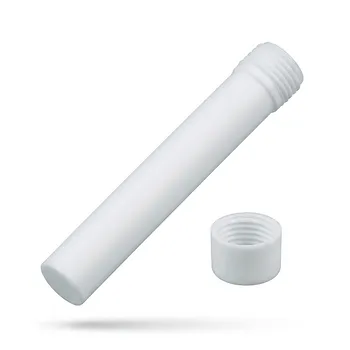
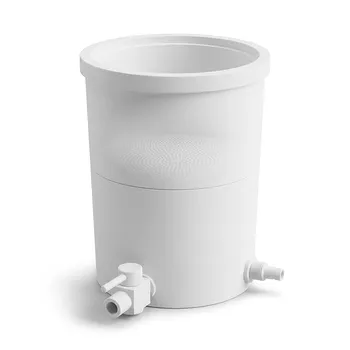
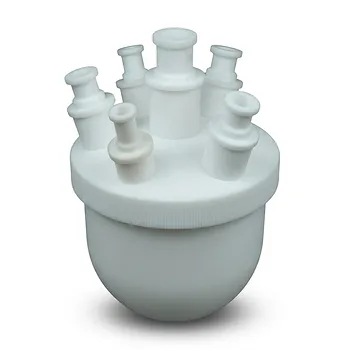
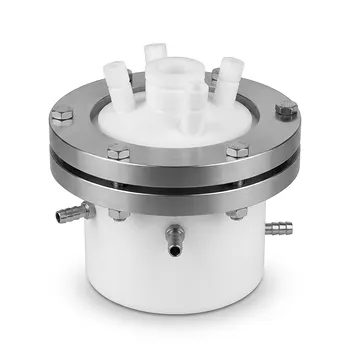
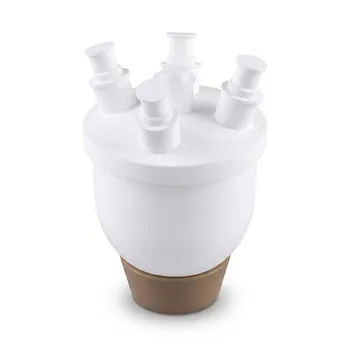
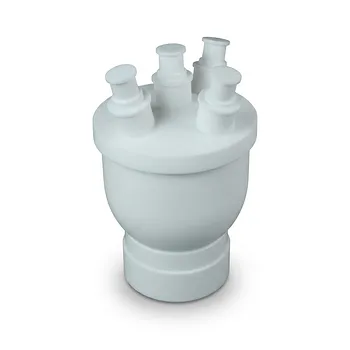
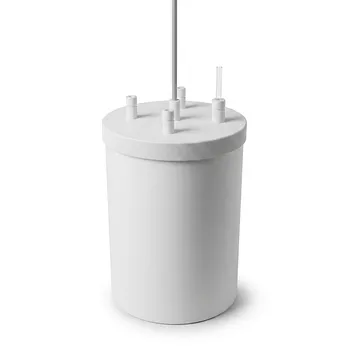
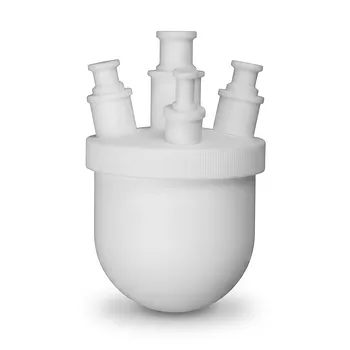
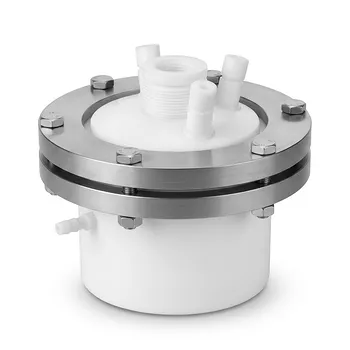
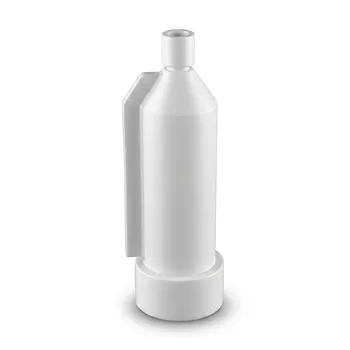
PTFE liners are the standard for metal-organic framework (MOF) synthesis because they provide a chemically inert and non-stick environment that withstands the aggressive solvents and high-pressure conditions required for crystal growth. By isolating the reaction from the metal reactor body, these liners prevent corrosion and eliminate the risk of metal ion leaching, which is essential for achieving high product purity and precise crystalline structures.
The primary role of a PTFE liner is to serve as a sacrificial, inert barrier that facilitates subcritical solvent conditions while protecting the structural integrity of the reactor and the chemical purity of the MOF precursors.
Ensuring Chemical Stability in Harsh Environments
Resistance to Corrosive Solvents and Ligands
The synthesis of MOFs often involves strong polar organic solvents like N,N-dimethylformamide (DMF) or acidic organic ligands such as trimesic acid. PTFE (Polytetrafluoroethylene) is utilized because it is virtually unaffected by these chemicals, even at elevated temperatures where other materials would degrade.
Facilitating Subcritical Reaction States
Hydrothermal reactors create a sealed environment that allows solvents to remain liquid well above their atmospheric boiling points. PTFE liners maintain their structural integrity under these high-temperature and high-pressure conditions, enabling the reaction to reach the subcritical state necessary for full coordination between metal ions and ligands.
Protection of the Metallic Reactor Body
Without a liner, the stainless steel body of a hydrothermal autoclave would be subject to intense corrosion from the reaction mixture. The PTFE liner acts as a critical barrier, extending the lifespan of the hardware and ensuring safety during high-pressure operations.
Preserving Product Purity and Crystal Quality
Prevention of Metal Ion Leaching
A significant risk in MOF synthesis is the leaching of iron, chromium, or nickel from the reactor walls into the solution. PTFE’s extremely low trace element leaching characteristics ensure that external impurity ions do not enter the crystal lattice, which preserves the precise electronic structure of materials like single-atom catalysts.
Optimization of Nucleation and Growth
The non-stick surface of PTFE prevents precursors from adhering to the vessel walls during the nucleation phase. This ensures that the coordination process remains controlled, leading to the development of highly regular crystalline structures and consistent morphology in products like ZIF-8.
Ease of Collection and Recovery
The excellent mold-release properties of PTFE allow researchers to easily collect synthesized nanopowders or single crystals after the reaction. This minimizes loss of material and prevents the cross-contamination that can occur when residue is trapped in the microscopic pores of a metal surface.
Understanding the Trade-offs and Limitations
Temperature Constraints
While PTFE is highly stable, it has a functional upper limit, typically around 220°C to 250°C. Exceeding these temperatures can cause the liner to soften or release toxic fluorinated gases, potentially compromising the experiment and user safety.
Physical Deformation (Creep)
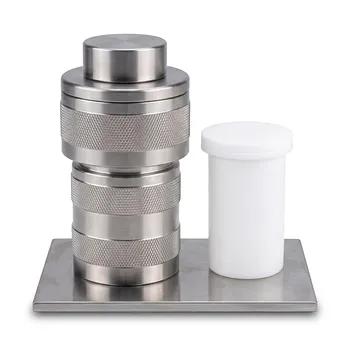
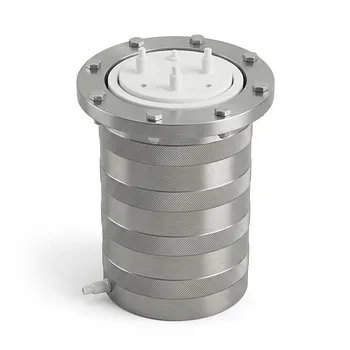
Under sustained high pressure and temperature, PTFE is susceptible to "cold flow" or mechanical deformation. This requires the use of a stainless steel outer shell to provide the necessary structural support and prevent the liner from losing its shape or failing.
Thermal Lag Considerations
PTFE is an effective thermal insulator, which means there is a time delay between the temperature of the oven and the actual temperature of the internal reaction mixture. Researchers must account for this lag to ensure the reaction reaches the intended kinetic state.
How to Apply This to Your Project
When selecting or using PTFE liners for MOF synthesis, consider your specific experimental parameters to ensure success.
- If your primary focus is high-purity single crystal growth: Ensure the liner is thoroughly cleaned with acid between uses to prevent "memory effects" where trace ions from previous experiments interfere with new nucleation.
- If your primary focus is high-temperature synthesis (above 220°C): Consider upgrading to PFA (Perfluoroalkoxy) or specialized metallic liners, as standard PTFE may begin to deform or degrade.
- If your primary focus is rapid screening of MOF structures: Use smaller volume PTFE-lined inserts to minimize solvent waste and reduce the thermal lag associated with larger, thicker-walled liners.
The strategic use of PTFE liners remains the most effective method for balancing the need for chemical isolation with the physical demands of hydrothermal MOF production.
Summary Table:
| Key Feature | Benefit for MOF Synthesis |
|---|---|
| Chemical Inertness | Resists aggressive solvents (DMF) and acidic ligands. |
| High Purity | Prevents metal ion leaching from stainless steel reactor walls. |
| Non-stick Surface | Optimizes nucleation control and ensures easy sample recovery. |
| Subcritical Support | Maintains structural integrity under high-pressure conditions. |
| Thermal Range | Provides stable performance for reactions up to 220°C - 250°C. |
Precision Fluoropolymer Solutions for Your Material Science Research
Elevate your material synthesis with KINTEK’s high-performance fluoropolymer expertise. Whether you are synthesizing advanced Metal-Organic Frameworks or conducting sensitive trace analysis, our PTFE and PFA liners provide the absolute chemical isolation and non-stick environment required for superior crystal growth and product purity.
Our extensive range covers everything from everyday basics—beakers, crucibles, and reagent bottles—to specialized components like hydrothermal synthesis liners, microwave digestion vessels, and custom electrochemical cells. Backed by end-to-end custom CNC fabrication, we deliver everything from high-volume consumables like tubing and O-rings to complex, bespoke laboratory setups tailored to your specific research parameters.
Ready to optimize your MOF production? Contact us today to discuss your specific requirements and discover how KINTEK’s high-performance fluoropolymer labware can enhance your laboratory's precision and efficiency.
References
- Ying Tian, Young Sun. Cross coupling between electric and magnetic orders in a multiferroic metal-organic framework. DOI: 10.1038/srep06062
This article is also based on technical information from Kintek Knowledge Base .
Related Products
- PTFE Lined High Pressure Digestion Vessel 50ml High Temperature Hydrothermal Synthesis Tank
- High Pressure Custom TFM Reactor Stainless Steel Outer Vessel PTFE Inner Cup for Corrosive Synthesis
- High Temperature Corrosion Resistant Hydrothermal Synthesis Reactor with TFM Inner Liner and Straight Cylinder Design
- Custom TFM Reaction Vessel with Stainless Steel Jacket and PTFE Inner Cup for High Corrosion Resistance
- High Purity TFM Microwave Digestion Vessels PTFE Acid Evaporation Liners Domestic GT-400 Equivalent Laboratory Reaction Containers
People Also Ask
- What are the benefits of using a PTFE-lined vessel for carbon-sulfur cathode treatment? Maximize Purity & Performance
- Why are PTFE-lined pressure digestion vessels required for the preparation of Ag/CeO2 catalysts? Purity & Performance
- What safety features are typically incorporated into high-pressure PTFE digestion vessel designs? Ensure Lab Safety
- What is the function of PTFE lined high-pressure vessels in g-C3N4 synthesis? Achieve High-Purity Material Growth
- Role of High-Pressure Digestion Tanks in Perovskite Synthesis: Achieve Superior Stability and Latent Heat