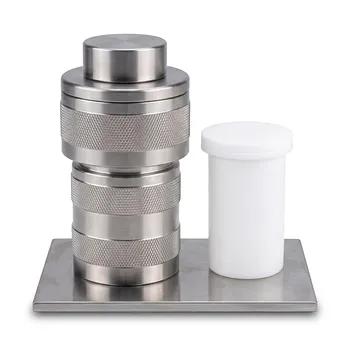
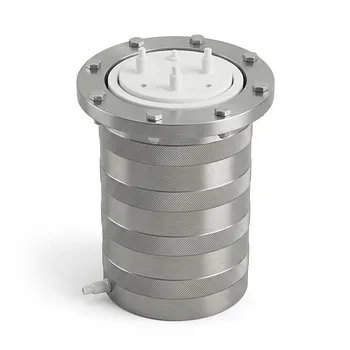
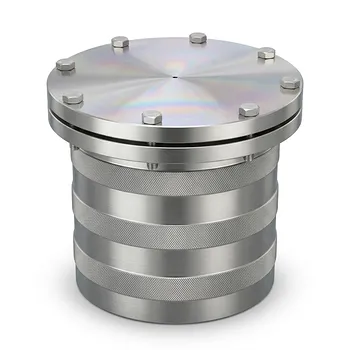
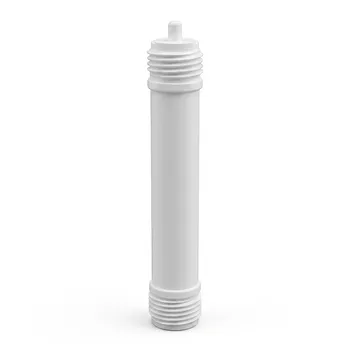
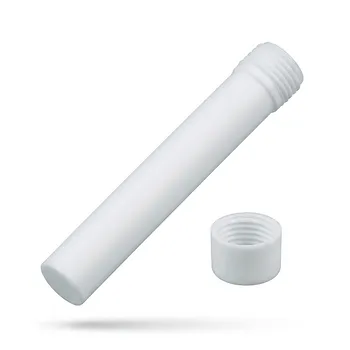
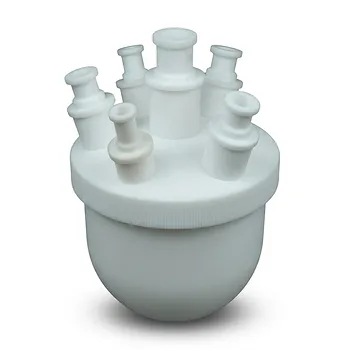
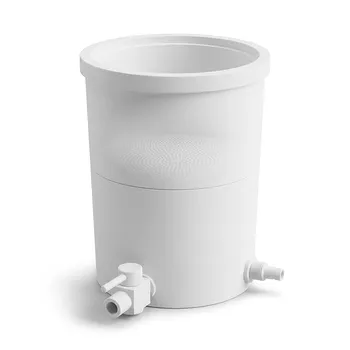
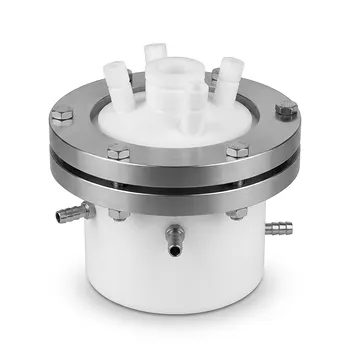
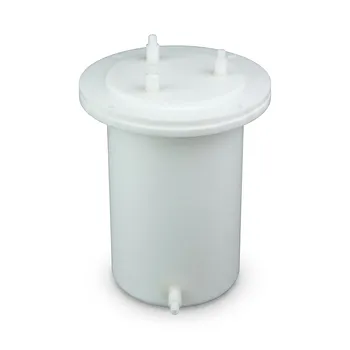
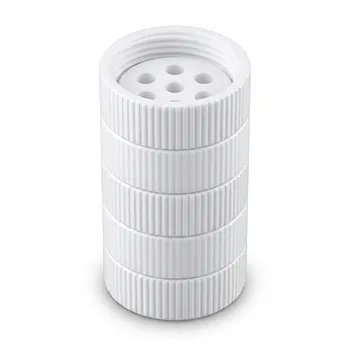
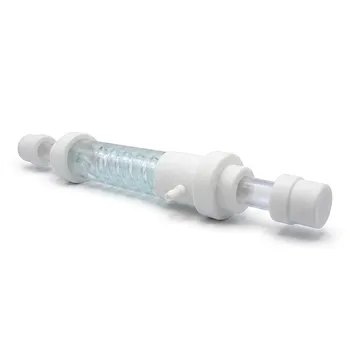
PTFE liners are the preferred choice for hydrothermal synthesis because they provide an chemically inert, non-stick barrier that survives high-pressure environments. In the specific case of NiFe-LDH synthesis, these liners prevent the corrosive alkaline precursors from attacking the metal autoclave walls, which ensures that no unwanted metal ions contaminate the final product. This isolation is critical for maintaining the precise purity and crystal structure required for high-performance catalyst materials.
Core Takeaway: PTFE liners serve as a vital chemical barrier that protects the purity of synthesized materials and the integrity of the pressure vessel by resisting corrosion from harsh reagents under high-temperature conditions.
The Role of Chemical Inertness in LDH Synthesis
Resisting Corrosive Precursors
NiFe-LDH synthesis often involves the use of nitrates, ammonium fluoride, and urea in alkaline environments. At temperatures between 120°C and 140°C, these chemicals become highly aggressive and can easily corrode standard laboratory glassware or metal surfaces. PTFE (Polytetrafluoroethylene) remains stable in these conditions, ensuring that the reaction environment remains chemically neutral and predictable.
Isolation from the Metal Outer Shell
Hydrothermal synthesis is typically performed inside a stainless steel autoclave to withstand high internal pressures. Without a liner, the acidic or basic reaction media would leach iron, nickel, or chromium ions from the steel walls into the solution. The PTFE liner acts as a total physical barrier, preventing these external impurities from altering the chemical composition of the LDH.
Impact on Material Quality and Morphology
Preventing Metal Ion Leaching
The active sites of a NiFe-LDH catalyst are highly sensitive to their atomic environment. Even trace amounts of leached metal ions from the reactor shell can poison the catalyst or change its electronic properties. By using high-purity PTFE, researchers ensure that the only metals present in the final structure are those intentionally added as precursors.
Facilitating Controlled Crystal Growth
Hydrothermal synthesis relies on a sealed, high-pressure environment to drive the growth of specific crystal phases. The stable environment provided by a PTFE liner allows for the precise structural growth of the LDH layers. This consistency is essential for producing materials with a uniform morphology and high surface area.
Operational Benefits and Safety
Non-Stick Properties and Sample Recovery
PTFE is naturally hydrophobic and possesses excellent "mold-release" properties. This non-stick nature ensures that the synthesized nanopowders do not adhere to the vessel walls during the cooling process. As a result, the recovery of the final product is more efficient, and the risk of sample loss or cross-contamination between batches is significantly reduced.
Protecting the Autoclave Infrastructure
Hydrothermal reactors are significant capital investments that must withstand extreme mechanical stress. Persistent exposure to corrosive precursors would eventually pit and weaken the stainless steel outer shell, leading to potential vessel failure under pressure. The PTFE liner extends the service life of the autoclave by shielding the structural metal from chemical attack.
Understanding the Trade-offs
Thermal Conductivity and Ramp Times
PTFE is an excellent thermal insulator, which means heat transfers more slowly from the heating oven to the reaction solution. Users must account for this lag when timing their synthesis or setting temperature profiles. Rapid heating of the exterior may lead to a delay in the internal solution reaching the target 120–140°C range.
Temperature and Pressure Limits
While PTFE is highly stable, it begins to soften and lose structural integrity as it approaches 250°C. For reactions requiring temperatures above 220°C, alternative materials like PFA or specialized metallic liners may be required. Additionally, PTFE has a high coefficient of thermal expansion, meaning it can deform or "flow" if the vessel is overfilled or heated too rapidly.
How to Apply This to Your Synthesis
When selecting or using a PTFE liner for your hydrothermal projects, consider the following recommendations based on your specific needs:
- If your primary focus is high purity (e.g., electrocatalysis): Always use a high-purity PTFE or PFA liner to ensure that the active sites of your LDH are not contaminated by leaching ions.
- If your primary focus is high-yield production: Leverage the non-stick properties of PTFE by ensuring the liner is thoroughly cleaned and polished, which facilitates the complete recovery of nanopowders.
- If your primary focus is reactor longevity: Inspect liners for signs of "cold flow" or deformation after every use, and replace them if they no longer provide a perfect seal against the autoclave cap.
By utilizing PTFE liners effectively, you ensure a clean, controlled, and safe environment for the synthesis of advanced functional materials.
Summary Table:
| Feature | Advantage for NiFe-LDH Synthesis | Key Benefit |
|---|---|---|
| Chemical Inertness | Resists aggressive nitrates and alkaline reagents | High-purity material composition |
| Isolation Barrier | Prevents ion leaching from stainless steel shells | Avoids catalyst poisoning/contamination |
| Non-Stick Surface | Minimal adhesion of synthesized nanopowders | Improved sample recovery and yield |
| Structural Safety | Shields metal autoclave from pitting and corrosion | Extended equipment service life |
Elevate Your Synthesis with KINTEK’s Fluoropolymer Excellence
Precision in material synthesis demands uncompromising equipment. KINTEK specializes in high-performance fluoropolymer solutions designed to meet the rigorous standards of modern laboratories. Whether you are performing high-pressure hydrothermal synthesis or complex fluid transfers, we provide the reliable tools you need to ensure purity and performance.
Our extensive range includes:
- Everyday Labware: Beakers, measuring cylinders, crucibles, dishes, and reagent/wash bottles.
- Sample Prep & Filtration: Separatory funnels, burettes, filters, pipettes, tweezers, and spatulas.
- Fluid Transfer & Consumables: Tubing, fittings, valves, stirring bars, O-rings, and gaskets.
- Advanced Apparatus: Custom hydrothermal synthesis liners, microwave digestion vessels, electrochemical cells, and microchannel reactors.
From standard high-purity trace analysis instruments to bespoke non-standard parts crafted via end-to-end custom CNC fabrication, KINTEK is your ultimate partner for PTFE and PFA laboratory supplies.
Ready to optimize your lab's efficiency? Contact us today to discuss your custom requirements!
References
- Álvaro Seijas‐Da Silva, Gonzalo Abellán. Scalable synthesis of NiFe-layered double hydroxide for efficient anion exchange membrane electrolysis. DOI: 10.1038/s41467-025-61356-2
This article is also based on technical information from Kintek Knowledge Base .
Related Products
- PTFE Lined High Pressure Digestion Vessel 50ml High Temperature Hydrothermal Synthesis Tank
- High Pressure Custom TFM Reactor Stainless Steel Outer Vessel PTFE Inner Cup for Corrosive Synthesis
- Custom TFM Reaction Vessel with Stainless Steel Jacket and PTFE Inner Cup for High Corrosion Resistance
- High Purity PTFE Microwave Digestion Vessel for Soil and Food Analysis Acid Resistant Fluoropolymer Sample Preparation Liners
- High Purity TFM Microwave Digestion Vessels PTFE Acid Evaporation Liners Domestic GT-400 Equivalent Laboratory Reaction Containers
People Also Ask
- What are the benefits of using a PTFE-lined vessel for carbon-sulfur cathode treatment? Maximize Purity & Performance
- Why are PTFE-lined pressure digestion vessels required for the preparation of Ag/CeO2 catalysts? Purity & Performance
- What is the function of high-pressure PTFE digestion vessels in mineral analysis? Optimize Sample Mineralization
- What safety features are typically incorporated into high-pressure PTFE digestion vessel designs? Ensure Lab Safety
- What is the function of PTFE lined high-pressure vessels in g-C3N4 synthesis? Achieve High-Purity Material Growth