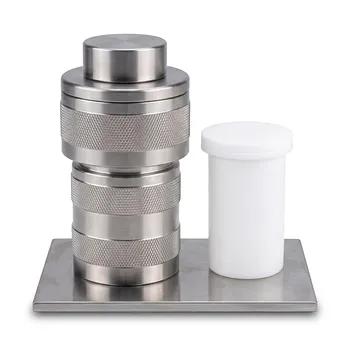
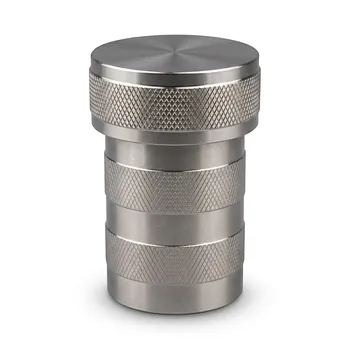
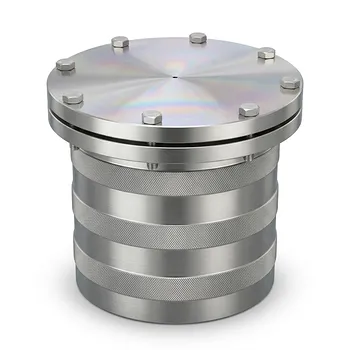
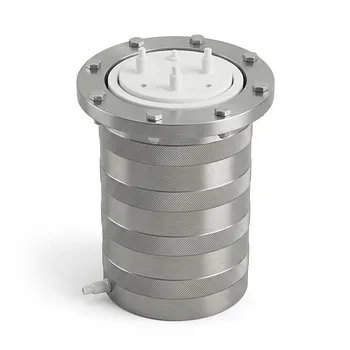
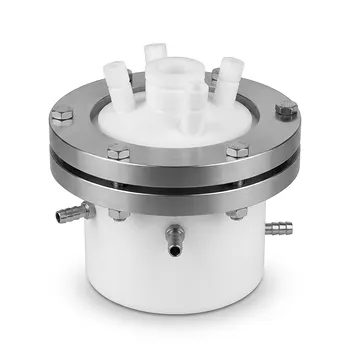
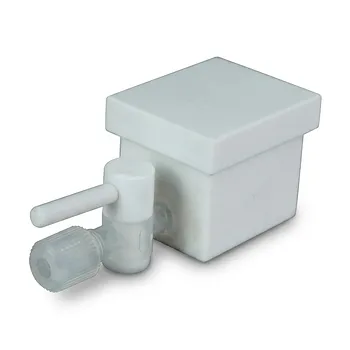
PTFE-lined hydrothermal synthesis autoclaves are essential because they provide a chemically inert environment that resists the extreme alkaline conditions required for zeolite formation. These vessels allow researchers to use high-concentration (4M) sodium hydroxide solutions at elevated temperatures (90°C) without corroding the reactor or contaminating the sample. By maintaining autogenous pressure and stable heat, the autoclave facilitates the critical dissolution-recrystallization of aluminosilicate gels into the specific Linde Type A (LTA) structure.
The core necessity of the PTFE liner lies in its ability to isolate highly corrosive reagents from the structural metal shell of the autoclave. This ensures both the physical integrity of the vessel and the chemical purity of the resulting zeolite crystals.
Resilience Against Harsh Chemical Environments
Combatting Strong Alkaline Corrosion
The synthesis of LTA zeolites relies on a 4M sodium hydroxide solution to dissolve precursors. Polytetrafluoroethylene (PTFE) is uniquely resistant to this level of alkalinity, which would otherwise degrade standard laboratory glassware or metal containers.
Maintaining Framework Purity
Without a liner, metal ions from the stainless steel autoclave walls can leach into the synthesis gel. This contamination can disrupt the precise silicon-to-aluminum ratio and prevent the formation of a high-quality zeolite framework.
Low Surface Energy and Yield
PTFE has an exceptionally low surface energy, which reduces the adhesion of zeolite particles to the vessel walls. This characteristic ensures more stable powder yields and makes the vessel easier to clean after the crystallization process is complete.
Creating the Physical Conditions for Crystallization
Enabling Autogenous Pressure
The sealed environment of the autoclave allows the internal pressure to rise naturally as the solution is heated. This autogenous pressure is a fundamental requirement for the hydrothermal process, driving the transition from gel to crystalline solid.
Thermal Stability for Crystal Growth
LTA synthesis typically requires a constant temperature of 90 °C for extended periods. The PTFE liner remains stable at this temperature, providing a consistent environment that allows the aluminosilicate crystals to grow into regular, well-defined structures.
Structural Support via the Outer Shell
While the PTFE liner provides chemical protection, it lacks the mechanical strength to contain high internal pressures. The stainless steel outer shell provides the necessary physical reinforcement to ensure the safety and success of the high-pressure reaction.
Understanding the Trade-offs and Limitations
Temperature Ceiling
PTFE liners are generally limited to operating temperatures below 200°C–250°C. Exceeding these limits can cause the material to soften, deform, or release hazardous vapors, making it unsuitable for ultra-high-temperature synthesis without specialized modifications.
Rate of Thermal Expansion
PTFE and stainless steel expand at different rates when heated. If the autoclave is heated or cooled too rapidly, the liner may warp or crack, potentially allowing corrosive liquids to reach the metal shell and cause catastrophic failure.
Memory Effects and Contamination
Over multiple uses, PTFE can develop microscopic pores that "trap" trace amounts of previous reagents. If not cleaned with extreme rigor, these residues can act as unintended seeds or contaminants in subsequent synthesis batches.
How to Apply This to Your Project
- If your primary focus is maximizing crystal crystallinity: Ensure the autoclave is heated gradually to maintain a uniform temperature distribution within the PTFE liner.
- If your primary focus is preventing framework contamination: Dedicate specific PTFE liners to specific zeolite types to avoid cross-contamination from residual aluminum or silicon.
- If your primary focus is laboratory safety: Never fill the PTFE liner to more than 80% of its total capacity to allow sufficient space for pressure expansion during heating.
By leveraging the chemical resistance of PTFE alongside the mechanical strength of a stainless steel autoclave, you create the perfect environment for the precise growth of LTA zeolites.
Summary Table:
| Feature | Benefit for LTA Synthesis | Technical Specification |
|---|---|---|
| Chemical Resistance | Resists 4M Sodium Hydroxide (NaOH) | High alkalinity tolerance |
| Framework Purity | Prevents metal ion leaching/contamination | Inert PTFE material |
| Surface Energy | Minimal adhesion for higher powder yield | Low friction/non-stick |
| Thermal Stability | Maintains stable environment at 90°C | Stable up to 200°C-250°C |
| Pressure Support | Enables autogenous pressure for crystallization | Supported by SS outer shell |
Elevate Your Research with KINTEK’s Precision Fluoropolymer Solutions
Achieving the perfect crystalline structure in LTA zeolites requires equipment that never compromises on purity or performance. KINTEK specializes in high-performance fluoropolymer materials, offering an exhaustive range of laboratory supplies crafted from premium PTFE and PFA.
From everyday essentials like beakers, crucibles, and reagent bottles to advanced hydrothermal synthesis liners, microwave digestion vessels, and custom electrochemical cells, we provide the tools necessary for the most demanding chemical environments. Our expertise extends to comprehensive fluid transfer components (tubing, valves) and bespoke sample prep tools.
Why choose KINTEK?
- End-to-End Customization: Our advanced CNC fabrication capabilities allow us to deliver complex, non-standard machined parts tailored to your specific reactor designs.
- Material Expertise: An absolute focus on high-performance fluoropolymers ensures maximum chemical resistance and zero contamination.
- Scalability: Whether you need a single bespoke setup or high-volume orders for industrial labs, we deliver with precision.
Contact KINTEK today to source the high-performance PTFE components your synthesis projects demand!
References
- Cyrille Ghislain Fotsop, Franziska Scheffler. Investigating the impact of heating rates on hydrothermal conversion of heat-treated kaolin into Linde-type LTA zeolite for water vapor sorption. DOI: 10.1039/d5ma00678c
This article is also based on technical information from Kintek Knowledge Base .
Related Products
- PTFE Lined High Pressure Digestion Vessel 50ml High Temperature Hydrothermal Synthesis Tank
- High Temperature Corrosion Resistant Hydrothermal Synthesis Reactor with TFM Inner Liner and Straight Cylinder Design
- Custom TFM Reaction Vessel with Stainless Steel Jacket and PTFE Inner Cup for High Corrosion Resistance
- High Pressure Custom TFM Reactor Stainless Steel Outer Vessel PTFE Inner Cup for Corrosive Synthesis
- PTFE Acid Steam Cleaning System HF Resistant Trace Analysis Beaker Digestion Tank Customizable
People Also Ask
- What are the benefits of using a PTFE-lined vessel for carbon-sulfur cathode treatment? Maximize Purity & Performance
- Why are PTFE-lined pressure digestion vessels required for the preparation of Ag/CeO2 catalysts? Purity & Performance
- What safety features are typically incorporated into high-pressure PTFE digestion vessel designs? Ensure Lab Safety
- What is the function of PTFE lined high-pressure vessels in g-C3N4 synthesis? Achieve High-Purity Material Growth
- Role of High-Pressure Digestion Tanks in Perovskite Synthesis: Achieve Superior Stability and Latent Heat