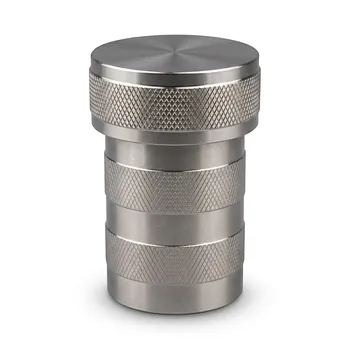
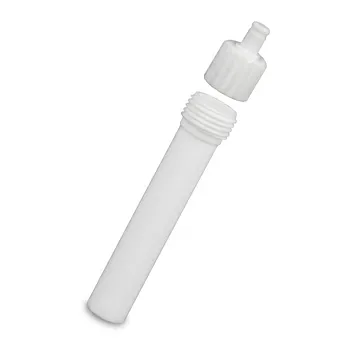
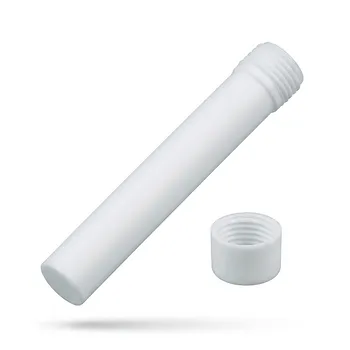
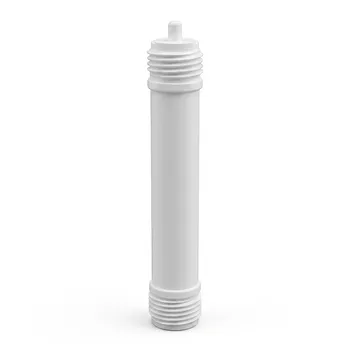
PTFE liners are used in CeO2 nanorod synthesis because they provide an chemically inert, non-stick environment capable of withstanding the aggressive alkaline conditions required for the reaction. Specifically, they resist corrosion from high concentrations of sodium hydroxide (NaOH) and temperatures exceeding 100°C while preventing metallic contamination from the autoclave’s outer shell.
Core Takeaway: PTFE (Polytetrafluoroethylene) acts as a critical protective barrier that ensures chemical purity and structural integrity during hydrothermal synthesis by resisting extreme pH levels and facilitating a controlled, high-pressure environment for nanorod growth.
Resisting Harsh Chemical Environments
The synthesis of cerium dioxide (CeO2) nanorods frequently involves highly concentrated alkaline solutions, such as 60.00 g of NaOH. These conditions are extremely corrosive to standard laboratory metals and glass.
Exceptional Chemical Inertness
PTFE is naturally resistant to strong bases, acids, and oxidative environments. This inertness ensures that the liner does not react with the cerium precursors or the sodium hydroxide during the hydrothermal process.
Protection of the Autoclave Shell
The outer body of a hydrothermal autoclave is typically made of stainless steel for mechanical strength. Without a PTFE liner, the alkaline solution would attack the steel, causing irreversible damage to the expensive reactor vessel.
Ensuring Product Purity and Quality
In nanomaterial synthesis, even trace amounts of foreign elements can alter the catalytic or electrical properties of the final product. PTFE serves as a "clean room" inside the high-pressure vessel.
Preventing Metal Leaching
High temperatures and pressures can cause metallic impurities (such as iron, nickel, or chromium) to leach from the stainless steel autoclave walls into the reaction mixture. The PTFE liner acts as a physical barrier, ensuring that the CeO2 nanorods remain uncontaminated.
Non-Stick Surface for Growth
PTFE is a non-stick material, which prevents precursors and growing nanorods from adhering to the vessel walls. This ensures that the cerium precursors fully react within the solution, promoting the uniform development of the desired rod-like morphology.
Managing High Temperature and Pressure
Hydrothermal synthesis relies on the "dissolution-recrystallization" process, which requires the reaction to take place in a sealed, high-pressure environment.
Thermal Stability at 100°C and Beyond
While CeO2 nanorods are often synthesized at 100°C to 110°C, PTFE remains stable at temperatures up to 250°C. This provides a significant safety margin and ensures the liner does not melt or lose its structural integrity during the 12-to-24-hour reaction cycles.
Facilitating a Sealed Environment
Under heat, PTFE expands slightly, which helps create a high-pressure seal within the stainless steel jacket. This pressure is essential for driving the chemical reactions that allow cerium particles to organize into specific nanorod structures.
Understanding the Trade-offs
While PTFE is the industry standard, it is important to recognize its limitations to ensure experimental safety and repeatability.
Temperature Limitations
PTFE begins to soften and undergo degradation above 250°C, releasing toxic fumes. For synthesis requiring temperatures above this threshold, alternative materials like PPL (Para-polyphenylene) or metallic alloys must be used.
Thermal Expansion and Memory
PTFE has a high coefficient of thermal expansion, meaning it expands and contracts significantly during heating and cooling cycles. If the autoclave is cooled too rapidly, the liner may deform or "creep," potentially leading to leaks in future uses.
Porosity and Cross-Contamination
Over many uses, PTFE can become slightly porous, potentially "remembering" or absorbing small amounts of precursors. For high-precision synthesis, liners must be thoroughly cleaned with acid or replaced periodically to prevent cross-contamination between batches.
How to Apply This to Your Project
When selecting or using a PTFE liner for hydrothermal synthesis, your choice should align with your specific experimental goals.
- If your primary focus is Maximum Purity: Utilize high-purity PTFE or PFA liners and perform a "dummy run" with dilute acid before your first synthesis to leach out any manufacturing residues.
- If your primary focus is Morphological Control: Ensure the liner is free of scratches or pitting, as surface imperfections can act as unintended nucleation sites that disrupt uniform nanorod growth.
- If your primary focus is Safety and Longevity: Never exceed a 75-80% fill volume to allow for liquid expansion, and always stay below the 250°C thermal limit of the PTFE material.
By maintaining a clean and intact PTFE environment, you ensure that the chemical energy of the hydrothermal process is directed solely toward the precise crystallization of high-quality CeO2 nanorods.
Summary Table:
| Feature | Benefit in CeO2 Synthesis |
|---|---|
| Chemical Inertness | Resists highly concentrated NaOH solutions and aggressive precursors |
| Shell Protection | Prevents corrosive damage to the stainless steel autoclave body |
| Product Purity | Blocks metallic leaching (Fe, Ni, Cr) to ensure trace-level purity |
| Non-Stick Surface | Promotes uniform rod morphology and prevents wall adhesion |
| Thermal Stability | Operates safely up to 250°C, ideal for 100-110°C synthesis cycles |
Optimize Your Lab Results with KINTEK’s Precision PTFE Solutions
Don’t let contamination or corrosion compromise your research. KINTEK specializes in high-performance fluoropolymer labware designed for the most demanding hydrothermal environments.
From standard PTFE and PFA liners, beakers, and centrifuge tubes to complex custom CNC-fabricated reaction apparatus, battery testing fixtures, and microwave digestion vessels, we provide everything you need for trace analysis and material synthesis. Whether you require high-volume consumables or bespoke non-standard parts like electrochemical cells or microchannel reactors, our end-to-end manufacturing ensures absolute purity and durability.
Experience the KINTEK difference in high-performance fluoropolymers. Contact us now to get a quote or discuss your custom requirements!
References
- Shou‐Jie He, Yinhui Li. Internal electric field boosting visible photocatalytic degradation of antibiotics by flower-like CeO<sub>2</sub>/Bi<sub>2</sub>S<sub>3</sub> S-scheme heterojunctions. DOI: 10.1039/d5ra02077h
This article is also based on technical information from Kintek Knowledge Base .
Related Products
- PTFE Lined High Pressure Digestion Vessel 50ml High Temperature Hydrothermal Synthesis Tank
- Custom TFM Reaction Vessel with Stainless Steel Jacket and PTFE Inner Cup for High Corrosion Resistance
- High Temperature Corrosion Resistant Hydrothermal Synthesis Reactor with TFM Inner Liner and Straight Cylinder Design
- High Purity PTFE Microwave Digestion Vessel Replacement Liner for Acid Sample Preparation and Trace Analysis
- High Purity TFM Microwave Digestion Vessels PTFE Acid Evaporation Liners Domestic GT-400 Equivalent Laboratory Reaction Containers
People Also Ask
- What are the benefits of using a PTFE-lined vessel for carbon-sulfur cathode treatment? Maximize Purity & Performance
- Why are PTFE-lined pressure digestion vessels required for the preparation of Ag/CeO2 catalysts? Purity & Performance
- What is the function of high-pressure PTFE digestion vessels in mineral analysis? Optimize Sample Mineralization
- What safety features are typically incorporated into high-pressure PTFE digestion vessel designs? Ensure Lab Safety
- What is the function of PTFE lined high-pressure vessels in g-C3N4 synthesis? Achieve High-Purity Material Growth