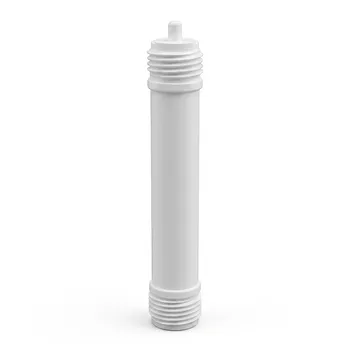
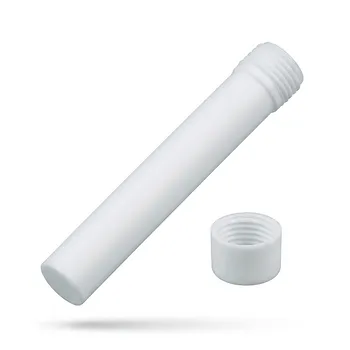
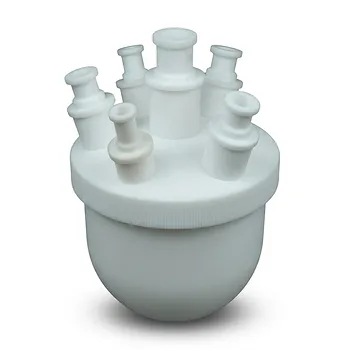
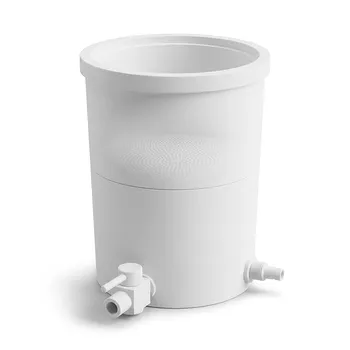
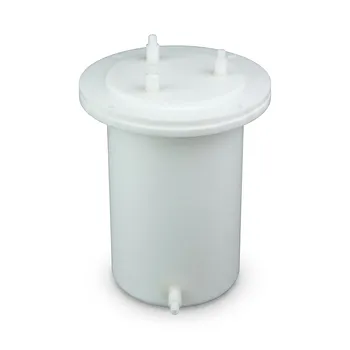
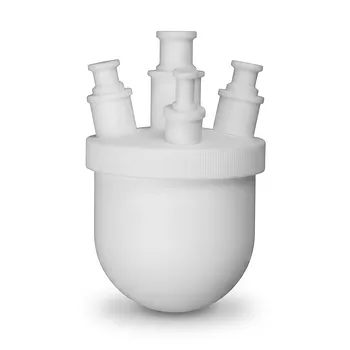
Polytetrafluoroethylene (PTFE) liners are indispensable in the hydrothermal synthesis of Nitrogen-doped Graphene (N-G) because they provide a chemically inert barrier that survives extreme heat and pressure. During the process, they prevent highly reactive nitrogen sources—like urea or hydrazine—from corroding the metal autoclave shell and stop metal ions from leaching into and contaminating the graphene structure.
Core Takeaway: PTFE liners serve as a critical isolation layer that maintains a high-purity chemical environment, ensuring that the nitrogen-doping reaction occurs without interference from metallic impurities or reactor degradation.
Protection Against Harsh Reaction Environments
Shielding the Metal Reactor Shell
The synthesis of N-G often involves temperatures exceeding 150°C and pressures that would rapidly degrade standard metals. PTFE liners prevent active nitrogen sources and solvents from coming into direct contact with the stainless steel outer shell of the autoclave.
Resistance to Corrosive Nitrogen Sources
Nitrogen-doping agents such as urea, hydrazine hydrate, or organic amines can become highly corrosive or penetrative under hydrothermal conditions. PTFE’s exceptional chemical resistance allows it to remain stable even when exposed to these aggressive alkaline or acidic environments for extended periods.
Preventing Ionic Leaching
Without a liner, the metal walls of the reactor would release metal impurity ions into the solution. These ions can integrate into the graphene lattice, potentially ruining its electrochemical properties or altering its intended crystalline phase.
Ensuring Material Quality and Purity
Maintaining High-Purity Doping
For Nitrogen-doped Graphene, the goal is a precise chemical modification of the carbon framework. PTFE ensures the reaction takes place in a pure chemical environment, allowing the nitrogen atoms to bond correctly without interference from stray elements.
Promoting Microstructural Uniformity
By providing a stable and consistent thermal environment, the liner helps ensure the microstructural uniformity of the resulting nanomaterials. This consistency is vital for the performance of N-G in applications like supercapacitors or catalyst supports.
Facilitating Product Recovery
PTFE possesses well-known non-stick properties that simplify the collection of the final reaction product. This ensures that the N-rGO (reduced graphene oxide) precursors can be fully retrieved without loss or contamination from surface adhesion.
Understanding the Trade-offs and Limitations
Temperature Ceiling Constraints
While PTFE is highly stable, it has a clear thermal limit, typically around 200°C to 250°C for hydrothermal applications. Exceeding these temperatures can cause the liner to soften, deform, or even release toxic fluorinated vapors.
Pressure Sensitivity and Deformation
Under extreme pressure, PTFE can undergo "cold flow" or permanent deformation if the liner is not properly fitted to the stainless steel shell. Users must ensure a precise fit to prevent the liner from buckling and allowing the reaction liquid to escape into the metal housing.
Porosity and Cleaning Challenges
While chemically inert, PTFE can be slightly porous to certain organic molecules at high temperatures. If not cleaned rigorously using acid digestion or specialized solvents between runs, cross-contamination from previous experiments can occur.
How to Optimize Your Synthesis Setup
To achieve the best results in your hydrothermal synthesis, consider the following recommendations based on your specific research goals:
- If your primary focus is Maximum Chemical Purity: Always use high-purity, virgin PTFE liners and implement a "blank" cleaning run with dilute nitric acid before starting your synthesis.
- If your primary focus is High-Temperature Reactions (>220°C): Consider switching from PTFE to PFA (Perfluoroalkoxy) or specialized metallic alloys, as PTFE may lose structural integrity at these elevated ranges.
- If your primary focus is Quantitative Product Yield: Leverage the non-stick nature of PTFE by using a silicone spatula or specialized rinsing techniques to ensure all graphene hydrogel or powder is recovered from the vessel.
The strategic use of PTFE liners remains the gold standard for creating high-performance, contaminant-free nitrogen-doped carbon materials.
Summary Table:
| Key Feature of PTFE Liners | Benefit to N-G Synthesis | Potential Limitations/Risks |
|---|---|---|
| Chemical Inertness | Protects autoclave from corrosive nitrogen sources (urea/hydrazine). | Limited to temperatures <250°C. |
| Ionic Isolation | Prevents metal ion leaching from contaminating the graphene lattice. | Risk of cross-contamination if not cleaned properly. |
| Non-Stick Properties | Ensures maximum recovery of graphene hydrogel/powder precursors. | Susceptible to "cold flow" deformation under pressure. |
| Thermal Stability | Maintains a consistent environment for microstructural uniformity. | Softening occurs at extreme hydrothermal ranges (>220°C). |
Elevate Your Nanomaterial Synthesis with KINTEK's High-Performance Fluoropolymers
Are you striving for the highest purity in your hydrothermal synthesis? At KINTEK, we maintain an exclusive focus on high-performance fluoropolymer materials to ensure your research is never compromised by contamination or equipment failure.
From everyday basic labware (beakers, measuring cylinders, crucibles, reagent bottles) and general consumables (stirring bars, O-rings, gaskets) to advanced reaction apparatus like high-purity PTFE and PFA hydrothermal synthesis liners, microwave digestion vessels, and custom electrochemical cells, we manufacture virtually every laboratory supply imaginable. Backed by end-to-end custom CNC fabrication, we are uniquely equipped to deliver everything from complex non-standard machined parts to high-volume orders for fluid transfer components (tubing, valves, fittings) and sample prep tools.
Ready to optimize your lab's efficiency and purity? Contact KINTEK today to discuss your bespoke laboratory setups and discover how our expert fluoropolymer manufacturing can support your next breakthrough.
References
- Yan Song, Xiao Zhang. Structure and properties of Au/N-G composites prepared based on different nitrogen sources. DOI: 10.1088/1742-6596/2951/1/012108
This article is also based on technical information from Kintek Knowledge Base .
Related Products
- PTFE Lined High Pressure Digestion Vessel 50ml High Temperature Hydrothermal Synthesis Tank
- High Pressure Custom TFM Reactor Stainless Steel Outer Vessel PTFE Inner Cup for Corrosive Synthesis
- Custom TFM Reaction Vessel with Stainless Steel Jacket and PTFE Inner Cup for High Corrosion Resistance
- High Purity PTFE Microwave Digestion Vessel for Soil and Food Analysis Acid Resistant Fluoropolymer Sample Preparation Liners
- High Purity TFM Microwave Digestion Vessels PTFE Acid Evaporation Liners Domestic GT-400 Equivalent Laboratory Reaction Containers
People Also Ask
- What are the benefits of using a PTFE-lined vessel for carbon-sulfur cathode treatment? Maximize Purity & Performance
- Why are PTFE-lined pressure digestion vessels required for the preparation of Ag/CeO2 catalysts? Purity & Performance
- What safety features are typically incorporated into high-pressure PTFE digestion vessel designs? Ensure Lab Safety
- What is the function of PTFE lined high-pressure vessels in g-C3N4 synthesis? Achieve High-Purity Material Growth
- Role of High-Pressure Digestion Tanks in Perovskite Synthesis: Achieve Superior Stability and Latent Heat