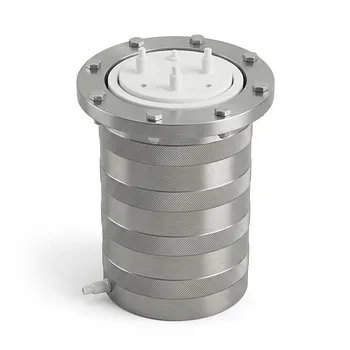
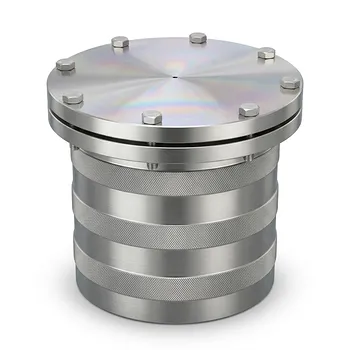
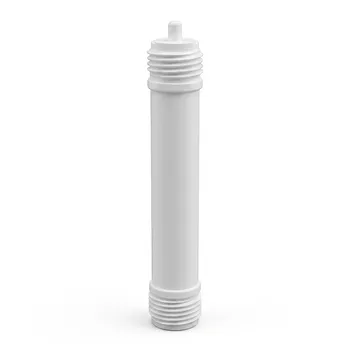
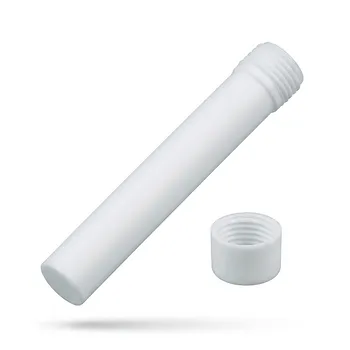
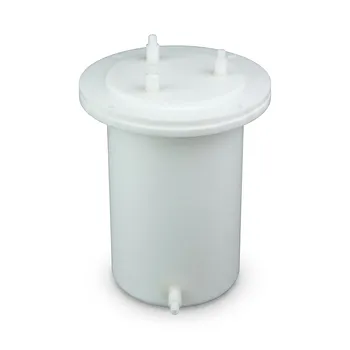
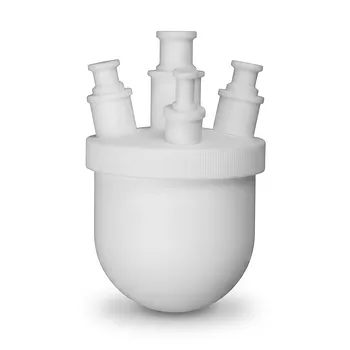
Polytetrafluoroethylene (PTFE) liners are the industry standard for hydrothermal synthesis due to their extreme chemical resilience. For the synthesis of $CuCo_2S_4@Co–V–O–F$ nanocatalysts, these liners provide a chemically inert environment that resists the corrosive effects of precursors at high temperatures (typically 150 °C) and autogenous pressures. They prevent contamination from the metal reactor shell and ensure the high purity and structural integrity required for precise nanocatalyst growth.
Core Takeaway: PTFE liners serve as a critical barrier that protects the reaction chemistry from metallic contamination while shielding the hardware from corrosive precursors. This ensures the synthesized nanocatalysts maintain the exact purity and morphological structure needed for high-performance applications.
The Role of Chemical Inertness in Complex Synthesis
Resisting Corrosive Precursors
The synthesis of $CuCo_2S_4@Co–V–O–F$ involves a complex mix of precursors, including sulfides and fluorides, which can be highly reactive. PTFE is virtually immune to attack from strong acids, bases, and organic solvents, making it the only viable material for these harsh environments.
Eliminating Metal Ion Leaching
Without a liner, the hydrothermal solution would directly contact the stainless steel shell of the autoclave. This contact would lead to the leaching of iron, nickel, or chromium ions into the reaction, which would contaminate the $CuCo_2S_4$ lattice and degrade its catalytic performance.
Maintaining High-Purity Microenvironments
A clean reaction environment is essential for the precise growth of nanostructures. PTFE’s chemical stability ensures that the "microenvironment" remains consistent throughout the heating cycle, allowing the $Co–V–O–F$ shell to deposit uniformly onto the $CuCo_2S_4$ core.
Managing High-Pressure and Temperature Environments
Thermal Stability at 150 °C
The synthesis of these specific nanocatalysts often requires sustained temperatures around 150 °C. PTFE maintains its structural integrity and chemical resistance at these levels, providing a stable vessel for the duration of the hydrothermal process.
Pressure Containment and Safety
Hydrothermal reactions generate significant autogenous pressure as liquids are heated beyond their boiling points in a sealed space. The PTFE liner acts as a primary seal, protecting the outer steel vessel from chemical-induced stress corrosion cracking or weakening.
Facilitating Precise Lattice Control
By providing a stable, non-reactive environment, PTFE allows researchers to precisely tune lattice defects, such as oxygen or selenium vacancies. This precision is vital for the $CuCo_2S_4@Co–V–O–F$ catalyst, as its activity depends on specific atomic arrangements.
Enhancing Product Quality and Recovery
Surface Energy and Non-Stick Properties
PTFE has extremely low surface energy, which prevents the synthesized nanocatalysts from adhering to the walls of the vessel. This non-stick property is critical for achieving high recovery rates of the final powder product after the reaction is complete.
Simplifying the Cleaning Process
Because the product does not stick to the liner, the risk of cross-contamination between different synthesis batches is significantly reduced. This ensures that every run of $CuCo_2S_4@Co–V–O–F$ produces consistent results without interference from previous experiments.
Morphological Consistency
The lack of interaction between the liner and the growth solution ensures that the morphology (shape and size) of the nanocatalyst is determined solely by the chemical precursors. This leads to the uniform "flower-like" or "core-shell" structures typically desired in these catalysts.
Understanding the Trade-offs
Thermal Limitations
While PTFE is excellent for 150 °C, it begins to soften and "creep" as temperatures approach 250 °C. For reactions requiring higher temperatures, researchers must transition to more expensive materials like PPL (polyphenylene polymers) or specialized metallic alloys.
Mechanical Wear and Deformation
Repeated high-pressure cycles can cause the PTFE liner to lose its shape, a phenomenon known as cold flow. If a liner becomes significantly deformed, it may no longer provide an airtight seal, leading to pressure leaks and failed synthesis runs.
Potential for Gas Permeability
At very high pressures, small gas molecules can occasionally permeate the PTFE wall and reach the steel shell. While rare at 150 °C, this necessitates regular inspection of the stainless steel autoclave for any signs of hidden corrosion behind the liner.
How to Apply This to Your Project
Recommendations for Synthesis Success
- If your primary focus is maximum purity: Always use a high-purity, virgin PTFE liner and perform a "dummy" cleaning run with dilute nitric acid before your first synthesis.
- If your primary focus is catalyst yield: Take advantage of the non-stick surface by using ultrasonic cleaning to dislodge any nanocrystals that may be loosely settled at the bottom of the liner.
- If your primary focus is vessel longevity: Never exceed the 250 °C limit of PTFE and inspect the liner for "browning" or deformation after every five uses.
The use of a PTFE liner is the single most important factor in ensuring that the hydrothermal synthesis of complex nanocatalysts remains controlled, pure, and repeatable.
Summary Table:
| Feature | Benefit | Impact on Nanocatalyst Synthesis |
|---|---|---|
| Chemical Inertness | Resists sulfides and fluorides | Prevents corrosion and precursor interference |
| Metal-Free Surface | Eliminates ion leaching | Ensures lattice purity and high catalytic activity |
| Low Surface Energy | Superior non-stick properties | Maximizes product recovery and prevents cross-contamination |
| Thermal Stability | Reliable at 150 °C+ | Maintains structural integrity under autogenous pressure |
| Clean Microenvironment | Consistent reaction conditions | Facilitates precise control over morphology and defects |
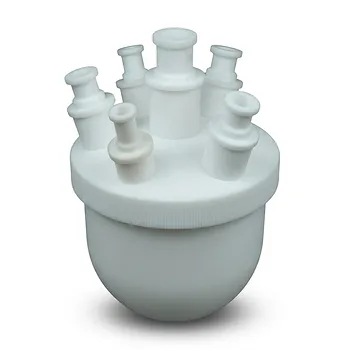
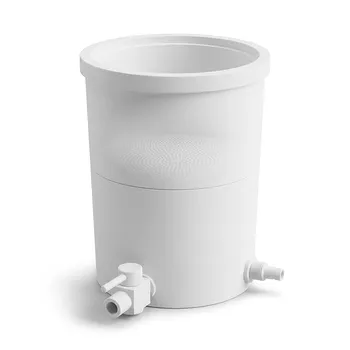
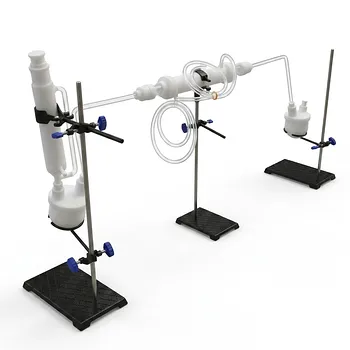
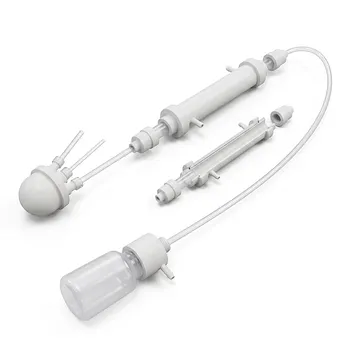
Elevate your research precision with KINTEK’s high-performance fluoropolymer solutions. From everyday basic labware—including beakers, measuring cylinders, crucibles, and reagent bottles—to specialized high-purity trace analysis instruments and cleaning tanks, we provide the tools necessary for rigorous scientific discovery.
Our expertise extends to comprehensive fluid transfer components (tubing, fittings, valves), sample prep tools (filters, pipettes, tweezers), and advanced reaction apparatus like hydrothermal synthesis liners, microwave digestion vessels, and custom electrochemical cells. KINTEK manufactures virtually all imaginable laboratory supplies crafted from PTFE and PFA.
Backed by end-to-end custom CNC fabrication, we deliver everything from complex non-standard machined parts to high-volume orders with an absolute focus on material performance. Ensure your synthesis results remain pure and repeatable—contact KINTEK today for your custom laboratory setup!
References
- Boyao Zhang, Fu‐Fa Wu. Rapidly reconstructed CuCo<sub>2</sub>S<sub>4</sub>@Co–V–O–F nanocatalysts for efficient and stable overall water splitting in alkaline and seawater electrolysis. DOI: 10.1039/d5ra03052h
This article is also based on technical information from Kintek Knowledge Base .
Related Products
- PTFE Lined High Pressure Digestion Vessel 50ml High Temperature Hydrothermal Synthesis Tank
- High Pressure Custom TFM Reactor Stainless Steel Outer Vessel PTFE Inner Cup for Corrosive Synthesis
- Custom TFM Reaction Vessel with Stainless Steel Jacket and PTFE Inner Cup for High Corrosion Resistance
- High Purity PTFE Microwave Digestion Vessel for Soil and Food Analysis Acid Resistant Fluoropolymer Sample Preparation Liners
- High Purity TFM Microwave Digestion Vessels PTFE Acid Evaporation Liners Domestic GT-400 Equivalent Laboratory Reaction Containers
People Also Ask
- What are the benefits of using a PTFE-lined vessel for carbon-sulfur cathode treatment? Maximize Purity & Performance
- Why are PTFE-lined pressure digestion vessels required for the preparation of Ag/CeO2 catalysts? Purity & Performance
- What is the function of high-pressure PTFE digestion vessels in mineral analysis? Optimize Sample Mineralization
- What safety features are typically incorporated into high-pressure PTFE digestion vessel designs? Ensure Lab Safety
- What is the function of PTFE lined high-pressure vessels in g-C3N4 synthesis? Achieve High-Purity Material Growth