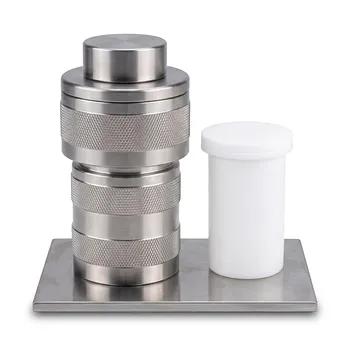
Polytetrafluoroethylene (PTFE) liners are essential in the hydrothermal synthesis of functionalized fabrics because they provide a chemically inert barrier that prevents acidic reaction media from corroding metal autoclaves. During in-situ synthesis, these liners isolate the reaction—often involving organic acids like 1,2,3,4-butanetetracarboxylic acid—to prevent metal ion leaching and ensure the stable bonding of functional groups, such as beta-cyclodextrin, to the fiber surfaces.
Core Takeaway: PTFE liners serve as a critical interface that protects the structural integrity of the reaction vessel while safeguarding the chemical purity of the synthesis process. This dual role is vital for achieving consistent, high-purity functionalization of fabrics in harsh, high-temperature environments.
The Role of PTFE as a Corrosion Shield
Resisting Acidic Degradation
Hydrothermal synthesis for fabrics often utilizes 1,2,3,4-butanetetracarboxylic acid, creating a highly corrosive environment. PTFE’s exceptional chemical inertness allows it to withstand these acidic conditions at elevated temperatures (e.g., 70°C and above) without degrading.
Protecting the Metal Outer Shell
Without a liner, the acidic reaction solution would directly erode the stainless steel walls of the reaction vessel. By providing a robust barrier, PTFE prevents this erosion, thereby extending the service life of expensive pressure vessels and ensuring laboratory safety.
Preserving Chemical Purity and Fiber Integrity
Preventing Metal Ion Leaching
At high temperatures and pressures, acids can leach metal ions (such as iron or nickel) from the vessel walls into the solution. These impurities can interfere with the synthesis, potentially causing fluorescence quenching or altering the desired chemical properties of the functionalized fabric.
Facilitating Stable Bonding
The liner ensures a controlled environment where beta-cyclodextrin inclusion complexes can bond stably to the fiber surfaces. By excluding external contaminants and metal catalysts, the PTFE liner maintains the intended stoichiometry of the reaction.
Maintaining Microstructure Control
A clean, metal-free environment is necessary for the controlled growth of microstructures on fabric fibers. This purity ensures that the synthesized materials achieve the specific crystalline form and functional density required for the application.
Optimizing the Hydrothermal Environment
Thermal and Pressure Stability
PTFE liners possess excellent sealing properties, which help maintain a constant temperature and pressure environment within the vessel. This stability is crucial for long-duration reactions, ensuring the fabric is treated uniformly throughout the process.
Improving Yield and Recovery
The smooth, non-stick internal surface of PTFE prevents the synthesized materials or nanopowders from adhering to the walls. This "mold-release" property significantly improves the synthesis yield and makes the recovery of the functionalized fabric and leftover reactants much easier.
Understanding the Trade-offs and Limitations
Temperature and Pressure Thresholds
While PTFE is highly resilient, it has specific thermal limits (typically up to 220°C–250°C). Exceeding these temperatures can lead to mechanical deformation or "creeping" of the liner, which may compromise the seal or damage the metal vessel.
Maintenance and Wear
PTFE liners are consumables that can develop micro-cracks or stains over repeated high-pressure cycles. Failure to inspect and replace a worn liner can lead to "vessel biting," where the liner becomes stuck in the autoclave, or worse, allows corrosive seepage to reach the metal shell.
Applying This Knowledge to Your Synthesis
Making the Right Choice for Your Goal
- If your primary focus is high-purity fabric functionalization: Prioritize high-quality, virgin PTFE liners to ensure zero metal contamination and maximize the stability of your inclusion complexes.
- If your primary focus is equipment longevity: Implement a strict inspection protocol for your liners to prevent acidic seepage from compromising the structural integrity of your stainless steel autoclaves.
- If your primary focus is maximizing product yield: Utilize the anti-adhesion properties of PTFE to ensure easy recovery of functionalized fabrics and prevent material loss during the cleaning phase.
The strategic use of PTFE liners transforms a potentially destructive chemical process into a controlled, repeatable method for creating advanced functionalized textiles.
Summary Table:
| Feature | Primary Benefit | Impact on Fabric Synthesis |
|---|---|---|
| Chemical Inertness | Resists acidic degradation | Protects autoclave walls from corrosion |
| Purity Barrier | Prevents metal ion leaching | Ensures stable bonding and microstructure |
| Non-Stick Surface | High material recovery | Increases yield and simplifies cleaning |
| Thermal Stability | Reliable pressure sealing | Maintains consistent reaction environment |
Upgrade Your Lab with KINTEK’s High-Performance Fluoropolymer Solutions
Precision matters in hydrothermal synthesis. At KINTEK, we specialize in high-performance PTFE and PFA laboratory supplies, ranging from everyday basics like beakers, crucibles, and centrifuge tubes to advanced hydrothermal synthesis liners and bespoke reaction apparatus.
Our expertise in end-to-end custom CNC fabrication allows us to deliver everything from complex non-standard machined parts to high-volume orders of fluid transfer components, filtration tools, and reaction vessels. Whether you need standard labware or specialized battery testing fixtures and microchannel reactors, our absolute focus on fluoropolymer materials ensures your equipment survives the harshest chemical environments.
Don't compromise on purity or equipment safety. Contact us today to discuss your specific requirements and see how KINTEK's precision-engineered solutions can enhance your research outcomes.
References
- Sandra Flinčec Grgac, Tanja Krivec. APPLICATION OF IN-SITU HYDROTHERMAL SYNTHESIS FOR THE FUNCTIONALISATION OF COTTON/POLYESTER FABRIC WITH THE INCLUSION COMPLEX OF Β-CYCLODEXTRIN AND ESSENTIAL TEA TREE OIL. DOI: 10.46793/noveltds16.070fg
This article is also based on technical information from Kintek Knowledge Base .
Related Products
- PTFE Lined High Pressure Digestion Vessel 50ml High Temperature Hydrothermal Synthesis Tank
- High Pressure Custom TFM Reactor Stainless Steel Outer Vessel PTFE Inner Cup for Corrosive Synthesis
- Custom TFM Reaction Vessel with Stainless Steel Jacket and PTFE Inner Cup for High Corrosion Resistance
- High Purity PTFE Microwave Digestion Vessel for Soil and Food Analysis Acid Resistant Fluoropolymer Sample Preparation Liners
- High Purity TFM Microwave Digestion Vessels PTFE Acid Evaporation Liners Domestic GT-400 Equivalent Laboratory Reaction Containers
People Also Ask
- What are the benefits of using a PTFE-lined vessel for carbon-sulfur cathode treatment? Maximize Purity & Performance
- Why are PTFE-lined pressure digestion vessels required for the preparation of Ag/CeO2 catalysts? Purity & Performance
- What safety features are typically incorporated into high-pressure PTFE digestion vessel designs? Ensure Lab Safety
- What is the function of PTFE lined high-pressure vessels in g-C3N4 synthesis? Achieve High-Purity Material Growth
- Role of High-Pressure Digestion Tanks in Perovskite Synthesis: Achieve Superior Stability and Latent Heat