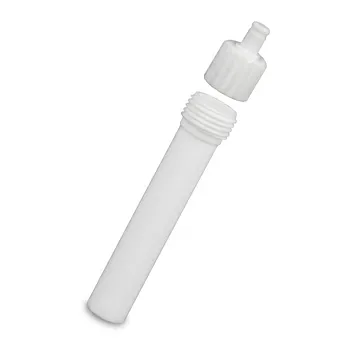
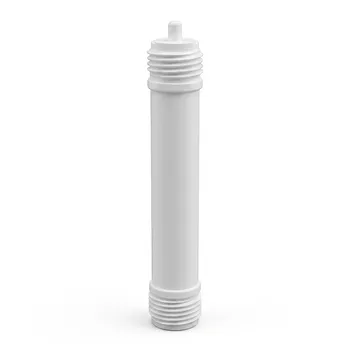
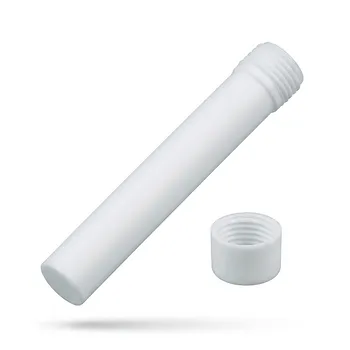
PTFE liners are essential because they provide a chemically inert barrier against the extreme acidity and oxidizing conditions required for jarosite formation.
At 140°C, the hydrothermal synthesis of jarosite involves high concentrations of trivalent iron, sulfates, and halogen ions. This creates a highly aggressive medium that would rapidly corrode standard metallic vessels, leading to sample contamination and vessel failure.
Core Takeaway: PTFE liners act as a critical isolation layer that protects the structural integrity of the autoclave while preventing metal ions from leaching into the reaction. This ensures the chemical purity and controlled microstructure necessary for successful jarosite synthesis.
The Corrosive Nature of Jarosite Synthesis
High-Acidity and Oxidizing Environments
The synthesis of jarosite requires a specific chemical environment rich in sulfates and trivalent iron. These components create a highly acidic and oxidizing solution that is notoriously difficult to contain.
The Role of Halogens and Mineral Hydrolysis
The presence of halogen ions at 140°C significantly increases the risk of pitting and stress corrosion in metal containers. PTFE’s inherent chemical inertness allows mineral hydrolysis to proceed safely without the liner reacting with these volatile species.
Maintaining Sample Purity and Integrity
Preventing Metal Leaching
Standard stainless steel autoclaves can release nickel, chromium, or iron ions when exposed to acidic media at high temperatures. The PTFE liner acts as a chemical barrier, ensuring that the synthesized jarosite remains free from external metallic impurities.
Facilitating Controlled Microstructure
The purity of the reaction environment directly influences the crystal growth and morphology of the final product. By eliminating side reactions with the vessel walls, researchers can achieve more uniform nanopowders or single-crystal materials.
Operational Safety and Ease of Use
Structural Protection of the Pressure Vessel
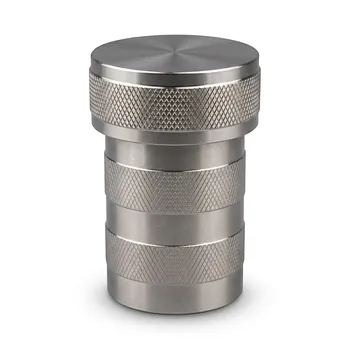
Hydrothermal synthesis occurs under significant internal pressure which requires a steel outer jacket for strength. The liner prevents the reaction media from corroding the steel jacket, which is vital for maintaining the long-term safety and pressure rating of the equipment.
Non-Stick Properties and Sample Recovery
PTFE is known for its excellent mold-release properties, which are beneficial when collecting synthesized minerals. This non-stick surface ensures that the jarosite can be fully recovered and the vessel can be cleaned easily for subsequent experiments.
Understanding the Trade-offs
Temperature and Pressure Limitations
While PTFE is stable at 140°C, it begins to soften as it approaches its upper limit of 250°C. Researchers must be mindful that thermal expansion of the PTFE can exert additional stress on the stainless steel shell if the vessel is overfilled.
Thermal Lag During Heating
PTFE is an effective thermal insulator, which can cause a temperature lag between the oven setting and the actual internal reaction temperature. It is often necessary to allow for longer equilibration times to ensure the internal medium has reached the required 140°C.
How to Apply This to Your Project
To ensure the best results during jarosite synthesis, your choice of liner and operational protocol should align with your specific experimental goals.
- If your primary focus is material purity: Always use high-purity, virgin PTFE liners to prevent any pre-existing contaminants from migrating into your trivalent iron solution.
- If your primary focus is vessel longevity: Inspect liners for deformation or "creeping" after every 140°C cycle to ensure the seal remains tight and the steel jacket remains protected.
- If your primary focus is precise crystal morphology: Account for the thermal insulation of PTFE by using an external thermocouple or extending the dwell time to ensure the reaction environment stays constant.
By leveraging the chemical stability of PTFE, you can transform a highly corrosive mineral synthesis into a safe, repeatable, and precise laboratory process.
Summary Table:
| Feature | Function in Synthesis | Benefit for Research |
|---|---|---|
| Chemical Inertness | Resists high acidity, sulfates, and halogens | Prevents vessel corrosion and failure |
| High-Purity Barrier | Blocks leaching from steel autoclaves | Ensures uncontaminated jarosite samples |
| Non-Stick Surface | Facilitates easy mineral collection | Maximizes sample recovery and cleaning ease |
| Thermal Stability | Maintains integrity at 140°C | Provides a safe, repeatable reaction environment |
| Isolation Layer | Protects the structural steel jacket | Extends the lifespan of expensive lab equipment |
Elevate Your Hydrothermal Synthesis with KINTEK’s Precision Fluoropolymers
Don't let corrosive media compromise your research integrity or damage your equipment. KINTEK specializes in high-performance PTFE and PFA solutions designed to withstand the most aggressive chemical environments. From standard laboratory consumables like beakers, crucibles, and digestion tubes to advanced custom hydrothermal synthesis liners and microwave digestion vessels, we provide the purity and durability your lab demands.
Whether you need bespoke laboratory setups, complex non-standard machined parts, or high-volume orders, our end-to-end custom CNC fabrication ensures a perfect fit for your specific application. Experience the KINTEK advantage in high-performance fluoropolymers and protect your investment today.
Ready to optimize your synthesis process? Contact KINTEK today for a custom quote!
References
- Rui CHANG, Yu-Yan Sara ZHAO. Halogen partitioning and structural incorporation in K- and Na-jarosite: Experimental insights under Mars-relevant conditions. DOI: 10.15302/planet.2025.25003
This article is also based on technical information from Kintek Knowledge Base .
Related Products
- PTFE Lined High Pressure Digestion Vessel 50ml High Temperature Hydrothermal Synthesis Tank
- High Temperature Corrosion Resistant Hydrothermal Synthesis Reactor with TFM Inner Liner and Straight Cylinder Design
- High Purity PTFE Microwave Digestion Vessel Replacement Liner for Acid Sample Preparation and Trace Analysis
- High Purity PTFE Microwave Digestion Vessel for Soil and Food Analysis Acid Resistant Fluoropolymer Sample Preparation Liners
- High Purity TFM Microwave Digestion Vessels PTFE Acid Evaporation Liners Domestic GT-400 Equivalent Laboratory Reaction Containers
People Also Ask
- What are the benefits of using a PTFE-lined vessel for carbon-sulfur cathode treatment? Maximize Purity & Performance
- Why are PTFE-lined pressure digestion vessels required for the preparation of Ag/CeO2 catalysts? Purity & Performance
- What is the function of high-pressure PTFE digestion vessels in mineral analysis? Optimize Sample Mineralization
- What safety features are typically incorporated into high-pressure PTFE digestion vessel designs? Ensure Lab Safety
- What is the function of PTFE lined high-pressure vessels in g-C3N4 synthesis? Achieve High-Purity Material Growth