PTFE and PFA are the materials of choice for hydrogen peroxide synthesis because they combine absolute chemical inertness with the ability to prevent catalytic decomposition. These fluoropolymers withstand the highly oxidative products and aggressive acidic or alkaline electrolytes inherent in the synthesis process. Most importantly, they act as a critical barrier that prevents metal ion leaching, which would otherwise trigger the rapid, unwanted breakdown of the produced hydrogen peroxide.
Core Takeaway: PTFE and PFA are preferred because they ensure both reactor longevity in corrosive environments and the stability of the final product by eliminating metal-induced decomposition and contamination.
Resilience in Highly Oxidative Environments
Survival Against Aggressive Electrolytes
The electrosynthesis of hydrogen peroxide often requires the use of strong acidic or alkaline electrolytes to facilitate the reaction. Standard materials would quickly degrade, but the carbon-fluorine bonds in PTFE and PFA provide a level of chemical inertness that resists these corrosive conditions indefinitely.
Integrity Under Oxidative Stress
Hydrogen peroxide is a powerful oxidant that can compromise the structural integrity of lesser plastics and metals. PTFE and PFA maintain their molecular stability, ensuring that reaction vessels, fluid tubing, and seals do not swell, crack, or lose their mechanical properties during continuous operation.
Protecting Product Yield and Purity
Prevention of Catalytic Decomposition
The most critical role of these materials is the isolation of metal ions. Trace metals like iron or copper, often found in stainless steel reactor shells, act as catalysts that drive the decomposition of $H_2O_2$ into water and oxygen.
Maintaining a Pure Reaction Interface
By using PTFE or PFA liners and components, researchers create a metal-free environment. This ensures that the hydrogen peroxide remains stable once formed, significantly increasing the overall efficiency and yield of the synthesis process.
Low Surface Energy and Fouling Resistance
These fluoropolymers possess extremely low surface energy, which creates a "non-stick" effect. This prevents reaction byproducts or impurities from adhering to the reactor walls, maintaining the dimensional accuracy of flow channels and simplifying the cleaning process between experiments.
Structural and Thermal Reliability
Sealing Performance and Airtightness
In high-temperature reflux or hydrothermal synthesis, maintaining a hermetic seal is vital. PTFE and PFA components provide superior sealing performance, preventing the volatilization of reagents and ensuring that the internal environment remains pressurized and stable.
Thermal Stability Across Broad Ranges
Whether the synthesis is performed at ambient temperatures or via hydrothermal routes, these materials remain thermally stable. They can withstand the high-temperature and high-pressure environments required for nanomaterial growth without leaching organic contaminants into the system.
Understanding the Trade-offs
Mechanical Limitations and Cold Flow
Despite their chemical advantages, PTFE is subject to "cold flow" or creep, meaning it can deform over time under constant mechanical load. In high-pressure reactor designs, this requires careful engineering or the use of PFA, which generally offers better melt-processability and mechanical consistency in complex shapes.
Permeability Concerns
While these materials are chemically inert, they can be slightly permeable to certain gases over long durations. In extremely sensitive applications, the thickness of the PTFE/PFA liner must be carefully calculated to ensure it provides a sufficient barrier against gas diffusion into the outer metal shell.
Making the Right Choice for Your Goal
To select the appropriate fluoropolymer for your reactor, consider the specific demands of your synthesis method:
- If your primary focus is complex reactor geometry: Use PFA, as its melt-processability allows for the creation of intricate parts and smoother linings compared to PTFE.
- If your primary focus is maximum thermal resistance at a lower cost: Use PTFE, which handles slightly higher temperature peaks and is generally more cost-effective for simple gaskets and liners.
- If your primary focus is preventing product decomposition: Either material is excellent, provided it creates a complete barrier between the reaction media and any metallic supporting structures.
The strategic use of PTFE and PFA transforms a highly volatile synthesis environment into a controlled, high-purity process that maximizes both safety and chemical yield.
Summary Table:
| Feature | PTFE | PFA | Metal (e.g., Stainless Steel) |
|---|---|---|---|
| Chemical Inertness | Absolute | Absolute | Poor (Corrodes in acids/alkalis) |
| $H_2O_2$ Stability | Prevents catalytic breakdown | Prevents catalytic breakdown | Triggers rapid decomposition |
| Surface Energy | Extremely Low (Non-stick) | Extremely Low (Non-stick) | High (Prone to fouling) |
| Processability | Machined (Best for liners) | Melt-processed (Complex shapes) | Forged/Welded |
| Temperature Resistance | Very High | High | Very High (But reactive) |
Elevate Your Synthesis Purity with KINTEK Fluoropolymers
Maximize your chemical yield and ensure absolute stability in corrosive environments with KINTEK’s high-performance PTFE and PFA solutions. From everyday basic labware—including beakers, measuring cylinders, and reagent bottles—to specialized high-purity trace analysis instruments and cleaning tanks, we provide the materials that eliminate metal-induced contamination.
Our expertise covers the entire spectrum of fluid transfer and sample preparation:
- Fluid Control: Tubing, fittings, valves, and filtration tools.
- General Consumables: Stirring bars, O-rings, gaskets, and seal tapes.
- Advanced Apparatus: Custom electrochemical cells, battery testing fixtures, and microwave digestion vessels.
Backed by end-to-end custom CNC fabrication, KINTEK can deliver everything from complex non-standard machined parts to high-volume orders. Contact our experts today to secure the high-performance fluoropolymer components your laboratory deserves!
References
- Ao Yu, Yang Yang. Recent advances in electrosynthesis of H<sub>2</sub>O<sub>2</sub><i>via</i> two-electron oxygen reduction reaction. DOI: 10.1039/d4cc01476f
This article is also based on technical information from Kintek Knowledge Base .
Related Products
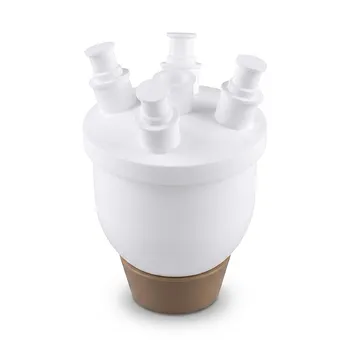
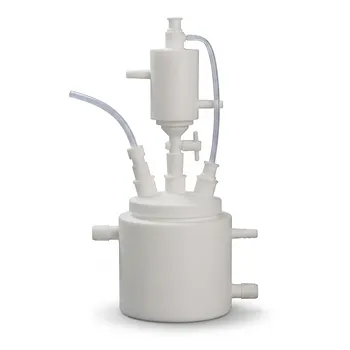
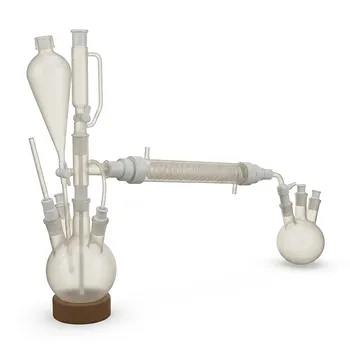
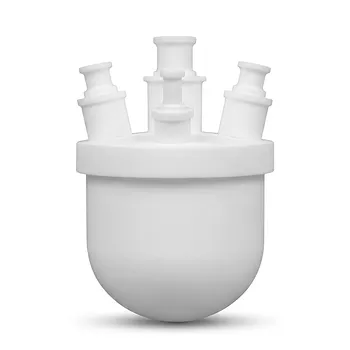
- High Performance Customizable PTFE Reaction Vessel and Corrosion Resistant Polytetrafluoroethylene Flask for Chemical Laboratory Use
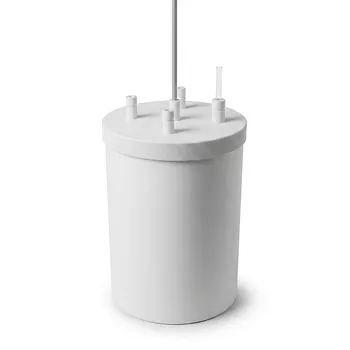
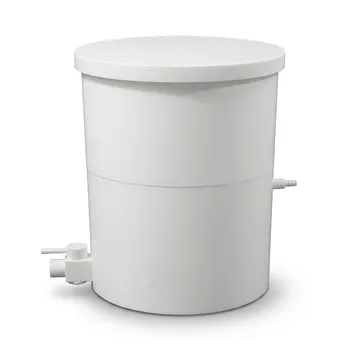
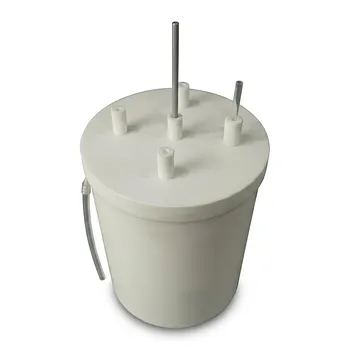
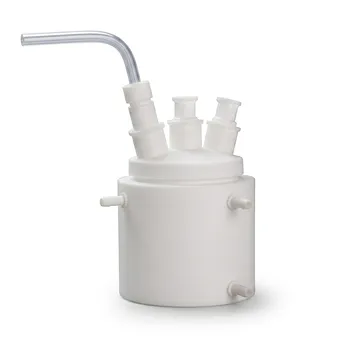
- High Purity PFA Reaction Vessel 4L Water Oxygen Separation Tank for Proton Exchange Membrane Electrolysis Experiments Customizable Laboratory Fluid Component
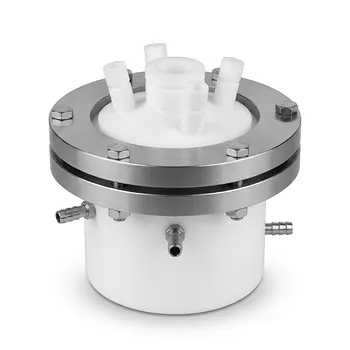
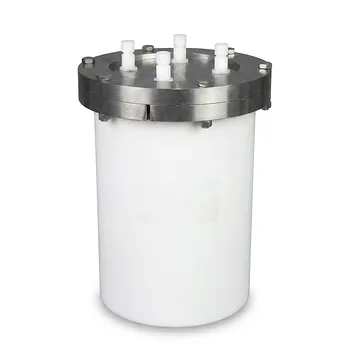
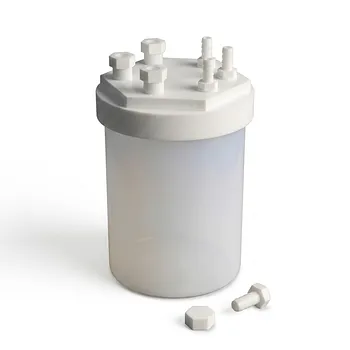
- High Pressure Custom TFM Reactor Stainless Steel Outer Vessel PTFE Inner Cup for Corrosive Synthesis
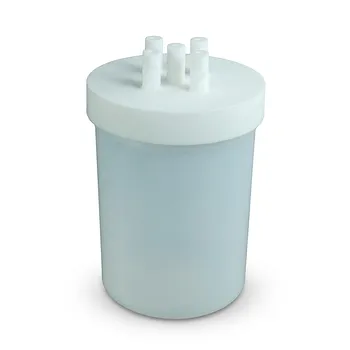
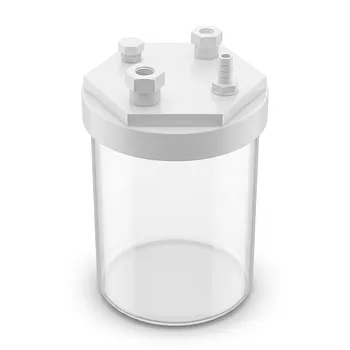
- High Purity PTFE Reaction Vessel Polyfluortetraethylene Cylindrical Tank Petrochemical Reaction Container
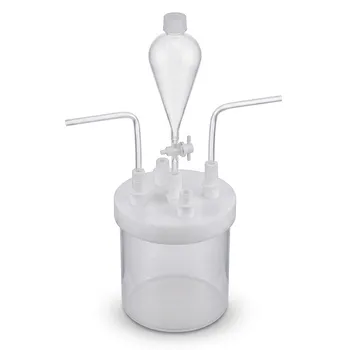
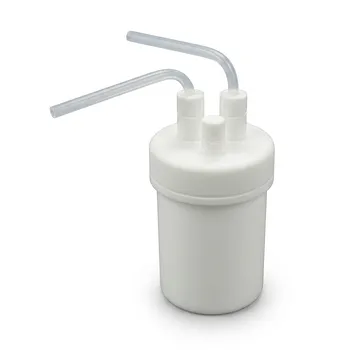
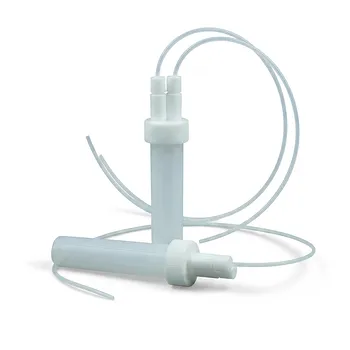
- High Purity PFA Reaction Vessel for Biopharmaceutical Synthesis and Corrosive Chemical Fluid Handling with Customizable Tube Fittings
People Also Ask
- What are the key steps for structural integrity in molded PTFE lab reaction vessels? Master fine powder processing.
- Why is a PTFE reaction vessel required for Ti3C2Tx MXene synthesis? Ensure Safe HF Etching & High Purity
- Why are fluoroplastic (PTFE) reaction vessels recommended for Methylene Blue (MB) adsorption kinetic experiments?
- Ion Activation Reaction Vessel Requirements: Why PTFE is Critical for Membrane Performance
- Why is a high-quality PTFE reaction vessel required for the etching preparation of Ti3C2Tx MXene? Ensure Pure Synthesis.