PFOA salts are used because they dissolve in water; free PFOA does not. In aqueous emulsion polymerization, ammonium, sodium, or potassium perfluorooctanoate can act as fluorinated surfactants that stabilize dispersed fluoromonomers and help produce uniform PTFE or PFA resin. Free PFOA is too poorly soluble to perform that role effectively in a water-based system.
The salt’s solubility is important during manufacturing, while the finished fluoropolymer’s performance comes from its highly fluorinated polymer structure. The processing aid enables controlled resin formation; it does not directly create the chemical resistance of the final labware.
Why the Salt Form Works in Polymer Processing
Free PFOA is poorly suited to aqueous polymerization
Free PFOA has a strongly fluorinated, water-repelling tail and an acidic carboxyl group. Although the acid group provides some polarity, the molecule is substantially insoluble in water under typical processing conditions.
That limited solubility prevents free PFOA from distributing effectively throughout an aqueous reaction mixture. It therefore cannot reliably stabilize the interfaces needed for efficient emulsion polymerization.
Salt formation increases aqueous solubility
When PFOA is converted into an ammonium, sodium, or potassium salt, the carboxylic acid proton is replaced by a counterion. The resulting ionic head group interacts much more favorably with water.
The molecule then behaves as a fluorinated surfactant: its water-compatible ionic end remains in the aqueous phase while its fluorinated portion interacts with the dispersed fluoromonomer or polymer particles.
The surfactant stabilizes polymer particles
During emulsion polymerization, the fluorinated surfactant helps prevent newly formed polymer particles from aggregating. This produces a more stable dispersion and supports the formation of consistent resin particles.
A well-controlled dispersion can also improve polymerization efficiency and help manufacturers obtain resin with predictable processing and physical characteristics.
How This Produces Fluoropolymer Labware
The processing aid and the finished polymer have different roles
PFOA salts are used as processing aids, not as the structural material of the finished wash bottle, crucible, tubing, or digestion vessel. After polymerization, the resin is isolated, processed, and shaped into the final fluoropolymer component.
The labware’s performance is primarily determined by the polymer’s molecular structure, crystallinity, density, fabrication quality, and any post-processing treatment—not simply by the water solubility of the original surfactant.
Fluorinated polymer chains create chemical resistance
PTFE and PFA contain highly fluorinated polymer backbones. Strong carbon–fluorine bonding and the shielding effect of fluorine give these materials very low chemical reactivity.
As a result, properly manufactured fluoropolymer labware generally resists attack from many strong acids, bases, solvents, and oxidizing environments.
Low surface energy supports non-wetting behavior
The fluorinated surface has very low surface energy. This produces pronounced hydrophobicity and oleophobicity, so many aqueous and organic liquids do not readily wet or adhere to the material.
For laboratory use, that behavior can reduce sample retention, simplify rinsing, and limit cross-contamination between operations. It does not mean that every chemical is completely nonreactive or that residues are impossible.
Structural quality also matters
Chemical inertness alone does not determine labware performance. Wall thickness, welds, seams, porosity, dimensional stability, thermal history, and mechanical design can be equally important.
For example, a chemically resistant tube can still fail if it is poorly fabricated, mechanically damaged, or exposed to temperatures beyond its design range.
How Solubility Relates to Finished-Labware Purity
Residual processing chemicals are a separate concern
The historical use of PFOA salts creates a potential concern about residual surfactant, PFOA-related compounds, or ionic background. These substances are not supposed to define the bulk properties of the finished fluoropolymer, but their presence or absence can matter in sensitive applications.
This is especially relevant to trace analysis, semiconductor processing, high-purity chemical handling, and workflows where even low-level extractables can affect results.
Manufacturing route affects analytical suitability
Modern fluoropolymer products may be produced using suspension polymerization, surfactant-free processes, or alternative processing aids designed to avoid persistent PFOA-related substances.
Therefore, users evaluating high-purity labware should consider the manufacturer’s material declarations, extraction data, regulatory documentation, and stated PFOA or PFAS status rather than assuming that all PTFE and PFA products have identical histories.
“PFOA-free” should be interpreted precisely
A product claim should specify what it covers—for example, intentional use, detectable residuals, a defined regulatory threshold, or a broader PFAS restriction.
PFOA-free does not automatically mean PFAS-free, and it does not by itself establish that a product is free of every possible extractable or ionic contaminant.
Understanding the Trade-offs
Solubility improves processing but introduces cleanup requirements
Water-soluble surfactant salts are effective because they can move through the aqueous reaction medium. However, that same mobility means they must be appropriately removed, controlled, or accounted for during resin recovery and finishing.
Manufacturing quality therefore depends on both the polymerization process and subsequent purification and processing steps.
Chemical resistance is not universal
PTFE and PFA are exceptionally resistant materials, but they are not invulnerable. Certain molten or highly reactive fluorinating systems, extreme temperatures, radiation exposure, and mechanical stresses can degrade or damage fluoropolymer components.
Compatibility must be evaluated against the actual chemical, concentration, temperature, pressure, exposure time, and mechanical load.
Cleaner processing does not replace product qualification
A surfactant-free or alternative-aid manufacturing route can reduce concern about PFOA-related residues. It does not, by itself, prove that the final component has the required cleanliness, dimensional stability, or resistance to a particular process.
Qualification should include the complete product specification and, where necessary, application-specific testing.
Making the Right Choice for Your Goal
Choose based on both the finished material’s performance and the manufacturing history required by your application.
- If your primary focus is chemical resistance: Select properly specified PTFE or PFA labware and verify compatibility with the specific chemicals, temperatures, and exposure conditions involved.
- If your primary focus is trace-level analytical cleanliness: Request documentation on polymerization aids, PFOA/PFAS status, extractables, ionic background, and lot-level quality controls.
- If your primary focus is process reliability: Evaluate fabrication quality, wall thickness, connections, pressure and temperature limits, and dimensional stability—not just the resin designation.
- If your primary focus is regulatory or environmental compliance: Obtain a precise supplier declaration defining whether the claim addresses PFOA, broader PFAS, intentional use, residual content, or applicable regulatory limits.
Understanding the distinction between a soluble processing salt and the insoluble, chemically inert finished polymer makes it easier to select fluoropolymer labware that is both technically suitable and analytically trustworthy.
Summary Table:
| Aspect | PFOA Salts | Free PFOA | Impact on Labware |
|---|---|---|---|
| Water Solubility | High (ionic head) | Low (acidic form) | Determines process efficiency; not final product property. |
| Role | Processing aid (surfactant) | Not effective in aqueous polymerization | Enables controlled resin formation; does not define final performance. |
| Residue Risk | Potential residual surfactant | Lower direct use but still possible | Affects trace analysis cleanliness; requires purification verification. |
| End-Product Performance | Indirectly via polymer structure | Indirectly via polymer structure | Determined by PTFE/PFA's chemical resistance and low surface energy. |
Enhance your lab's analytical integrity with high-purity PTFE/PFA labware from KINTEK. Our products are manufactured with advanced processing methods to minimize PFOA-related residues, ensuring exceptional chemical resistance and low extractables for trace analysis. Whether you need standard beakers, digestion vessels, or custom CNC-machined components, our dedicated team supports your unique requirements. Contact us today to discuss your application and discover how KINTEK can deliver reliable, contamination-controlled solutions that meet your highest purity standards. Get in touch with our experts to request a quote or more information.
Related Products
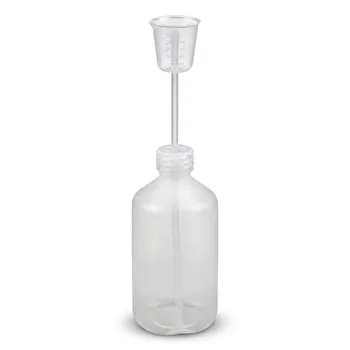
- Translucent PFA Bottle Top Dispenser for Corrosion Resistant Chemical Squeeze Extraction
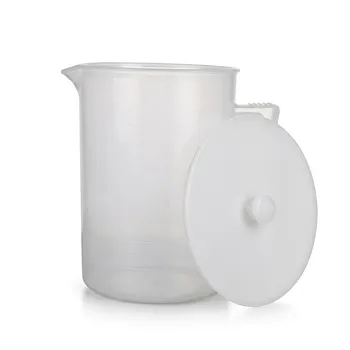
- High Purity PFA Beaker with Handle and Large Capacity Washable Soak Basket Multi Spec Teflon Laboratory Labware
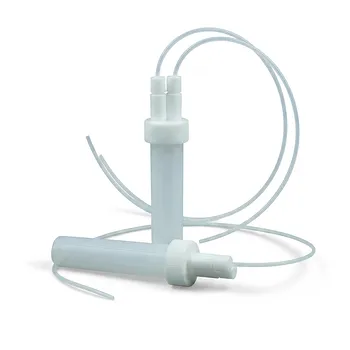
- High Purity PFA Reaction Bottle with Tubing Connection for Corrosive Chemical Synthesis and Trace Analysis
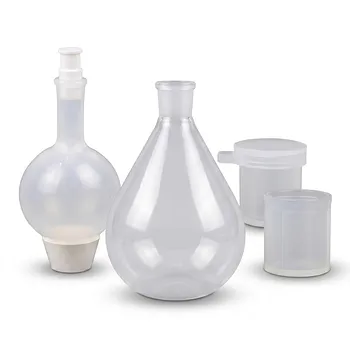
- PFA Eggplant Flask Custom Molded Pear Shaped Laboratory Flask Corrosion Resistant Glass Alternative
- High Purity PFA Chromatography Column with Collection Bottle Corrosion Resistant Fluoropolymer Filtration System for Trace Analysis
People Also Ask
- What is the operational temperature range for PFA laboratory products? Master Extremes from -200°C to +260°C
- What is the effective operating temperature range for PFA laboratory products? From -200°C to +260°C Versatility
- Why Use PFA Labware for MnFe2O4/rGO Precursors? Ensure Stoichiometric Precision and Purity
- What are the chemical compatibility boundaries of PFA fluoropolymer labware, and how can PFA surfaces be treated for adhesive bonding? Learn safe usage and bonding methods.
- Why do PFA fluoropolymer laboratory products offer different melt-processability and structural toughness compared to standard PTFE labware?