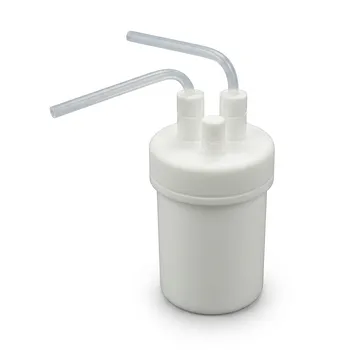
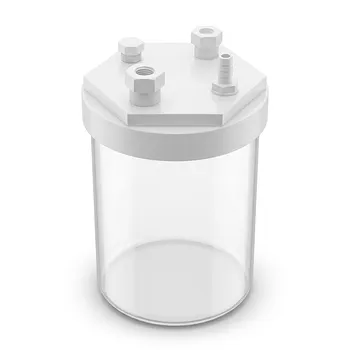
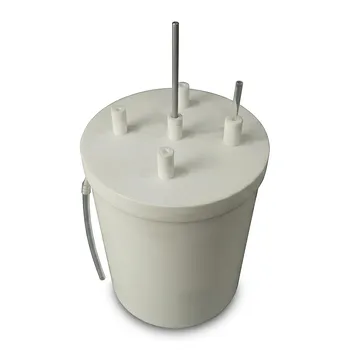
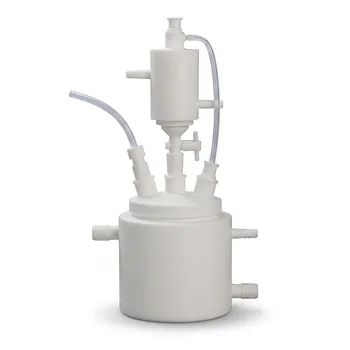
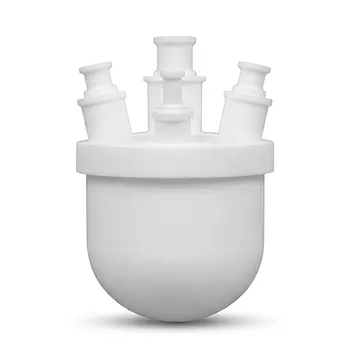
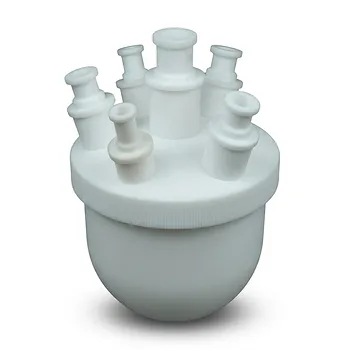
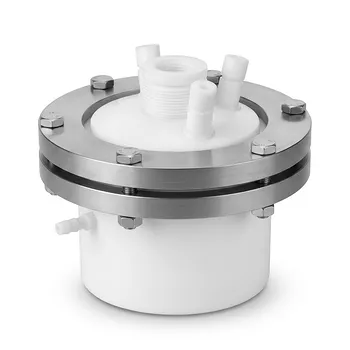
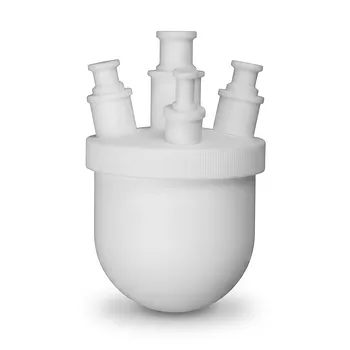
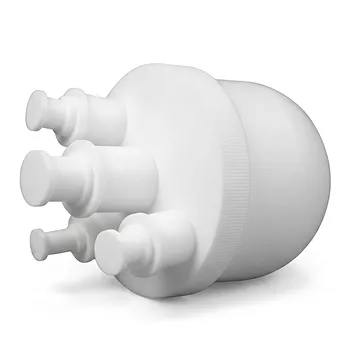
Hydrothermal synthesis reactors are the specialized tools required to create high-crystallinity nanostructures because they manipulate the fundamental solvent properties of water under extreme conditions. By creating a sealed, high-pressure, and high-temperature environment, these reactors enable the dissolution and recrystallization of precursors that remain insoluble at ambient levels. This process ensures the formation of phase-pure transition metal oxides (TMOs) with precise morphological control and minimal structural defects.
Core Takeaway: Hydrothermal synthesis leverages elevated pressure and temperature to transform water into a potent chemical medium, facilitating controlled nucleation and directional crystal growth that results in highly ordered, defect-free nanostructures.
The Physics of the Hydrothermal Environment
Overcoming Solubility Barriers
Under ambient conditions, many transition metal precursors are virtually insoluble in water. The hydrothermal reactor raises temperatures above the boiling point and increases pressure above 1 atm, significantly enhancing the solubility and reactivity of these raw materials.
This "solvothermal" state allows for the full dissolution of precursors, which then undergo controlled precipitation. This cycle of dissolution and recrystallization is the primary driver behind the high crystallinity observed in the final product.
Enhancing Reaction Kinetics
The high-pressure environment within the reactor accelerates chemical reaction kinetics. This energy-dense state allows selenium, oxygen, or sulfur atoms to effectively incorporate into the crystal lattice of the metal oxide.
Because the thermal field is uniform throughout the vessel, the resulting nanomaterials exhibit high reproducibility and phase purity. This consistency is vital for applications in electronics and catalysis where material uniformity is non-negotiable.
Precision Control of Morphology and Crystallinity
Directional Crystallization and Nucleation
The reactor serves as a "closed-system" laboratory where parameters like pH, temperature, and reaction time can be tuned with extreme precision. By adding mineralizers such as NaOH or KOH, researchers can favor specific crystal planes.
This control enables the growth of anisotropic structures, such as nanorods, nanowires, and nanosheets. These specific shapes are critical for optimizing the intrinsic catalytic activity and charge transport efficiency of the material.
Inhibiting Particle Agglomeration
One of the primary challenges in nanomaterial synthesis is the tendency of particles to clump together. The pressurized liquid-phase environment in a hydrothermal reactor effectively inhibits agglomeration.
By maintaining a stable environment for growth, the reactor ensures that nanostructures maintain their defined shapes, such as peony-like or needle-like structures. This preservation of surface area is essential for the performance of the metal oxide in its final application.
The Role of Reactor Design in Material Purity
Chemical Inertness of Teflon Liners
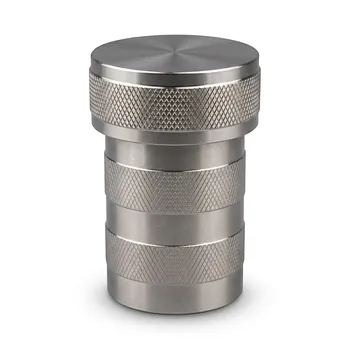
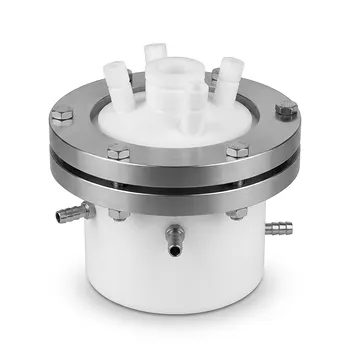
Most hydrothermal reactors utilize a PTFE (Teflon) liner to hold the precursor solution. This material is chosen for its exceptional corrosion resistance and chemical inertness.
The liner prevents the reactive precursor solutions from interacting with the stainless steel walls of the pressure vessel. This safeguard ensures that the resulting Transition Metal Oxides are of exceptionally high purity, free from metallic contamination.
Energy Efficiency Compared to Alternative Methods
Hydrothermal synthesis operates at significantly lower temperatures than vapor deposition or solid-state sintering. This reduces the energy input required while still delivering high-quality, defect-minimized materials.
The ability to produce complex, single-crystal nanostructures at lower temperatures makes this method highly attractive for integrating materials into thin-film electronics or composite structures.
Understanding the Trade-offs
Scaling and Safety Limitations
While hydrothermal reactors are excellent for laboratory-scale precision, scaling them for mass production presents challenges. The reliance on batch processing and high-pressure safety requirements can increase operational complexity and cost.
Furthermore, the "black box" nature of a sealed autoclave means that researchers cannot observe the reaction in real-time. This requires extensive post-synthesis characterization to verify that the desired morphology and crystallinity have been achieved.
Optimization Sensitivity
Small fluctuations in the fill degree of the reactor or the concentration of mineralizers can lead to significant variations in the final product. Achieving the "perfect" crystal structure often requires a rigorous optimization phase for every new material composition.
Applying This to Your Project
Recommendations for Material Synthesis
- If your primary focus is maximizing catalytic surface area: Utilize mineralizers and lower temperatures within the reactor to promote the growth of complex, high-surface-area morphologies like nanoflowers or hollow spheres.
- If your primary focus is electronic charge transport: Prioritize longer reaction times at higher pressures to ensure the growth of long, high-crystallinity nanowires or nanotubes with minimal lattice defects.
- If your primary focus is material purity for sensitive electronics: Always utilize a high-quality PTFE or PPL liner and ensure thorough cleaning protocols to prevent cross-contamination between batches.
The hydrothermal reactor remains the definitive tool for researchers who require absolute control over the structural and chemical integrity of transition metal oxide nanostructures.
Summary Table:
| Key Feature | Impact on Synthesis | Final Product Benefit |
|---|---|---|
| High-Pressure Environment | Increases precursor solubility and reaction kinetics | High crystallinity and phase purity |
| Tunable pH & Mineralizers | Facilitates directional crystal growth | Controlled morphology (nanowires, sheets) |
| Liquid-Phase Medium | Inhibits particle agglomeration | Uniform surface area and defined shapes |
| PTFE/PPL Liners | Ensures absolute chemical inertness | Contamination-free, high-purity materials |
| Uniform Thermal Field | Consistent nucleation and precipitation | High reproducibility and structural integrity |
Elevate Your Research with KINTEK’s High-Performance Fluoropolymer Solutions
Achieving high-crystallinity nanostructures requires equipment that can withstand extreme conditions without compromising purity. At KINTEK, we specialize in the engineering and fabrication of high-performance labware crafted exclusively from PTFE and PFA.
Whether you require essential labware (beakers, crucibles, reagent bottles) or specialized reaction apparatus like hydrothermal synthesis liners, microwave digestion vessels, and custom electrochemical cells, our end-to-end custom CNC fabrication ensures every component meets your exact specifications. From high-purity trace analysis tools to complex fluid transfer components (tubing, fittings, valves), we provide the chemically inert environment your transition metal oxide synthesis demands.
Ready to optimize your laboratory setup? Contact our fluoropolymer experts today to discuss your custom project or high-volume needs and experience the KINTEK difference in material purity and performance.
References
- Viraj Pasindu, Imalka Munaweera. Multifunctional transition metal oxide/graphene oxide nanocomposites for catalytic dye degradation, renewable energy, and energy storage applications. DOI: 10.1039/d5ra04806k
This article is also based on technical information from Kintek Knowledge Base .
Related Products
- High Temperature Corrosion Resistant Hydrothermal Synthesis Reactor with TFM Inner Liner and Straight Cylinder Design
- PTFE Lined High Pressure Digestion Vessel 50ml High Temperature Hydrothermal Synthesis Tank
- Custom PTFE Reaction System with Hose Barb Fittings Corrosion Resistant High Sealing 2L 4L Lab Reactor with Separatory Funnel
- High Pressure Custom TFM Reactor Stainless Steel Outer Vessel PTFE Inner Cup for Corrosive Synthesis
- High Purity PFA Reaction Vessel for Biopharmaceutical Synthesis and Corrosive Chemical Fluid Handling with Customizable Tube Fittings
People Also Ask
- What is the role of a corrosion-resistant reactor in the synthesis of lignin-based carbon dots? Ensure Maximum Purity
- What are the technical advantages of using hydrothermal synthesis reactors for advanced electronic & optical nanomaterials?
- How does a hydrothermal synthesis reactor facilitate the production of crystalline materials with tailored morphologies? Precision Crystal Growth
- Why is the sealing reliability of a hydrothermal synthesis reactor critical for 24-hour cycles? Ensure Nano-Precision
- What role do hydrothermal synthesis reactors play in CQD preparation? Achieve High-Purity Nanomaterial Synthesis