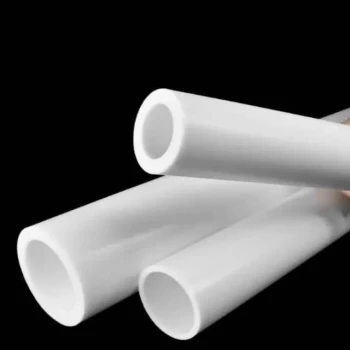
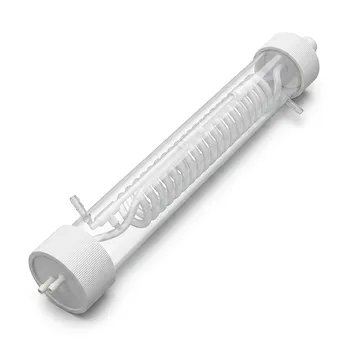
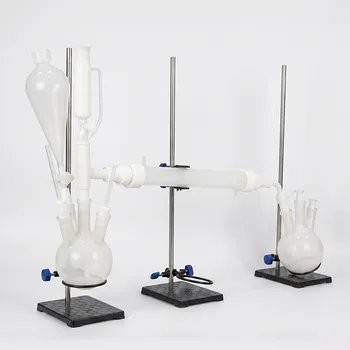
High-purity PTFE and PFA liners are indispensable in CuO nanoparticle synthesis due to their near-total chemical inertness under extreme conditions. These materials serve as a critical barrier that protects the structural integrity of the high-pressure reactor from aggressive precursors like copper nitrate and sodium hydroxide. By preventing metal ion leaching and maintaining a sealed, contaminant-free environment, they ensure the production of high-purity copper oxide with precise morphological control.
Core Takeaway: PTFE and PFA liners are required to isolate corrosive reaction media from the metal reactor body, preventing contamination and ensuring the chemical purity and uniform size distribution of the synthesized CuO nanoparticles.
Protecting the Reaction Environment
Resistance to Aggressive Chemical Precursors
The synthesis of CuO often involves highly corrosive substances, including copper nitrate, copper chloride, and concentrated sodium hydroxide (often up to 6 M).
High-purity PTFE and PFA are among the few materials capable of withstanding these strong acids and bases without degrading. They also resist organic solvents like DMSO, which are frequently used to control nanoparticle growth.
Prevention of Metal Ion Leaching
Hydrothermal reactors are typically constructed from stainless steel, which can release iron, nickel, or chrome ions when exposed to corrosive fluids at high temperatures.
A high-purity liner acts as a physical shield, ensuring that no metallic impurities from the outer vessel enter the solution. This is vital because even trace amounts of foreign ions can disrupt the crystal lattice of the CuO nanoparticles.
Ensuring Material Quality and Consistency
Control Over Particle Morphology
The purity of the reaction environment directly influences the nucleation and growth kinetics of the nanoparticles.
By eliminating outside contaminants, these liners allow for a "clean" reaction that results in a narrow particle size distribution. This consistency is essential for applications in electronics, catalysis, and sensing where surface area is critical.
Ease of Sample Recovery
PTFE and PFA possess excellent mold-release properties, meaning the synthesized nanopowders do not easily adhere to the vessel walls.
This non-stick characteristic allows researchers to collect the maximum yield of the CuO product without scraping the liner, which further reduces the risk of introducing polymer shavings or cross-contaminants into the final sample.
Understanding the Trade-offs
Temperature and Pressure Limitations
While chemically robust, PTFE and PFA have strict thermal limits, typically losing structural integrity above 250°C to 260°C.
Exceeding these temperatures can cause the liner to soften or "creep," potentially leading to a seal failure or the permanent deformation of the vessel.
The "Memory Effect" and Absorption
Fluoropolymers can be slightly porous at a microscopic level, leading to the absorption of certain ions or solvents during high-pressure cycles.
If a liner is not meticulously cleaned between experiments, trace amounts of previous precursors can leach back into the new reaction, a phenomenon known as the memory effect. This is particularly problematic when switching between different dopants like gold (Au) or silver (Ag).
How to Apply This to Your Project
Making the Right Choice for Your Goal
- If your primary focus is maximum purity for electronic applications: Always use virgin, high-purity PTFE liners and implement a dedicated "acid-digestion" cleaning cycle between batches to eliminate the memory effect.
- If your primary focus is high-temperature synthesis (above 250°C): You must transition from fluoropolymer liners to specialized materials like quartz or gold-plated inserts, as PTFE will fail structurally.
- If your primary focus is uniform nanosheet morphology: Ensure the liner is tightly fitted to the autoclave body to maintain consistent heat transfer, which is critical for the uniform loading of active components.
Selecting the appropriate high-purity liner is not merely a safety precaution, but a fundamental requirement for achieving the chemical precision necessary in modern nanotechnology.
Summary Table:
| Feature | Benefit in CuO Nanoparticle Synthesis |
|---|---|
| Chemical Resistance | Withstands corrosive precursors like NaOH and copper nitrate without degradation. |
| Contamination Control | Acts as a barrier against metal ion leaching from the steel reactor body. |
| Morphology Control | Promotes uniform nucleation and growth for consistent particle size distribution. |
| Sample Recovery | Non-stick properties ensure maximum yield and prevent cross-contamination. |
| Thermal Stability | Reliable performance for hydrothermal reactions up to 250°C-260°C. |
Elevate Your Research with KINTEK High-Performance Fluoropolymers
Achieving precision in CuO nanoparticle synthesis requires equipment that never compromises on purity. At KINTEK, we specialize exclusively in high-performance fluoropolymer materials, offering everything from everyday basic labware—such as beakers, crucibles, reagent bottles, and digestion tubes—to high-purity trace analysis instruments and fluid transfer components like tubing, fittings, and valves.
Our expertise extends to advanced reaction apparatus, including bespoke hydrothermal synthesis liners, microwave digestion vessels, and custom electrochemical cells. Whether you need high-volume consumables like stirring bars and O-rings or complex, non-standard CNC-machined parts, KINTEK provides end-to-end custom fabrication to meet your exact specifications.
Ready to optimize your laboratory setup? Contact us today to discover how our PTFE and PFA solutions can deliver the chemical inertness and reliability your project demands!
References
- Naveed Akhtar, Zakir Ullah. CuO Nanoparticles: Tuning Properties for Energy and Optoelectronic Applications. DOI: 10.1002/nano.70015
This article is also based on technical information from Kintek Knowledge Base .
Related Products
- PTFE Lined High Pressure Digestion Vessel 50ml High Temperature Hydrothermal Synthesis Tank
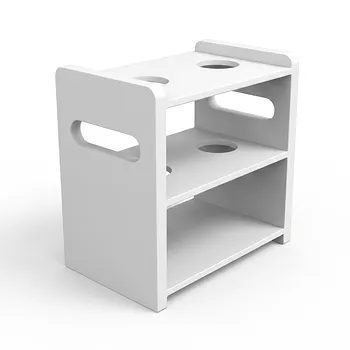
- Custom PTFE Acid Resistant Support Rack for PFA Hydrogen Absorption Systems Multi Hole Configurations
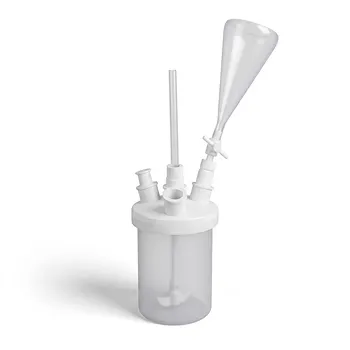
- Transparent Corrosion Resistant PFA Thermometer Sleeve and Customizable Hydrogen Fluoride Condensation Device
- High Purity PTFE Microwave Digestion Vessel for Soil and Food Analysis Acid Resistant Fluoropolymer Sample Preparation Liners
- PTFE PFA Vacuum Filtration System Corrosion Resistant Customizable Shatterproof Laboratory Device
People Also Ask
- What are the benefits of using a PTFE-lined vessel for carbon-sulfur cathode treatment? Maximize Purity & Performance
- Why are PTFE-lined pressure digestion vessels required for the preparation of Ag/CeO2 catalysts? Purity & Performance
- What safety features are typically incorporated into high-pressure PTFE digestion vessel designs? Ensure Lab Safety
- What is the function of high-pressure PTFE digestion vessels in mineral analysis? Optimize Sample Mineralization
- What is the function of PTFE lined high-pressure vessels in g-C3N4 synthesis? Achieve High-Purity Material Growth