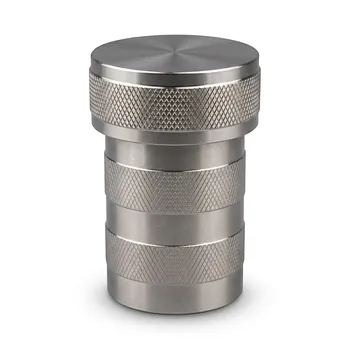
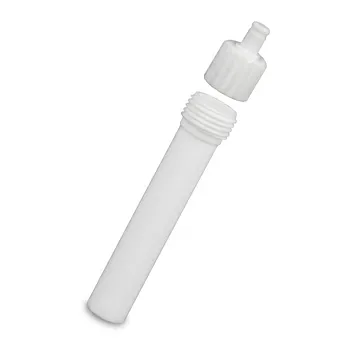
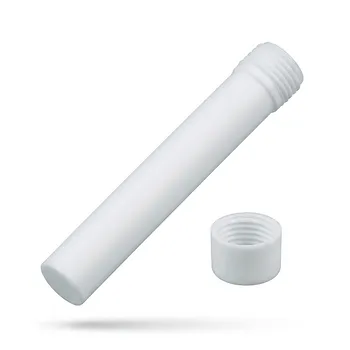
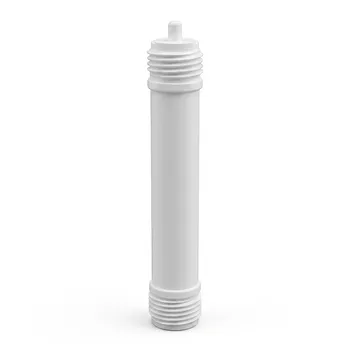
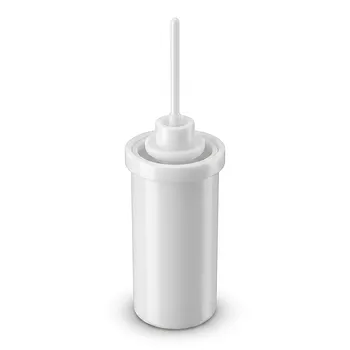
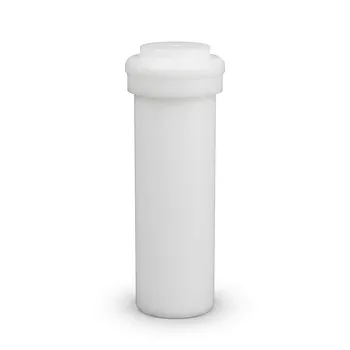
The requirement for high-purity PTFE or PFA liners in hydrothermal synthesis is driven by the need for absolute chemical isolation and material purity. These fluoroplastic liners act as an inert barrier, preventing corrosive precursors and high-temperature solvents from attacking the metal walls of the autoclave. By eliminating the risk of metal ion leaching, these liners ensure that the doped cerium oxide nanoparticles maintain their intended chemical composition and functional properties without contamination.
High-purity liners provide a chemically inert environment that protects the autoclave from corrosion while ensuring no external metallic impurities interfere with the delicate doping process. This isolation is the only way to guarantee the precise electrochemical performance and morphology of the synthesized nanoparticles.
Maintaining Chemical Integrity in Extreme Environments
Preventing Metal Ion Contamination
Hydrothermal synthesis of cerium oxide often involves corrosive precursors such as nitrates or chlorides and strong alkaline or acidic media. At elevated temperatures and pressures, these chemicals would otherwise react with the stainless steel walls of the autoclave. The liner prevents leaching of metal ions (like iron, nickel, or chromium) into the reaction, which is critical when precisely controlling the dopant concentration of cerium oxide.
Protecting the Structural Autoclave
The metal body of an autoclave provides the mechanical strength to withstand high pressure but is often vulnerable to chemical erosion. High-purity PTFE (Polytetrafluoroethylene) or PFA (Perfluoroalkoxy) liners shield the metal shell from aggressive reagents. This protection not only ensures the safety of the high-pressure process but also significantly extends the operational lifespan of the expensive autoclave hardware.
Ensuring Low Impurity Leaching
Standard plastics can release organic or inorganic impurities when subjected to heat and pressure. Using high-purity fluoroplastics ensures an extremely low leaching rate, providing a stable environment for crystal growth. This level of cleanliness is essential for producing high-performance materials where even trace impurities can alter the catalytic or optical properties of the nanoparticles.
Influence on Particle Morphology and Collection
Non-Stick Surface for High Yield
PTFE and PFA possess excellent mold-release and non-stick properties, which are vital when working with nanomaterials. These characteristics allow researchers to collect the synthesized nanopowders or single crystals easily without material sticking to the vessel walls. This ensures a higher product yield and simplifies the cleaning process between experimental batches.
Consistency in Nanoparticle Morphology
The stable, inert environment provided by the liner allows for better control over the reaction kinetics and crystal growth. This stability is necessary to achieve uniform morphologies, such as nanorods or nanospheres, which are highly sensitive to the chemical environment. Consistent conditions lead to a narrow particle size distribution and reproducible experimental results.
Understanding the Trade-offs
Temperature and Pressure Limitations
While fluoroplastic liners offer exceptional chemical resistance, they have distinct thermal limits, typically around 220°C to 260°C. Exceeding these temperatures can cause the liner to soften, deform, or even release toxic fumes. Engineers must carefully balance the reaction requirements with the physical limitations of the liner material to prevent equipment failure.
Risk of "Creep" and Deformation
Under prolonged high-pressure conditions, PTFE can experience "creep," where the material slowly flows or changes shape. This can lead to sealing issues or difficulty removing the liner from the metal jacket after the reaction. Regular inspection for thinning or deformation is required to maintain the safety and integrity of the hydrothermal system.
Making the Right Choice for Your Goal
When selecting or using a liner for hydrothermal synthesis, consider the specific requirements of your doped cerium oxide project:
- If your primary focus is Absolute Chemical Purity: Use high-purity PFA liners, as they often offer lower leaching profiles and smoother surfaces than standard PTFE.
- If your primary focus is High-Temperature Reactions: Ensure your process remains below 250°C and use a thick-walled PTFE liner to minimize the risk of thermal deformation.
- If your primary focus is Morphology Control: Leverage the non-stick properties of PTFE to ensure total recovery of nanorods or nanospheres and maintain a clean reaction system.
By strictly isolating the reaction environment, high-purity liners enable the precise engineering of doped cerium oxide nanoparticles required for advanced technical applications.
Summary Table:
| Feature | Benefit for Nanoparticle Synthesis | Material Impact |
|---|---|---|
| Chemical Inertness | Prevents reaction with corrosive precursors (nitrates/chlorides). | Ensures stable crystal growth. |
| Metal-Free Environment | Eliminates leaching of Fe, Ni, or Cr from autoclave walls. | Maintains precise dopant concentrations. |
| Non-Stick Surface | Facilitates easy collection of nanopowders and rods. | Increases product yield & simplifies cleaning. |
| Thermal Stability | Provides safe operation up to 220°C - 260°C. | Protects structural autoclave integrity. |
| Low Leaching Rate | Prevents organic/inorganic impurity interference. | Guarantees catalytic & optical properties. |
Secure Your Synthesis Integrity with KINTEK
Don't let metal contamination compromise your doped cerium oxide research. KINTEK specializes in high-performance fluoropolymer materials, manufacturing virtually all imaginable laboratory supplies crafted from PTFE and PFA.
From everyday basic labware (beakers, measuring cylinders, crucibles, reagent bottles, and digestion tubes) and high-purity trace analysis instruments to comprehensive fluid transfer components (tubing, fittings, valves) and sample prep tools (filters, pipettes, tweezers), we have you covered. Our expertise extends to advanced derivative and reaction apparatus, including hydrothermal synthesis liners, microwave digestion vessels, and custom electrochemical cells.
Backed by end-to-end custom CNC fabrication, KINTEK is equipped to deliver everything from complex non-standard machined parts to high-volume orders with absolute precision.
Contact us today to discuss your custom PTFE/PFA requirements!
References
- Akira Yoko, Tadafumi Adschiri. Nonequilibrium Process for Doping Under Continuous-Flow Hydrothermal Synthesis of Cerium Oxide-Based Nanoparticles. DOI: 10.1021/prechem.5c00004
This article is also based on technical information from Kintek Knowledge Base .
Related Products
- High Temperature Corrosion Resistant Hydrothermal Synthesis Reactor with TFM Inner Liner and Straight Cylinder Design
- PTFE Lined High Pressure Digestion Vessel 50ml High Temperature Hydrothermal Synthesis Tank
- Custom TFM Reaction Vessel with Stainless Steel Jacket and PTFE Inner Cup for High Corrosion Resistance
- High Pressure Custom TFM Reactor Stainless Steel Outer Vessel PTFE Inner Cup for Corrosive Synthesis
- High Purity PTFE Microwave Digestion Vessel Replacement Liner for Acid Sample Preparation and Trace Analysis
People Also Ask
- What is the role of a corrosion-resistant reactor in the synthesis of lignin-based carbon dots? Ensure Maximum Purity
- What are the technical advantages of using hydrothermal synthesis reactors for advanced electronic & optical nanomaterials?
- How does a hydrothermal synthesis reactor facilitate the production of crystalline materials with tailored morphologies? Precision Crystal Growth
- Why is the sealing reliability of a hydrothermal synthesis reactor critical for 24-hour cycles? Ensure Nano-Precision
- What role do hydrothermal synthesis reactors play in CQD preparation? Achieve High-Purity Nanomaterial Synthesis