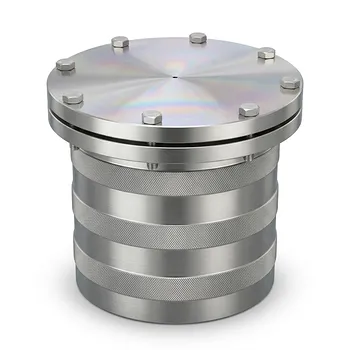
The integrity of high-purity Zinc Oxide (ZnO) nanoparticles depends entirely on the chemical environment within the hydrothermal autoclave.
High-purity PTFE or PFA liners are critical because they provide an impermeable, chemically inert barrier that resists the aggressive alkaline precursors, such as Sodium Hydroxide (NaOH), required for synthesis. By isolating the reaction from the stainless steel autoclave body, these liners prevent metal ion leaching that would otherwise contaminate the sample, degrade crystalline quality, and disrupt specific crystal growth orientations.
High-purity fluoropolymer liners serve as the essential interface between corrosive reagents and the metal reactor, ensuring that the synthesized nanomaterials remain free from metallic impurities. Their primary value lies in protecting the stoichiometric precision and optoelectronic properties of the final product under extreme pressure and temperature.
The Role of Chemical Inertness in High-Alkaline Reactions
Resisting Corrosive Precursors
The hydrothermal synthesis of ZnO frequently utilizes high concentrations of NaOH or other strong bases to facilitate crystallization. These reagents are highly corrosive to standard metals, including the stainless steel used in autoclave construction.
Maintaining Reactor Longevity
Beyond protecting the sample, high-purity liners act as a physical shield for the reactor itself. Without this barrier, the internal walls of the autoclave would suffer from pitting and thinning, leading to equipment failure and safety hazards during high-pressure cycles.
Sealing the Reaction Environment
Liners made from PTFE or PFA create a sealed, self-contained environment that maintains consistent pressure. This stability is vital for the repeatable growth of nanostructures with uniform morphology and size distribution.
Eliminating Metallic Contamination
Preventing Ion Leaching
At high temperatures and pressures, even "stainless" steel can release trace amounts of iron, nickel, or chromium ions if exposed to corrosive media. High-purity liners have extremely low leachable characteristics, ensuring these foreign ions do not enter the reaction system.
Impact on Crystal Growth and Orientation
The purity of the reaction environment directly influences how ZnO crystals nucleate and grow. Metallic impurities can act as unintentional dopants, altering the growth orientation and potentially ruining the intended semiconductor properties or photocatalytic activity of the ZnO nanorods.
Preserving Optoelectronic Integrity
For applications in electronics or optics, ZnO must be exceptionally pure to maintain its specific bandgap and luminescence. PTFE and PFA liners ensure that no external contaminants interfere with the electronic structure of the synthesized nanomaterials.
Operational Advantages of Fluoropolymers
Thermal and Pressure Stability
Both PTFE and PFA are selected for their ability to withstand the extreme thermal conditions of hydrothermal synthesis, typically up to 200–260°C. They maintain their structural integrity and chemical resistance even when the internal pressure of the vessel rises significantly.
Ease of Sample Recovery
Fluoropolymers possess excellent mold-release properties (non-stick surfaces). This allows researchers to easily collect synthesized nanopowders or single crystals from the liner without losing material or introducing contamination during the extraction process.
Understanding the Trade-offs
Temperature Limitations
While highly resistant, PTFE and PFA have upper thermal limits (generally around 250°C for PTFE). Exceeding these temperatures can cause the liner to soften, deform, or undergo "cold flow," which may compromise the seal or lead to liner failure.
Pressure Deformation
Under sustained high pressure, fluoropolymer liners can become permanently distorted or "pressed" into the threads of the autoclave. This requires users to carefully monitor fill ratios (typically 60-80%) to balance internal pressure and prevent structural damage to the liner.
Purity Grades
Not all PTFE is equal; "mechanical grade" PTFE may contain recycled material or fillers that can leach impurities. For high-performance synthesis, virgin, high-purity grades are required to ensure the leaching rate remains at near-zero levels.
Making the Right Choice for Your Goal
- If your primary focus is maximizing crystal purity: Always utilize virgin, high-purity PFA or PTFE liners to eliminate any possibility of metallic ion migration from the autoclave body.
- If your primary focus is synthesis at temperatures above 250°C: Consider alternative liner materials like PPL (Polyphenylene polymers) or quartz, as standard fluoropolymers may lose structural integrity.
- If your primary focus is high-yield sample recovery: Leverage the non-stick properties of PTFE to ensure that 100% of the synthesized nanostructures can be harvested without mechanical scraping.
- If your primary focus is reactor safety: Ensure the liner is properly seated and not overfilled, as the expansion of the fluid at high temperatures is the leading cause of liner deformation.
By meticulously isolating the reaction chemistry within a high-purity fluoropolymer environment, researchers can achieve the precise morphology and chemical signature required for advanced ZnO applications.
Summary Table:
| Feature | Benefit for ZnO Synthesis | Property |
|---|---|---|
| Chemical Inertness | Prevents reactions with aggressive NaOH precursors | High Corrosion Resistance |
| Purity Control | Eliminates leaching of Fe, Ni, or Cr ions from the reactor | Low Leachable Content |
| Surface Energy | Ensures easy recovery of 100% of synthesized nanopowders | Non-stick Fluoropolymer |
| Thermal Stability | Maintains seal integrity during high-pressure cycles | Stable up to 250°C |
| Morphology Control | Ensures uniform crystal growth and orientation | Contamination-Free Environment |
Elevate Your Nanomaterial Synthesis with KINTEK Precision
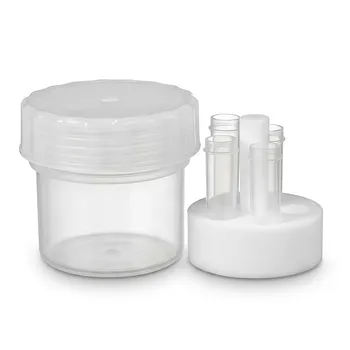
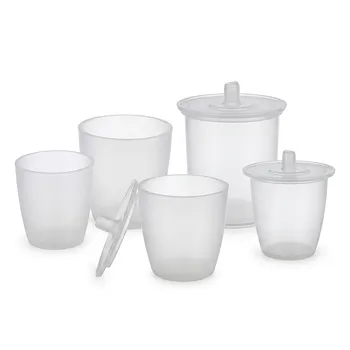
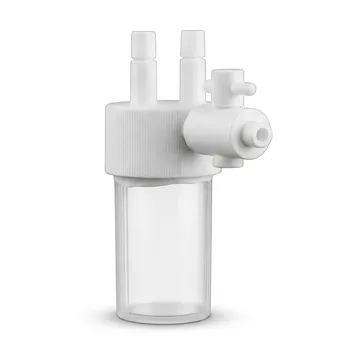
Achieve uncompromising purity in your research with KINTEK’s high-performance fluoropolymer solutions. From everyday basic labware like beakers, crucibles, and digestion tubes to advanced reaction apparatus such as hydrothermal synthesis liners, microwave digestion vessels, and custom electrochemical cells, we provide the absolute chemical isolation your high-purity ZnO nanoparticles require.
Our expertise in end-to-end custom CNC fabrication allows us to deliver everything from complex non-standard machined parts to high-volume orders of PFA and PTFE components. Ensure your results remain free from metallic impurities and optimize your lab's efficiency with materials designed for the most aggressive chemical environments.
Contact our experts today to request a quote for bespoke laboratory setups or high-performance fluoropolymer supplies tailored to your specific application.
References
- Priyanka Paul, Md. Sahadat Hossain. Crystallographic facet engineering of ZnO nanoparticles for photocatalytic organic pollutant degradation and antibacterial activity. DOI: 10.1039/d5ma00316d
This article is also based on technical information from Kintek Knowledge Base .
Related Products
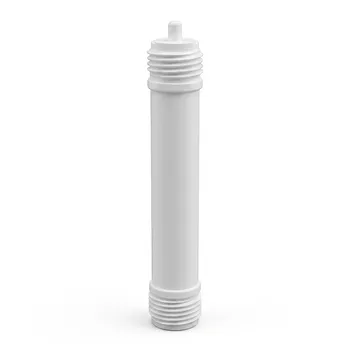
- High Purity PTFE Microwave Digestion Vessel for Soil and Food Analysis Acid Resistant Fluoropolymer Sample Preparation Liners
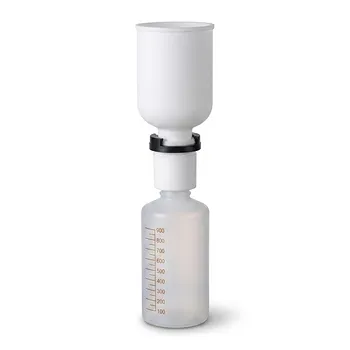
- PTFE PFA Vacuum Filtration System Corrosion Resistant Customizable Shatterproof Laboratory Device
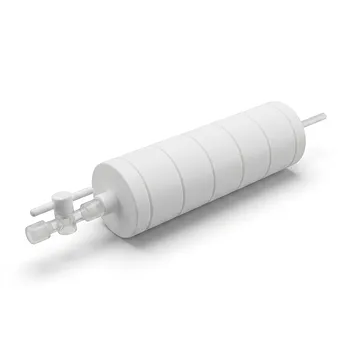
- PTFE Corrosion Resistant Filter with PFA Valve Connections and Integrated Sieve Plate
- Custom PTFE Constant Pressure Separatory Funnel Corrosion Resistant Low Background Labware for PFA Flasks
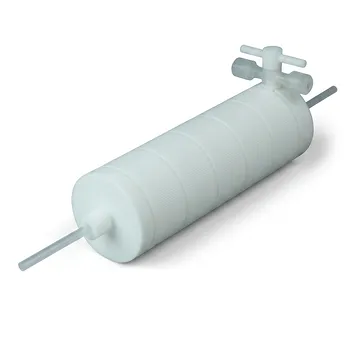
- High Purity PTFE Filter with PFA Valve Connections and Integrated Sieve Plate for Corrosive Fluid Processing
People Also Ask
- How does the dielectric property of PTFE benefit microwave-assisted digestion? Unlock Rapid and Uniform Sample Heating
- What are the advantages of using microwave digestion vessels? Optimize EG@MO synthesis with superior thermal control.
- What safety features are commonly integrated into microwave digestion vessels? Ensuring High-Pressure Laboratory Safety
- What are the advantages of using microwave digestion vessels for environmental analysis? Boost speed and sample accuracy.
- How do microwave digestion vessels support pharmaceutical elemental impurity testing? Achieve Precise USP Compliance