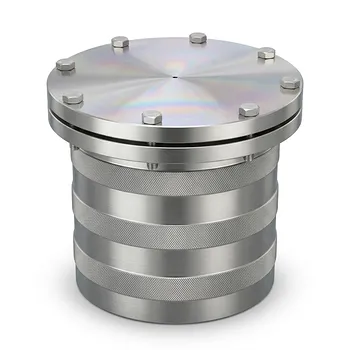
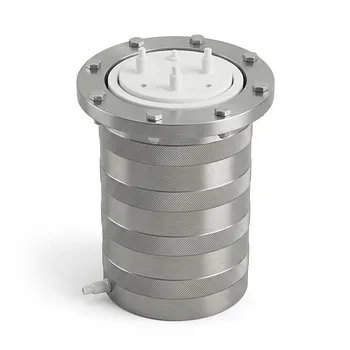
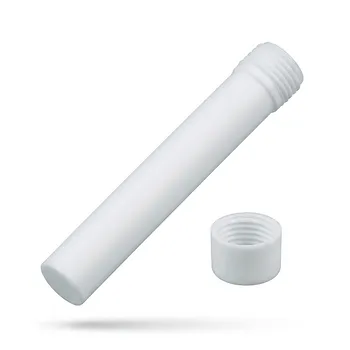
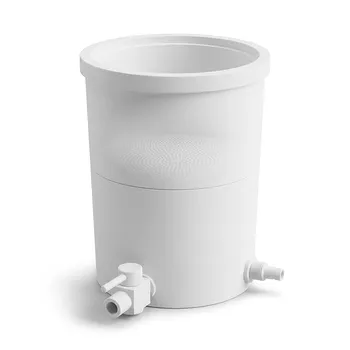
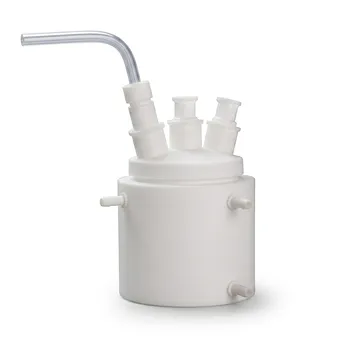
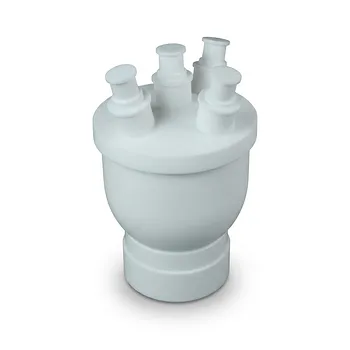
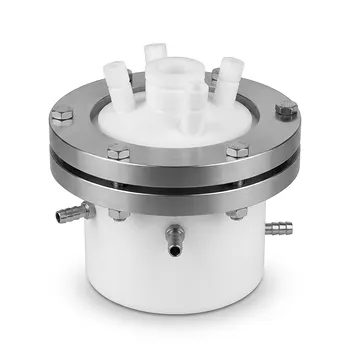
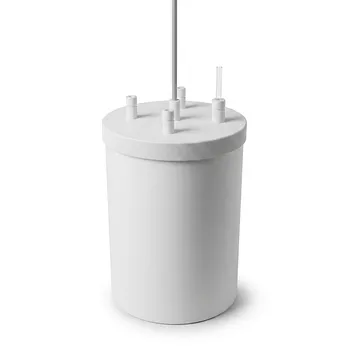
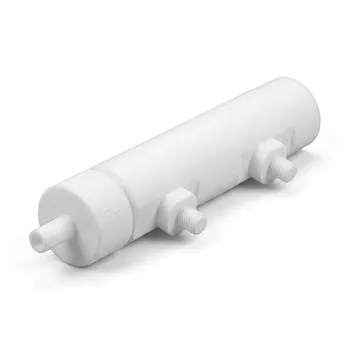
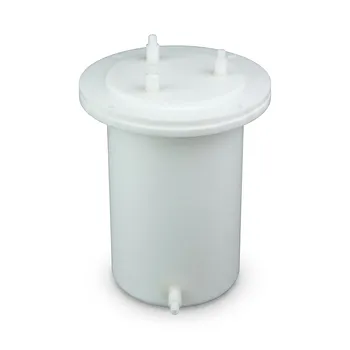
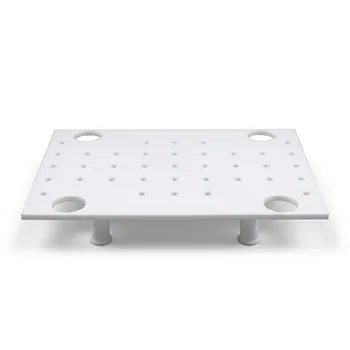
High-purity PTFE liners are essential because they act as a total chemical barrier, protecting the reactor's structural integrity and ensuring the Zirconia nanoparticles remain free from metallic contamination. These liners withstand the aggressive acidic or alkaline mineralizers, such as sodium hydroxide, required for Zirconia synthesis while providing a non-stick surface that facilitates the complete recovery of the final nanopowder.
Core Takeaway: PTFE liners are the "inner skin" of hydrothermal synthesis, providing a chemically inert environment that prevents corrosive precursors from damaging the reactor and stops metal ions from leaching into and ruining the purity of the Zirconia nanoparticles.
Protecting Structural Integrity Against Corrosion
Resistance to Aggressive Mineralizers
Zirconia nanoparticle preparation often requires the use of strong mineralizers like sodium hydroxide (NaOH) or potassium hydroxide (KOH). These substances are highly corrosive to the stainless steel typically used in the outer pressure vessel of a hydrothermal reactor.
Extending Reactor Service Life
By providing a complete seal, the PTFE liner isolates these harsh chemicals from the metal walls. This prevents pitting and stress corrosion cracking, which significantly extends the operational lifespan of the expensive high-pressure hardware.
Guaranteeing Chemical Purity and Microstructure
Preventing Metal Ion Leaching
At high temperatures and pressures, metal ions from a reactor's stainless steel shell (such as Iron, Chromium, or Nickel) can leach into the reaction solution. Without a high-purity barrier, these impurities would incorporate into the Zirconia crystal lattice, altering its physical and chemical properties.
Ensuring Controlled Crystal Growth
High-purity PTFE ensures that the reaction environment remains "clean," allowing for the controlled growth of Zirconia microstructures. This leads to uniform morphology and phase purity, which are critical for the performance of the nanoparticles in technical applications.
Optimizing Product Collection and Yield
Utilizing Non-Stick Surface Properties
Zirconia nanoparticles are exceptionally fine and can easily adhere to traditional container surfaces. The non-stick (low surface energy) nature of PTFE allows researchers to recover the synthesized powder completely without it becoming trapped in surface pores.
Facilitating Efficient Recovery
Because the synthesized material does not bond to the liner, the transition from the hydrothermal phase to the collection phase is seamless. This ensures a higher yield and prevents cross-contamination between different experimental batches.
Understanding the Trade-offs and Limitations
Temperature Constraints
While PTFE is highly inert, it has a functional temperature ceiling, typically around 220°C to 250°C. Exceeding these temperatures can cause the liner to soften or deform, potentially compromising the seal and damaging the reactor shell.
Pressure Sensitivity
PTFE is a relatively soft material that can "creep" or flow under extreme pressure. Users must ensure the liner is properly fitted within the stainless steel sleeve to prevent the material from migrating into the seal areas, which could lead to leaks or pressure failures.
How to Apply This to Your Project
Hydrothermal synthesis requires a balance between chemical aggressiveness and vessel safety. Choosing the right liner grade and maintaining it is vital for repeatable results.
- If your primary focus is Maximum Purity: Always use high-purity, "virgin" PTFE liners and implement a rigorous cleaning protocol (acid washing) between runs to prevent trace carry-over.
- If your primary focus is Reactor Safety: Inspect liners for "necking" or discoloration after every use, as these are signs of thermal fatigue that could lead to a breach of the corrosive precursors.
- If your primary focus is High-Yield Recovery: Use a dedicated liner for Zirconia synthesis to ensure the non-stick surface remains smooth and free of scratches from abrasive cleaning.
By prioritizing the integrity of the high-purity PTFE liner, you ensure both the safety of your laboratory environment and the uncompromising quality of your synthesized Zirconia nanoparticles.
Summary Table:
| Key Feature | Benefit | Impact on Zirconia Synthesis |
|---|---|---|
| Chemical Inertness | Resists NaOH/KOH mineralizers | Prevents reactor corrosion and vessel failure |
| High Purity | Zero metal ion leaching | Maintains crystal lattice integrity and phase purity |
| Non-Stick Surface | Low surface energy | Facilitates complete powder recovery and high yield |
| Thermal Stability | Reliable up to 250°C | Ensures safe, repeatable hydrothermal conditions |
Achieve uncompromising purity in your Zirconia synthesis with KINTEK’s high-performance fluoropolymer materials. From everyday basic labware like beakers, crucibles, and reagent bottles to specialized high-purity trace analysis instruments and cleaning tanks, we ensure a contamination-free environment. Our expertise extends to comprehensive fluid transfer components (tubing, valves), sample prep tools (filters, pipettes), and advanced reaction apparatus—including the very hydrothermal synthesis liners, microwave digestion vessels, and custom electrochemical cells essential for your research. Backed by end-to-end custom CNC fabrication, KINTEK delivers everything from bespoke non-standard parts to high-volume orders with an exclusive focus on PTFE and PFA. Ready to optimize your laboratory setup? Contact us today to get started!
References
- Yuriy A. Garanin, Maxim V. Zdorovets. Influence of precursors and mineralizers on phase formation in ZrO2 nanoparticles synthesized by the hydrothermal method. DOI: 10.1038/s41598-025-12213-1
This article is also based on technical information from Kintek Knowledge Base .
Related Products
- PTFE Lined High Pressure Digestion Vessel 50ml High Temperature Hydrothermal Synthesis Tank
- Custom TFM Reaction Vessel with Stainless Steel Jacket and PTFE Inner Cup for High Corrosion Resistance
- High Pressure Custom TFM Reactor Stainless Steel Outer Vessel PTFE Inner Cup for Corrosive Synthesis
- High Purity TFM Microwave Digestion Vessels PTFE Acid Evaporation Liners Domestic GT-400 Equivalent Laboratory Reaction Containers
- Large Scale PTFE Double Layer Reaction Tank with Integrated Filter Plate for Chemical Processing
People Also Ask
- What are the benefits of using a PTFE-lined vessel for carbon-sulfur cathode treatment? Maximize Purity & Performance
- Why are PTFE-lined pressure digestion vessels required for the preparation of Ag/CeO2 catalysts? Purity & Performance
- What safety features are typically incorporated into high-pressure PTFE digestion vessel designs? Ensure Lab Safety
- What is the function of PTFE lined high-pressure vessels in g-C3N4 synthesis? Achieve High-Purity Material Growth
- Role of High-Pressure Digestion Tanks in Perovskite Synthesis: Achieve Superior Stability and Latent Heat