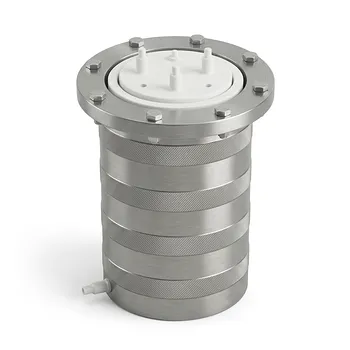
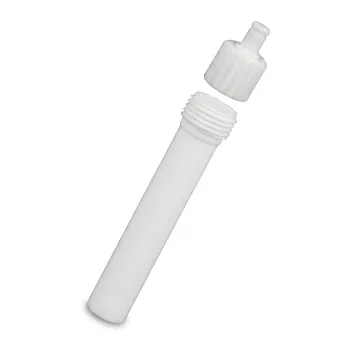
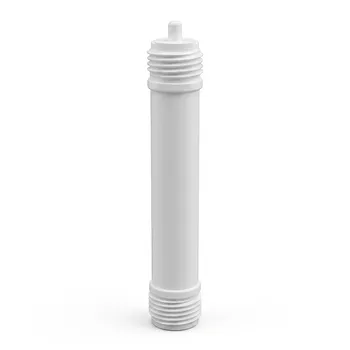
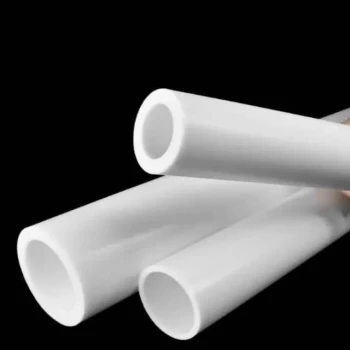
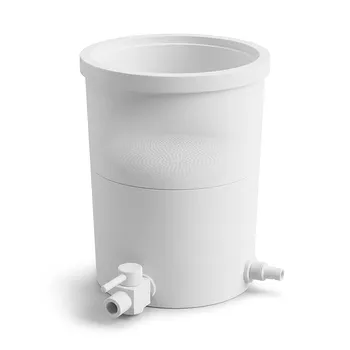
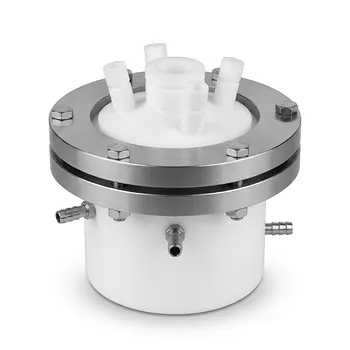
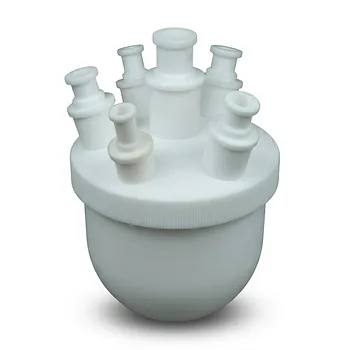
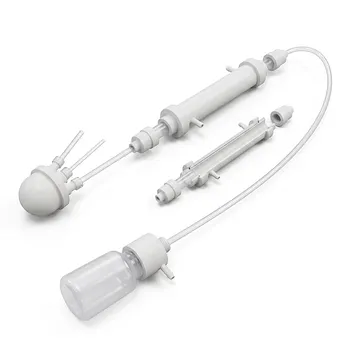
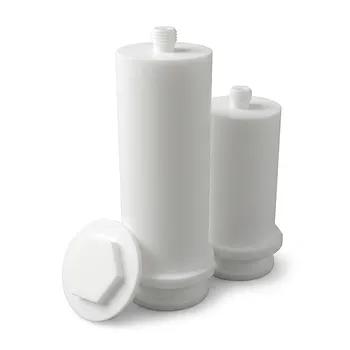
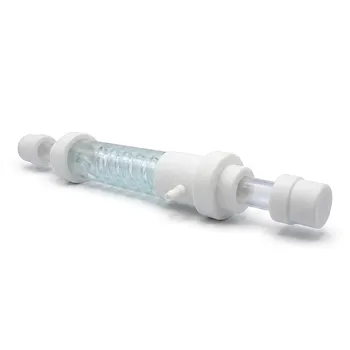
High-purity PTFE liners are the industry standard for hydrothermal synthesis because they provide an impenetrable chemical barrier between the reaction and the reactor's metal walls. In the preparation of TiO2@Er-Hydroxyapatite, these liners prevent metal ion leaching that would otherwise degrade the composite's photocatalytic performance. Their ability to withstand extreme temperatures and corrosive mineralizers ensures a sterile, stable environment for high-purity crystal growth.
PTFE liners ensure material purity by combining thermal stability with near-universal chemical resistance. They are essential for preventing the introduction of metal impurities that would compromise the functional integrity of advanced semiconductor and hydroxyapatite composites.
Eliminating Metal Ion Contamination
The Critical Barrier Function
PTFE (polytetrafluoroethylene) creates a complete physical seal between the precursor solution and the autoclave's stainless steel shell. This isolation is mandatory to prevent iron, nickel, or chromium ions from leaching into the reaction medium.
Maintaining Photocatalytic Integrity
Even trace amounts of foreign metal ions can "poison" a catalyst by creating recombination centers for charge carriers. High-purity PTFE ensures the TiO2@Er-Hydroxyapatite composite retains its intended electronic properties and reactive surface sites.
Solvent and Purity Stability
The material's resistance to strong polar solvents prevents the liner itself from degrading or shedding particles. This stability guarantees that the final hydroxyapatite structure remains free of organic or inorganic impurities.
Durability Against Corrosive Mineralizers
Resisting Strong Bases and Acids
Synthesizing TiO2 often requires concentrated sodium hydroxide (NaOH) or hydrochloric acid (HCl) as mineralizers. PTFE remains non-reactive even when exposed to these aggressive chemicals at elevated temperatures that would rapidly corrode metal.
Thermal and Structural Stability
These liners are designed to maintain their shape and seal under the high-pressure steam generated during hydrothermal processing. This stability prevents the "creep" or physical failure that could lead to reactor leakage or damage to the outer vessel.
Protection of the Outer Autoclave
Beyond protecting the sample, the liner acts as a sacrificial shield for the expensive metal reactor. By containing acidic or alkaline media, the PTFE liner prevents catastrophic corrosion of the autoclave's structural components.
Optimizing Material Recovery and Uniformity
Superior Mold-Release Properties
The non-stick nature of PTFE allows for the easy collection of fine nanopowders after the reaction is complete. This minimizes material loss and makes the cleaning process more efficient for subsequent synthesis runs.
Facilitating Uniform Crystal Growth
A clean, inert reaction interface allows for more predictable nucleation and crystal growth. This results in the uniform morphology required for the high-performance application of hydroxyapatite composites in biomedical or environmental fields.
Preventing Cross-Contamination
Because PTFE is easy to clean and resists the absorption of chemicals, it reduces the risk of cross-contamination between batches. This is vital when working with sensitive dopants like Erbium (Er).
Understanding the Limitations and Trade-offs
Temperature Constraints
PTFE generally has a safe operating limit around 220°C to 250°C. Exceeding these temperatures can cause the liner to soften or release toxic fumes, limiting its use in ultra-high-temperature synthesis.
Heat Transfer Efficiency
PTFE is a thermal insulator, meaning it can slow down the heating and cooling cycles of the reaction. Researchers must account for this thermal lag when timing the synthesis process to ensure consistent crystal development.
Pressure Sensitivity
While PTFE is durable, it can undergo permanent deformation if the internal pressure exceeds the material's yield strength at high temperatures. Proper sizing and venting protocols are necessary to prevent the liner from "pancaking" or sealing shut.
Applying These Insights to Your Synthesis Goal
How to Select Your Reactor Configuration
- If your primary focus is Maximum Purity: Utilize high-purity PTFE or PFA liners to ensure zero metal ion interference during the nucleation of the TiO2@Er-Hydroxyapatite.
- If your primary focus is High-Temperature Synthesis (>250°C): Consider alternative liners like PPL (Polyphenylene polymers) or quartz, as standard PTFE may lose structural integrity.
- If your primary focus is High-Volume Recovery: Prioritize PTFE liners with polished internal surfaces to leverage their non-stick properties for total powder collection.
Selecting high-purity PTFE ensures that the unique photocatalytic and structural properties of TiO2@Er-Hydroxyapatite are defined by the chemistry of the precursors rather than the impurities of the reactor.
Summary Table:
| Feature | Benefit for Synthesis | Impact on TiO2@Er-HA Composites |
|---|---|---|
| Chemical Inertness | Prevents metal ion leaching from reactor walls | Maintains photocatalytic and electronic integrity |
| Thermal Stability | Reliable performance up to 250°C | Enables stable crystal growth under pressure |
| Corrosion Resistance | Withstands strong acids (HCl) and bases (NaOH) | Protects equipment and prevents sample contamination |
| Non-Stick Surface | High recovery rate of fine nanopowders | Minimizes material loss and facilitates cleaning |
| Purity Control | Eliminates foreign recombination centers | Ensures uniform morphology and reactive surface sites |
Elevate Your Research with High-Performance Fluoropolymers
Maximize the purity of your synthesis with KINTEK, your premier partner for high-performance laboratory solutions. From everyday basic labware—including beakers, measuring cylinders, crucibles, and reagent bottles—to advanced components like high-purity PTFE/PFA hydrothermal synthesis liners, microwave digestion vessels, and custom electrochemical cells, we provide the tools necessary for zero-contamination research.
Our expertise extends from standard consumables (O-rings, seal tapes, and filters) to complex, custom CNC-fabricated parts designed for your specific reactor configurations. Whether you need high-volume orders or bespoke laboratory setups, KINTEK’s exclusive focus on fluoropolymer materials ensures your advanced composites remain free of iron, nickel, or chromium impurities.
Ready to optimize your lab's performance? Contact us today to discuss your custom fabrication needs!
References
- Rafael Lisandro Pereira Rocha, Josy Anteveli Osajima. Enhanced Photocatalytic Performance of TiO<sub>2</sub>@Er-Hydroxyapatite Composite for Cationic Dye and Drug Removal. DOI: 10.1021/acsomega.4c06314
This article is also based on technical information from Kintek Knowledge Base .
Related Products
- PTFE Lined High Pressure Digestion Vessel 50ml High Temperature Hydrothermal Synthesis Tank
- High Pressure Custom TFM Reactor Stainless Steel Outer Vessel PTFE Inner Cup for Corrosive Synthesis
- High Purity PTFE Microwave Digestion Vessel Replacement Liner for Acid Sample Preparation and Trace Analysis
- High Purity PTFE Microwave Digestion Vessel for Soil and Food Analysis Acid Resistant Fluoropolymer Sample Preparation Liners
- High Purity TFM Microwave Digestion Vessels PTFE Acid Evaporation Liners Domestic GT-400 Equivalent Laboratory Reaction Containers
People Also Ask
- What are the benefits of using a PTFE-lined vessel for carbon-sulfur cathode treatment? Maximize Purity & Performance
- Why are PTFE-lined pressure digestion vessels required for the preparation of Ag/CeO2 catalysts? Purity & Performance
- What is the function of high-pressure PTFE digestion vessels in mineral analysis? Optimize Sample Mineralization
- What safety features are typically incorporated into high-pressure PTFE digestion vessel designs? Ensure Lab Safety
- What is the function of PTFE lined high-pressure vessels in g-C3N4 synthesis? Achieve High-Purity Material Growth